Current Activities

Peaceful Dia de los Muertos Demonstration Planned at Trinity Site Entrance on Saturday, April 5th

CCNS NEWS UPDATE
Runs 3/28/14 through 4/4/14

(THEME UP AND UNDER)  This is the CCNS News Update, an overview of the latest nuclear safety issues, brought to you every week by Concerned Citizens for Nuclear Safety.  Here is this week’s top headline:

Peaceful Dia de los Muertos Demonstration Planned at Trinity Site Entrance on Saturday, April 5th

The Trinity Test Site, the location of the first test explosion of a nuclear device on July 16, 1945 on the White Sands Missile Range, is open to the public one day a year. It will be open on Saturday, April 5th.

The Tularosa Basin Downwinders Consortium and Las Mujeres Hablan, two advocacy organizations, are working together to tell the rest of the Trinity Test story that is not found in history books.  They have been working with local communities, congressional members , and New Mexico legislators to bring attention to the tragic health effects suffered by those exposed to the first atomic test.  The cancer rates in the counties surrounding the Trinity Site are among the highest in the nation.

The groups are bringing attention to the Radiation Exposure Compensation Act (RECA), a federal law that provides compensation to those who were exposed to radiation from above-ground tests and uranium mining and milling.  They are supporting the proposed RECA amendments, which are sponsored by the entire New Mexico Congressional delegation, to expand it to include those who were exposed to the Trinity Test.  http://www.tomudall.senate.gov/?p=press_release&id=1272, http://thomas.loc.gov/cgi-bin/bdquery/D?d113:3:./temp/~bdM6D0::|/home/LegislativeData.php|, http://thomas.loc.gov/cgi-bin/bdquery/D?d113:2:./temp/~bdM6D0::|/home/LegislativeData.php|

The advocacy groups are organizing a peaceful Dia de los Muertos demonstration at the Stallion Range Station, on Highway 380, east of San Antonio, New Mexico, beginning at 9 am on Saturday, April 5th and asking participants be on-site for two hours. The theme is to remember and honor the dead and recognize and expose the pain that secrecy imposes.  http://www.wsmr.army.mil/PAO/Trinity/Pages/default.aspx

The organizers ask that participants paint their faces with skeletons or bring cardboard skeleton masks.  Please bring your own water, snacks and posters.

Organizers will be providing information about the need to expand RECA and the National Institute of Health study to understand the lifestyles of those living downwind and downstream of the Trinity test.

Tina Cordova, one of the Tularosa Basin Downwinders Consortium organizers, said, “Sixty-nine years have passed.  It’s time to recognize those who were unknowing, unwilling, uncompensated, innocent participants in the world’s largest science experiment.  People in New Mexico have been suffering in silence ever since the bomb was detonated in July 1945.  It’s time we reveal the rest of the story and people are made aware of the complete legacy of Trinity.”

Everyone who has been affected, who has had a family member that has been affected, or who has an interest in the issue are invited to attend.  Videographers will capture the event for inclusion in a documentary that is in production.

For more information, please contact Tina Cordova at (505) 897-6787 or tcordova@queston.net or Joni Arends, CCNS, at (505) 986-1973 or ccns@nuclearactive.org.

 
This has been the CCNS News Update.  For more information and to make a tax-deductible contribution, please visit our website at http://www.nuclearactive.org.
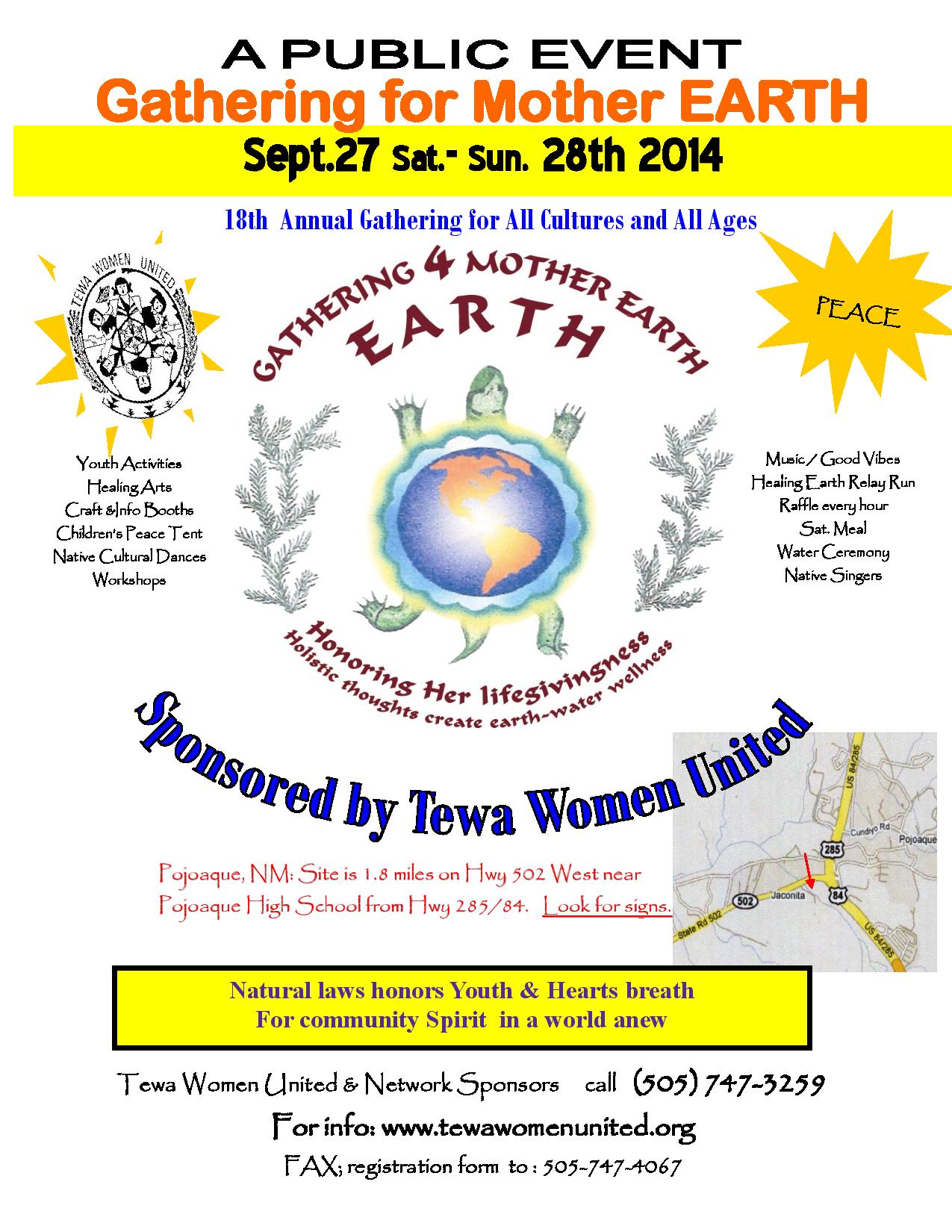
 

Upcoming Public Meetings about WIPP in Albuquerque (Th. 3/27) and Santa Fe (Mon. 3/31)

Hi,
The location and time for the public information meeting in Santa Fe on Monday, March 31st has changed.  The new location is the Santa Fe Main Library, located at 145 Washington Avenue, in downtown Santa Fe, from 6 to 7:30 pm.

The March 18th meeting at South West Organizing Project (SWOP) was standing room only.  Photos courtesy of SWOP at  https://www.dropbox.com/sh/m56uehx3pc4ooff/TEaiOdTTId/WIPP%20Discussion

We look forward to seeing you on Thursday, March 27th at the Albuquerque Peace & Justice Center and Monday, March 31st at the Santa Fe Main Library.
Onward,
CCNS

CCNS NEWS UPDATE
Runs 3/21/14 through 3/28/14


(THEME UP AND UNDER)  This is the CCNS News Update, an overview of the latest nuclear safety issues, brought to you every week by Concerned Citizens for Nuclear Safety.  Here is this week’s top headline:

•    DOE Plans to Ship LANL TRU Waste to Commercial Facility; Upcoming Public Meetings in Albuquerque and Santa Fe about WIPP

On March 13th, the Department of Energy (DOE) announced that it was working on a contract with a commercial waste facility to “stage” the plutonium-contaminated transuranic waste from Los Alamos National Laboratory (LANL) that is scheduled to be disposed at the closed Waste Isolation Pilot Plant (WIPP).  Frank Marcinowski, a DOE Deputy Assistant Secretary, said that the shipments would begin in early April to the unnamed commercial facility.

The transport of the waste is needed for LANL to meet the unenforceable Framework Agreement that Governor Susana Martinez established for the removal 3,706 cubic meters of transuranic waste stored in fabric tents to WIPP.  A June 30th, 2014 deadline was established and the state and federal governments want to move the remaining 546 cubic meters of waste from LANL before the deadline. http://www.nmenv.state.nm.us/documents/LANL_Framework_Agreement.pdf

Joni Arends, of CCNS, said, “The Framework Agreement, which has delayed other legacy waste cleanup at LANL, was established without any public input.  Now DOE now is making plans to move transuranic waste to an unnamed commercial facility for staging.  Is DOE thinking what will happen to that waste if WIPP never reopens?  Before the contract is signed, there should be an opportunity for informed public input.”

Ted Wyka, Chairman of the DOE Accident Investigation Board, is leading the investigations of the February 5th fire and the February 14th release at WIPP.  The 180-page fire investigation report is available at http://www.wipp.energy.gov/.

Southwest Research and Information Center, Citizens for Alternatives to Radioactive Dumping, Concerned Citizens for Nuclear Safety, and Nuclear Watch New Mexico will be sponsoring three public information meetings in both Albuquerque and Santa Fe about the recent incidents at WIPP and how you can get involved.

The first public information meeting will take place in Albuquerque on Tuesday, March 18th from 5:30 to 7:30 pm at the SouthWest Organizing Project (SWOP) office, located at 10th and Gold, Southwest.  The second Albuquerque meeting will take place on Thursday, March 27th from 6 to 8 pm at the Albuquerque Peace and Justice Center, located at 202 Harvard, Southeast.  A complementary dinner will be available at both meetings.  Don Hancock, of Southwest Research and Information Center, will provide the latest information, along with Rey Garduño and Lucille Cordova.

The third meeting will take place in Santa Fe on Monday, March 31st from 6 to 7:30 pm at the Santa Fe Main Library, located at 145 Washington, in downtown Santa Fe.  Please note the new location.  Don Hancock, of Southwest Research and Information Center, Scott Kovac, of Nuclear Watch New Mexico, and former CCNS Board member Sasha Pyle will give presentations.

This has been the CCNS News Update.  For more information and to make a tax-deductible contribution, please visit our website at http://www.nuclearactive.org.

 

DOE Plans to Ship LANL TRU Waste to Commercial Facility; Upcoming Public Meetings in Albuquerque and Santa Fe about WIPP

CCNS NEWS UPDATE
Runs 3/14/14 through 3/21/14


(THEME UP AND UNDER)  This is the CCNS News Update, an overview of the latest nuclear safety issues, brought to you every week by Concerned Citizens for Nuclear Safety.  Here is this week’s top headline:

•    DOE Plans to Ship LANL TRU Waste to Commercial Facility; Upcoming Public Meetings in Albuquerque and Santa Fe about WIPP

On March 13th, the Department of Energy (DOE) announced that it was working on a contract with a commercial waste facility to “stage” the plutonium-contaminated transuranic waste from Los Alamos National Laboratory (LANL) that is scheduled to be disposed at the closed Waste Isolation Pilot Plant (WIPP).  Frank Marcinowski, a DOE Deputy Assistant Secretary, said that the shipments would begin in early April to the unnamed commercial facility.

The transport of the waste is needed for LANL to meet the unenforceable Framework Agreement that Governor Susana Martinez established for the removal 3,706 cubic meters of transuranic waste stored in fabric tents to WIPP.  A June 30th, 2014 deadline was established and the state and federal governments want to move the remaining 546 cubic meters of waste from LANL before the deadline. http://www.nmenv.state.nm.us/documents/LANL_Framework_Agreement.pdf

Joni Arends, of CCNS, said, “The Framework Agreement, which has delayed other legacy waste cleanup at LANL, was established without any public input.  Now DOE now is making plans to move transuranic waste to an unnamed commercial facility for staging.  Is DOE thinking what will happen to that waste if WIPP never reopens?  Before the contract is signed, there should be an opportunity for informed public input.”

Ted Wyka, Chairman of the DOE Accident Investigation Board, is leading the investigations of the February 5th fire and the February 14th release at WIPP.  The 180-page fire investigation report is available at http://www.wipp.energy.gov/.

Southwest Research and Information Center, Citizens for Alternatives to Radioactive Dumping, Concerned Citizens for Nuclear Safety, and Nuclear Watch New Mexico will be sponsoring three public information meetings in both Albuquerque and Santa Fe about the recent incidents at WIPP and how you can get involved.

The first public information meeting will take place in Albuquerque on Tuesday, March 18th from 5:30 to 7:30 pm at the SouthWest Organizing Project (SWOP) office, located at 10th and Gold, Southwest.  The second Albuquerque meeting will take place on Thursday, March 27th from 6 to 8 pm at the Albuquerque Peace and Justice Center, located at 202 Harvard, Southeast.  A complementary dinner will be available at both meetings.  Don Hancock, of Southwest Research and Information Center, will provide the latest information, along with Rey Garduño and Lucille Cordova.

The third meeting will take place in Santa Fe on Monday, March 31st from 6 to 7:30 pm at the Santa Fe Main Library, located at 145 Washington, in downtown Santa Fe.  Please note the new location.  Don Hancock and Scott Kovac, of Nuclear Watch New Mexico, will give presentations.

This has been the CCNS News Update.  For more information and to make a tax-deductible contribution, please visit our website at http://www.nuclearactive.org.
 

U.S. Nuclear Waste Technical Review Board Meeting in ABQ on Wednesday, March 19th

Hi All,

In addition to the public information meetings sponsored by Southwest Research and Information Center (SRIC), Citizens for Alternatives to Radioactive Dumping (CARD), CCNS, and Nuclear Watch New Mexico on Tuesday, March 18th in ABQ; Thursday, March 27th in ABQ; and Monday March 31st in Santa Fe (see the Update below for more information)

The U.S. Nuclear Waste Technical Review Board will hold a public meeting in Albuquerque on Wednesday, March 19th regarding the “U.S. Department of Energy (DOE) research and development (R&D) activities related to salt as a geologic medium for disposal of spent nuclear fuel (SNF) and high-level radioactive waste (HLW).”  The meeting will be held at the Marriott Hotel, 2101 Louisiana Blvd., NE, Albuquerque, beginning at 8 am.  The agenda is available at http://www.nwtrb.gov/.  Sandia and LANL scientists will be presenting, along with the former Director of the Environmental Evaluation Group (EEG), Bob Neill.  Public comment is scheduled for 4:45 pm.  The notice encourages the public who would like to speak to sign the “Public Comment Register” when you arrive.  They may decide on a time limit for your remarks, depending upon how many people sign up to speak.

Onward,
CCNS


Upcoming Public Meetings in Albuquerque (3/18 and 3/27) and Santa Fe (3/31) about WIPP)


CCNS NEWS UPDATE
Runs 3/7/14 through 3/14/14

(THEME UP AND UNDER)  This is the CCNS News Update, an overview of the latest nuclear safety issues, brought to you every week by Concerned Citizens for Nuclear Safety.  Here is this week’s top headline:

·      Upcoming Public Meetings in Albuquerque and Santa Fe about WIPP

Southwest Research and Information Center, Citizens for Alternatives to Radioactive Dumping, Concerned Citizens for Nuclear Safety, and Nuclear Watch New Mexico will be sponsoring three public information meetings in both Albuquerque and Santa Fe about the recent fire and plutonium release at the Waste Isolation Pilot Plant (WIPP) and how to get involved.  Public input into the decision-making processes is essential now.  Updated information about the serious accidents as well as proposals to expand WIPP’s mission will be presented. 

The first public information meeting will take place in Albuquerque on Tuesday, March 18th from 5:30 to 7:30 pm at the SouthWest Organizing Project (SWOP) office, located at 10th and Gold, Southwest.  The second meeting in Albuquerque will take place on Thursday, March 27th from 6 to 8 pm at the Albuquerque Peace and Justice Center, located at 202 Harvard, Southeast.  A complementary dinner will be available at both meetings.  Don Hancock, of Southwest Research and Information Center, will present the latest information, along with Rey Garduño and Lucille Cordova.

The third meeting will take place in Santa Fe on Monday, March 31st from 5:30 to 7 pm at the Santa Fe Community Foundation, located at Paseo de Peralta and Halcona Street.  Don Hancock and Scott Kovac, of Nuclear Watch New Mexico, will present.

There are several proposals to expand the mission of WIPP beyond its current mission to dispose of plutonium-contaminated waste generated by the nuclear weapons complex.  WIPP is a deep geologic “pilot” plant to demonstrate the safe disposal of transuranic radioactive and hazardous wastes in salt.  It opened on March 26, 1999 after decades of public opposition about the safety of the facility.  Plutonium is carcinogenic and even in the smallest amount is dangerous if inhaled or ingested. 

The salt-hauling vehicle that was involved in the February 5th fire was being used to remove salt from an experimental area being developed for “heater tests” to determine if high-level radioactive waste could be disposed of at WIPP. 

There are current five proposals on the table to expand WIPP’s mission and three proposals to reduce safety requirements.  The expansion proposals would bring wastes that are currently not allowed for disposal.  They are high-level waste generated by the nuclear reactors at the Hanford site in Washington state; commercial high-level waste from the West Valley site in New York; surplus plutonium from Department of Energy sites; elemental mercury from industrial sites; and high-activity low-level radioactive waste, called Greater-than-Class C waste, generated by government and commercial activities.

Proposals to reduce safety requirements include lessening monitoring of volatile organic compounds, less robust room closures, and reconfiguration of the waste rooms.

 
This has been the CCNS News Update.  For more information and to make a tax-deductible contribution, please visit our website at http://www.nuclearactive.org.
 

Remembering Fred Tyler, Co-Founder of the Tularosa Basin Downwinders Consortium


CCNS NEWS UPDATE

Runs 2/28/14 through 3/7/14


(THEME UP AND UNDER)  This is the CCNS News Update, an overview of the latest nuclear safety issues, brought to you every week by Concerned Citizens for Nuclear Safety.  Here is this week’s top headline:

·   Remembering Fred Tyler, Co-Founder of the Tularosa Basin Downwinders Consortium

Fred Tyler, co-founder of the Tularosa Basin Downwinders Consortium, passed away suddenly on February 14th from an unknown lung ailment.  Born in 1950 in the Tularosa Basin, Tyler was very active in his community and church, and was currently serving as a Tularosa Village Trustee.  For 35 years Tyler worked for the Army and Air Force Exchange.  During that time, he and his family moved 14 times before returning to Tularosa.  He soon became a pecan and grape farmer.

In 2004, Tyler co-founded the Tularosa Basin Downwinders Consortium with Tina Cordova.  They both were raised in Tularosa and had heard the stories about the searing light that rose into the sky the morning of July 16, 1945.  The community had been told that it was a military ammunition cache that had exploded, but it was actually the first plutonium atomic weapon explosion at the Trinity Test Site some 35 miles northwest of Tularosa.  Over 13 pounds of plutonium did not fission and remains unaccounted for.

Tyler, the eldest son of Rufina Utter Tyler, had often heard the first hand stories of the blast from his mother who suffered multiple bouts of different forms of cancer.  Tyler had often wondered how the blast played in the cancer that ultimately took his mother.

Cordova researched the regional autoimmune disease and cancer statistics and found that, in 1999, the national average was 202.7 per 100,000 people.  In their Otero County, Cordova found it was 694.6.   In neighboring Lincoln County, the rate was 764.5 per 100,000 people.  The numbers have remained consistent throughout the years.

Cordova and Tyler founded the Consortium to gather data from family histories and individuals who may have been damaged by exposure to the Trinity radiation.  Reinforced with the data, they went to the congressional offices to ask for financial compensation and medical benefits for the New Mexico downwinders under the federal Radiation Exposure Compensation Act (RECA). 

Senator Tom Udall has led the effort to include the Trinity downwinders in the proposed amendments to RECA, which is co-sponsored by Senator Martin Heinrich.  http://www.tomudall.senate.gov/?p=press_release&id=1272  Representative Ben Ray Lujan introduced a companion bill in the House, which is co-sponsored by Representatives Michelle Lujan Grisham and Steve Pearce.  http://lujan.house.gov/index.cfm?sectionid=3&sectiontree=&searchkey=radiation+exposure+compensation+act

In February, the New Mexico Legislature passed a House Memorial 36 in the support of the RECA amendments.  http://www.nmlegis.gov/lcs/legislation.aspx?Chamber=H&LegType=M&LegNo=36&year=14  Representative Brian Egolf introduced the Memorial.  It was put on the Consent Order and passed unanimously on the House floor.  Senate Memorial 35, sponsored by Senator Howie Morales, did not get heard on the floor of the Senator.  The Senator was prepared to say on the floor, ““Senate Memorial 35 is dedicate to the life and work of Fred Tyler, co-founder of Tularosa Basin Downwinders Consortium, who died during this session.”  Senator Morales, who is running for governor, is committed to advancing RECA however he is able.  Holly Beaumont, with Interfaith Worker Justice, led the effort to shepherd the memorial through the 30-day session.

Tina Cordova, said, “It is our honor to dedicate this Memorial to the memory of Fred Tyler who worked tirelessly to expand the Radiation Exposure Compensation Act to include the people of New Mexico who have been damaged by exposure to radiation from the Trinity blast.  The work of the Tularosa Basin Downwinders Consortium will go on but we will forever miss Fred and what he brought to our efforts.”


This has been the CCNS News Update.  To learn more, please visit our website at nuclearactive.org and like us on Facebook. 


For more information about the work of the Tularosa Basin Downwinders Consortium, please open the link vimeo.com/85980906 to see a short video, “Forgotten:  Trinity’s Downwinders.”  Produced by journalists Dennis Carroll and Natalie Guillen, the sizzle reel features Fred Tyler and other Trinity Downwinders.  It was made to elicit support and contributions toward production of a full-length documentary that will tell the story of the decades-long suffering of those who lived near and downwind from the 1945 Trinity atomic test.

izzle  Reel for Sizzle Reel for “Forgotten: Trinity’s Downwinders”
http://vimeo.com/85980906
About this video
“Dismissed and abandoned for nearly 70 years, New Mexico residents who lived near the site of the first detonation of a nuclear bomb suffered in silence – until now. To contribute and be a part of this historic project, please visit the film’s Web site at childrenofthebomb.blogspot.com.”

The Tularosa Basin Downwinders Consortium has been working for years to expand the Radiation Exposure Compensation Act (RECA) to include the people of New Mexico, as they were the first Downwinders.   Please share the film’s Web page link, childrenofthebomb.blogspot.com (no www) with everyone you know.  We need to bring attention to this issue. 

Tax-deductible gifts, made in Fred Tyler’s memory, can be made to CAPPED Support Services, 907 New York Avenue, Alamogordo, NM 88310, and phone number (575) 434-4673.   CAPPED Support Services is a non-profit cancer support center in Alamogordo that is accepting contributions for the Carroll and Guillen video “Forgotten: Trinity’s Downwinders.”  Please indicate in the memo line of your check that your contribution is for the documentary.  You can also make a contribution on the documentary’s Web page, childrenofthebomb.blogspot.com, or at www.capped.org.  Please designate Trinity Film Project in the purpose field.  

The Tularosa Basin Downwinders Consortium is extremely grateful for your support. 


Plutonium Leaks from WIPP While Plans to Expand the Site’s Capacity Proposed


WIPP Billboard 1998 © s.westerly

CCNS NEWS UPDATE

Runs 2/21/14 through 2/28/14

(THEME UP AND UNDER)  This is the CCNS News Update, an overview of the latest nuclear safety issues, brought to you every week by Concerned Citizens for Nuclear Safety.  Here is this week’s top headline:

·   Plutonium Leaks from WIPP While Plans to Expand the Site’s Capacity Proposed 

Shortly after the New Mexico Environment Department (NMED) announced on Friday, February 14th that a draft hazardous waste permit was available for 60 days of public review and comment, a release of radiation was detected in the Waste Isolation Pilot Plant (WIPP) underground.  http://www.wipp.energy.gov/index.htm  The detection triggered the HEPA filtration system which is designed to capture much of the contamination before the air is released into the environment.  On Wednesday, February 19th, the Carlsbad Environmental Monitoring and Research Center announced that plutonium and americium were found in an air monitoring station more than a half mile northwest of the WIPP exhaust shaft where filtered air is released.  Those radionuclides traveled more than a mile and a half from the presumed location of the underground release.  http://www.cemrc.org/

A press conference was held in Carlsbad on Thursday, February 20th in which the Environment Department Secretary Ryan Flynn and the WIPP Manager Jose Franco both said that the release was “very serious.”  Franco explained that the underground leak was the first of its kind since WIPP opened almost 15 years ago for the disposal of plutonium-contaminated waste generated by the nuclear weapons complex.  He added that an investigation team will begin work soon.

Flynn explained the state’s view of the leak by saying, “Events like this should never occur. From the state’s perspective, one event is far too many. Our primary concern continues to be public safety.”

Flynn traveled to Carlsbad after he was notified that radiation had been detected above ground.  He said, “We are wondering why it took a couple of days to confirm the radiological event outside of the underground. We will demand that federal officials share information with the public in real time. That’s the reason we are here.”

At the same time the New Mexico Environment Department draft hazardous waste permit supports WIPP’s proposal to increase the underground disposal capacity by 25 percent to allow much more waste for disposal; to reduce safety protections for workers and the public by eliminating robust barriers that would lessen the amount of toxic chemicals and radioactivity that could be released to the environment; and to reduce the air monitoring program for volatile organic compounds or VOCs.  http://www.nmenv.state.nm.us/wipp/index.html under “News”

Don Hancock, director of the Nuclear Waste Safety Program at the Southwest Research and Information Center, in Albuquerque, said, “Given the declining safety culture evidenced by the recent fire and radiation leak, this is no time to allow expansion of the capacity or the mission of WIPP.  Federal, Environment Department and public resources are best used now in understanding why the accidents happened, how to safely clean up the contamination, and how to prevent future accidents and leaks.”  See http://sric.org/nuclear/docs/WIPP_Leak_02262014.pdf

This has been the CCNS News Update.  To learn more, please visit our website at nuclearactive.org and like us on Facebook.


Recent articles about the WIPP fire and plutonium release:

ENE News has compiled a number of articles and comments – http://enenews.com/officials-theres-indications-of-a-nuclear-release-from-containers-at-new-mexico-waste-site-we-never-ever-thought-this-kind-of-an-event-would-occur-the-absolute-seriousness-of-this-is

Saturday, February 22, 2014 Carlsbad Current-Argus:  Town hall meeting to discuss WIPP radiation leak – http://www.currentargus.com/carlsbad-news/ci_25206355/town-hall-meeting-discuss-wipp-radiation-leak?source=email

Tuesday, February 25, 2014 Albuquerque Journal Editorial Board: Base WIPP response on science, not emotions – <http://www.abqjournal.com/author/editorial>

Other links:

WIPP Information at the Citizens for Alternatives to Radioactive Dumping (CARD) website, researched and written by Deborah Reade – http://www.cardnm.org/

February 21, 2011, Analysis:  WIPP is no safe haven for nuclear materials – http://enviroleaks.org/2011/01/21/analysis-wipp-is-no-safe-haven-for-nuclear-materials/


DOE Begins Investigation of Vehicle Fire in WIPP Underground

CCNS NEWS UPDATE

Runs 2/14/14 through 2/21/14

(THEME UP AND UNDER)  This is the CCNS News Update, an overview of the latest nuclear safety issues, brought to you every week by Concerned Citizens for Nuclear Safety.  Here is this week’s top headline:

·    DOE Begins Investigation of Vehicle Fire in WIPP Underground

The Department of Energy (DOE) Accident Investigation Board arrived at the Waste Isolation Pilot Plant (WIPP) on Monday, February 10th to begin their investigation of the salt-hauling vehicle fire.  The fire started on the morning of Wednesday, February 5th when a truck used for hauling salt in the underground WIPP mine caught fire for as yet unknown reasons.  The vehicle was being used to prepare space for proposed heater tests.  Immediate attempts to put out the fire were unsuccessful.  http://www.wipp.energy.gov/

All workers were safely evacuated to the surface.  Six employees were treated for smoke inhalation at the Carlsbad Medical Center and then released.  Four of them continue to be monitored by medical staff at the WIPP site.  Operations were suspended and shipments to the site were stopped.

WIPP is the nation’s only disposal site for plutonium-contaminated waste from nuclear bomb production.  The fire occurred in the northern part of the underground mine, near the salt handling shaft from which smoke billowed at the surface.  The shaft is more than 1,500 feet away from the nearest waste disposal rooms.

The Accident Investigation Board, comprised of officials from the DOE and the Mine Safety and Health Administration, will be supported by experts in the areas of fire protection, ventilation and mine safety.  How much time the investigation will take has not been decided.

The Defense Nuclear Facilities Safety Board previously has raised issues about the adequacy of the fire protection system in the underground.  In 2011, the Defense Board, an independent federal agency that watches the DOE weapons sites around the country, reviewed the WIPP Fire Hazard Analysis, which assesses fire hazards and associated protections.  http://www.dnfsb.gov

The Defense Board stated, “The Board’s staff is concerned that the [Fire Hazard Analysis], while containing a complete analysis of the aboveground operations, does not adequately address the fire hazards and risks associated with the underground operations. Of particular concern to the staff is that the [Analysis] fails to recognize the potential impact of a fire on WIPP’s ability to process waste, and ultimately on the ability to reduce inventories of transuranic (TRU) waste at other DOE sites.”

In its December 2011 response, DOE stated, “Small fires would likely be detected and extinguished by facility personnel using the extinguishers positioned throughout the occupied portions of the mine.”   http://www.dnfsb.gov/board-activities/letters/doe-response-board-june-24-2011-reporting-requirement-outlining-actions-tak

Don Hancock, director of the Nuclear Waste Safety Program at the Southwest Research and Information Center, in Albuquerque, said, “The underground fire at WIPP should have been quickly extinguished, but it was not.  Clearly, the fire protection system proved to be inadequate and must be improved.”  http://www.sric.org

Hancock added, “The investigation should examine whether non-essential activities, such as proposed heater tests, increase underground fire hazards.”

This has been the CCNS News Update.  To learn more, please visit our website at http://www.nuclearactive.org and like us on Facebook.


Salt-hauling Vehicle Catches Fire in WIPP Underground

CCNS NEWS UPDATE

Runs 2/7/14 through 2/14/14

(THEME UP AND UNDER)  This is the CCNS News Update, an overview of the latest nuclear safety issues, brought to you every week by Concerned Citizens for Nuclear Safety.  Here is this week’s top headline:

 *  Salt-hauling Vehicle Catches Fire in WIPP Underground

On the morning of Wednesday, February 5th, a truck used for hauling salt in the underground mine at the Waste Isolation Pilot Plant (WIPP) caught fire for as yet unknown reasons.  Immediate attempts to put out the fire were unsuccessful.  All workers were safely evacuated to the surface.  Six employees were treated for smoke inhalation at the Carlsbad Medical Center and then released.  Operations were suspended and shipments to the site were stopped.  http://www.wipp.energy.gov/

WIPP is the nation’s only disposal site for plutonium-contaminated waste from nuclear bombs.  The football-field-size disposal rooms are located 2,150 feet below the surface of the earth in the Permian salt beds about 26 miles east of Carlsbad, New Mexico.  The fire occurred in the northern part of the underground mine, near the salt handling shaft from which smoke billowed at the surface.  The shaft is more than 1,500 feet away from the nearest waste disposal rooms.  Federal law allows WIPP to hold up to 6.2 million cubic feet of radioactive and hazardous waste; slightly more than half that amount has been emplaced since March 1999.

Later in the day, five members of a mine rescue team entered the mine, confirmed that the air was safe to breathe, and that the fire was extinguished.  As of 1:05 am on Thursday, February 6th, the emergency situation was declared over by the Department of Energy (DOE), the federal agency in charge of the site.  As of the morning of Friday, February 7th, DOE has yet to provide an official report of the cause of the fire and why fire suppression systems did not quickly extinguish the blaze, among other things.

Although there is no underground or surface air monitoring at the salt handling shaft near the fire, WIPP officials emphasized that there was no release of radioactive and toxic chemicals, apparently because of the size of the fire and the distance from the waste.

Don Hancock, director of the Nuclear Waste Safety Program at the Southwest Research and Information Center, in Albuquerque, said, “A fire in any mine is a very bad thing. And this kind of accident is never supposed to happen at WIPP.  The fire points out that diesel-fueled underground vehicles pose a fire danger and that mining should be done only as necessary.  Thus, mining for non-WIPP-related activities, such as the proposed heater tests, should be terminated.”  http://www.sric.org

Hancock added, “Since a planned maintenance outage is scheduled for February 14th to March 10th, no more waste should be trucked to WIPP until the maintenance is over, a full investigation is completed and made public, and actions are taken to prevent any future fires in the mine.”


This has been the CCNS News Update.  To learn more, please visit our website at nuclearactive.org and like us on Facebook.


BioInitiative 2012 Report Issues New Warnings on Wireless and Electromagnetic Fields


CCNS NEWS UPDATE

Runs 1/24/14 through 1/31/14

(THEME UP AND UNDER)  This is the CCNS News Update, an overview of the latest nuclear safety issues, brought to you every week by Concerned Citizens for Nuclear Safety.  Here is this week’s top headline:

  •  BioInitiative 2012 Report Issues New Warnings on Wireless and Electromagnetic Fields

A new report by the BioInitiative Working Group 2012 says that we know enough to take action to lower the levels of exposure to low-intensity electromagnetic fields and wireless technologies.  The BioInitiative report, subtitled “A Rationale for Biologically-based Exposure Standards for Low-Intensity Electromagnetic Radiation,” says that since 2007, the health risks from electromagnetic radiation fields (EMFs) and wireless technologies have substantially increased.  http://www.bioinitiative.org

The study covers EMFs from powerlines, electrical wiring, appliances and hand-held devices, including cell and cordless phones, cell towers, smart meters, WiFi, wireless laptops, wireless routers, and baby monitors.  Health impacts include damage to DNA and genes, effects on memory, learning, behavior, attention, sleep disruption, cancer and neurological diseases.  The report reviewed over 1800 new scientific studies and concluded that all cell phone users are at risk, and that parents-to-be, pregnant women, and young children exposed to EMFs are at particular risk.  The BioInitiatives Working Group says that new safety standards are “urgently needed for protection against EMF and wireless exposures that now appear everywhere in daily life.”

One of the authors, Lennart Hardell, a physician at Orebro University in Sweden, says, “There is a consistent pattern of increased risk for glioma, [a malignant brain tumor] and acoustic neuoma with use of mobile and cordless phones.  Epidemiological evidence shows that radiofrequency should be classified as a human carcinogen.  The existing [] public safety limits and reference levels are not adequate to protect public health.”

Martha Herbert, a physician and PhD, says, “While we aggressively investigate the links between autism disorders and wireless technologies, we should minimize wireless and EMF exposures for people with autism disorders, children of all ages, people planning a baby, and during pregnancy.”  New studies indicate that wireless devices, such as phones and laptops, may alter brain development of the fetus.  In addition, hyperactivity and learning and behavioral problems have been linked to such use in both animal and human studies.

The BioInitiative website states, “Each wireless need had a wired solution in counterpart that has none of the health effects that wireless [radiofrequency radiation] does, with the exception of cell phone use for talking directly to someone.  It is time to re-think the wireless tsunami and educate people about health, privacy and security risks.  It is past time to develop new safety standards.  It is necessary now to look at less harmful ways to communicate, move ourselves from place to place, shop, sleep, recreate, save energy, and educate our children in school.  It is time to rethink our global commerce, energy, banking, transportation and communications infrastructures so we are all committed to sustaining healthy living spaces and conserve safe sanctuary for all species on earth.”

This has been the CCNS News Update.  To learn more, please visit our website at nuclearactive.org and like us on Facebook.