
Current Activities

Cleanup at LANL’s Area G May Not Begin Until 2028

capture

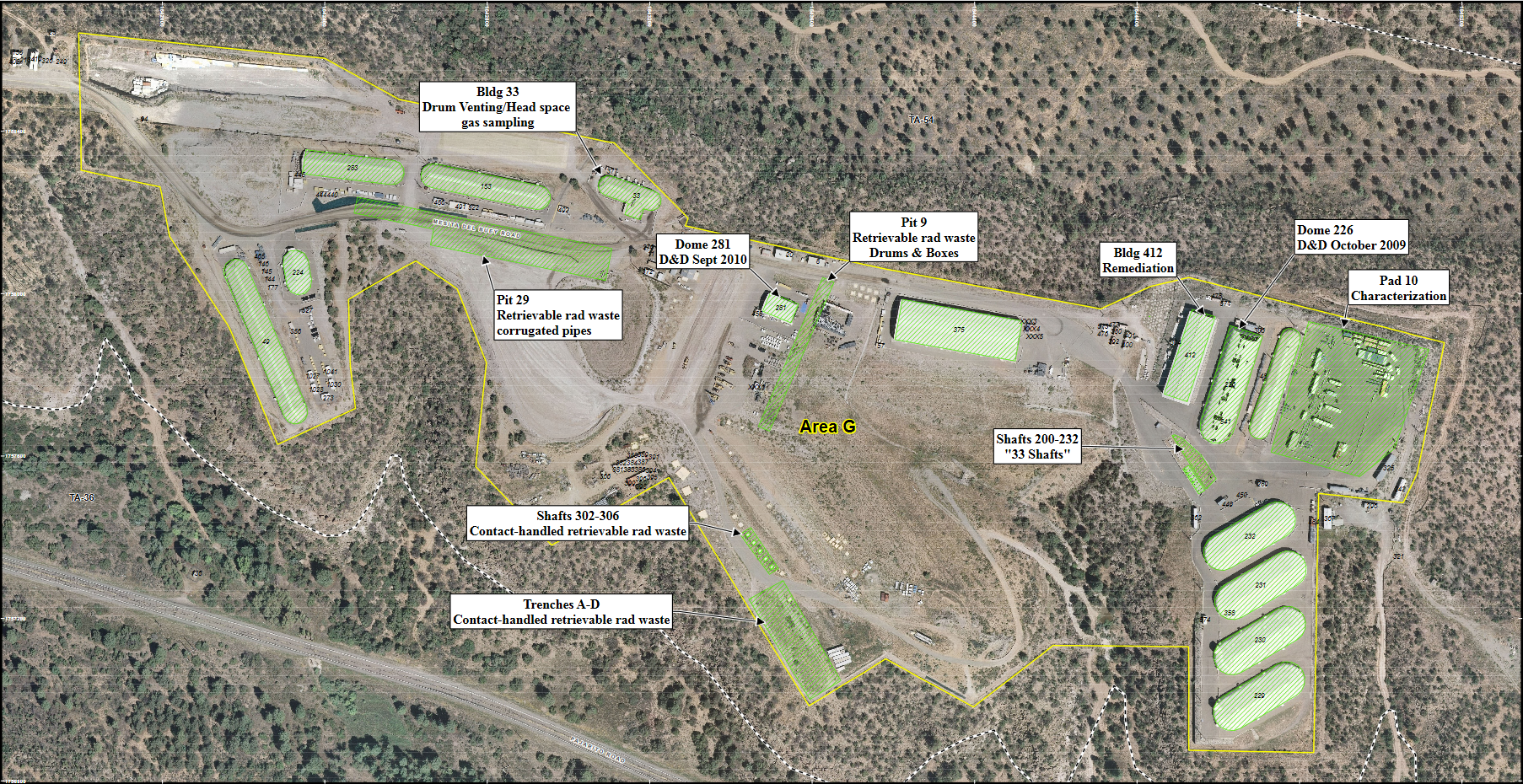
play3The release of several documents over the last couple of weeks reveals that even though the 63-acre Area G dump at Los Alamos National Laboratory (LANL) was supposed to be “cleaned up” by December 31, 2015, the new projected cleanup date to begin work may not be until 2028, at the earliest, 13 years after it was supposed to be finished.  The December 2015 cleanup date was established by the 2005 Compliance Order on Consent, or Consent Order, agreed to by the New Mexico Environment Department and the Department of Energy (DOE) and its contractor, the University of California.  https://www.env.nm.gov/HWB/documents/LANL_10-29-2012_Consent_Order_-_MODIFIED_10-29-2012.pdf

On June 24, 2016, the Department and DOE agreed to a new Consent Order, but this time without the opportunity for the public to request a formal hearing.  https://www.env.nm.gov/HWB/lanlperm.html   In July, Nuclear Watch New Mexico sued the Department, DOE and its contractor over this and other issues.  http://www.nukewatch.org/cleanuplawsuit.html

Technical Area 54, where the dumps at Areas G, H and L are located, first started receiving hazardous, toxic and radioactive waste in the late 1950s, which were disposed of in unlined pits, trenches and shafts in the volcanic tuff.  Some of the trenches are 65 feet deep and the waste is buried in layers, like a cake.

Pollutants have been found in the ground water below Areas G and L, which threaten the drinking water for Los Alamos County and Santa Fe.  None of the recently released documents explain how the regional drinking water aquifer will be protected while there are more cleanup delays.

On October 12th, the new DOE Environmental Management Field Office at LANL sent a letter notifying the Department of their withdrawal of the cleanup reports for Areas G, H, and L, which were submitted in 2011, stating that based on its life-cycle cost estimate and the need for the dumps to be available, it will submit new cleanup reports at some undetermined date.  doe-em-withdrawal-3-cleanup-plans-areas-g-h-l-10-12-16

Further, the new DOE Request for Proposal for cleanup of the LANL legacy waste reveals that preparing the cleanup documents will begin in 2026, with work possibly beginning in 2028.  https://www.emcbc.doe.gov/SEB/LLCC/rfppage.php, see September 21, 2016 cover letter, and at the bottom of the page, Amendment 001, Section L Red-line at p. 69.  It is anticipated that regardless of when the documents are released, the public will request a formal hearing.

Scott Kovac, of Nuclear Watch New Mexico, said, “It’s a disservice to make Northern New Mexico wait 13 more years for a “cleanup” that will probably want to leave most of the waste in the ground under a soil cap. The only way to completely protect the regional aquifer is to characterize the waste and remove the sources of the contamination. Then we’ll know what needs to be done. We expect more out of the world’s smartest scientists than a plan to cap the dumps.”

To learn about DOE’s cleanup plans for LANL legacy waste in the coming year, as well the completed and current work, please plan to attend the public meeting hosted by the New Mexico Environment Department and DOE’s Environmental Management at Los Alamos Field Office on Wednesday, November 16, 2016 from 5 pm at Fuller Lodge, in downtown Los Alamos.  https://www.env.nm.gov/wp-content/uploads/2016/01/161103PR-COAnnualPlanningPubMtg161116.pdf


Triassic Park Administrative Record in Disarray; Presents Challenges to Public to Provide Informed Comments about Hazardous Waste Permit

messydesk721

play3Providing informed public comments about a proposed hazardous waste disposal site is a daunting task, especially if the supporting paper and electronic documents are in disarray.  This is the case for the draft permit for Triassic Park, a proposed landfill for hazardous waste located east of Roswell, New Mexico.  Supporting documents in the administrative record were unstapled to be scanned for internet posting, but were not re-stapled together and are sitting loose in boxes.  The on-line record has almost 200 out-of-order items, missing documents, and nothing has been updated in months.

Triassic Park is located in rural, southeastern New Mexico, near the small communities of Dexter, Lake Arthur and Hagerman, where there are high levels of poverty and a large number of Spanish-speaking residents.  To learn more about Triassic Park and the history of discrimination by the New Mexico Environment Department, please go to http://sacredtrustnm.org/nmed-the-triassic-park-permit-just-as-bad-as-the-first-time/

Gandy Marley, Inc., the owners of Triassic Park, applied for a hazardous waste disposal permit, and following a public hearing in 2002, the New Mexico Environment Department issued the permit.  Now Gandy Marley is asking the Department to renew the 10-year permit.  https://www.env.nm.gov/HWB/tpperm.html

During the first public hearing, issues of discrimination were raised because basic information about the site was not made available in Spanish for the communities surrounding Triassic Park and Spanish-speakers who tried to participate were sometimes insulted.

Those concerns remain as today’s permitting process is repeating some of the discriminatory practices that were complained about 15 years ago.  http://nuclearactive.org/card-civil-rights-complaint-to-epa-about-triassic-park-thirteen-years-and-no-resolution/  The Department had to be prodded into providing a fact sheet in Spanish and did not provide printed information near the site until the comment period was almost over. Even now those documents are in their Roswell office, which is only open during working hours.  Further, the Department insists that everyone can easily use the on-line record even when the communities are rural, poor and have large numbers of Spanish speakers.  Recent research about internet use reveals that these communities are more likely to have lower on-line access and fewer on-line research skills, thus increasing participation challenges.  For these reasons, the Department must provide a paper copy near the dump in a place with longer hours.

Communities for Environmental Justice and Citizens for Alternatives to Radioactive Dumping are committed to raising these issues.  The groups request that you to sign their Change.org petition asking the Department to extend the public comment period for 60 days after the administrative record is put back in order and a paper copy is accessible in a public building with evening and weekend hours near the dump.  Please sign the petition at https://www.change.org/p/nmed-provide-printed-information-for-those-affected-by-triassic-park-hazardous-waste-dump?recruiter=613284821&utm_source=share_petition&utm_medium=email&utm_campaign=share_email_responsivebasin3

Public comments are currently due to the Environment Department on Friday, November 18th.  All comments should be directed by mail or email to:
Dave Cobrain, Program Manager
Hazardous Waste Bureau – New Mexico Environment Department
2905 Rodeo Park Drive East, Building 1
Santa Fe NM 87505-6303
Email: dave.cobrain@state.nm.us

In your comment you must state that they are:
Triassic Park Draft Permit Public Comments

Sample public comments that you can use are available at http://sacredtrustnm.org/nmed-the-triassic-park-permit-just-as-bad-as-the-first-time/

Or use these talking points/requests to create your own:

  • A paper copy of the entire Administrative Record, including the draft permit, English and Spanish Fact Sheets, the 2002 hearing record and the hearing transcript, and associated documents must be placed in a library near the site that is open evenings and weekends
  • The online Administrative Record must be corrected, be made complete, be updated in a timely manner, and be made more user-friendly
  • The comment period must be extended for an additional 60 days, beginning after these requests have been fulfilled
 

DOE Proposes WIPP Surface Storage Despite Four or More Roof Falls

wippceilingcollapse

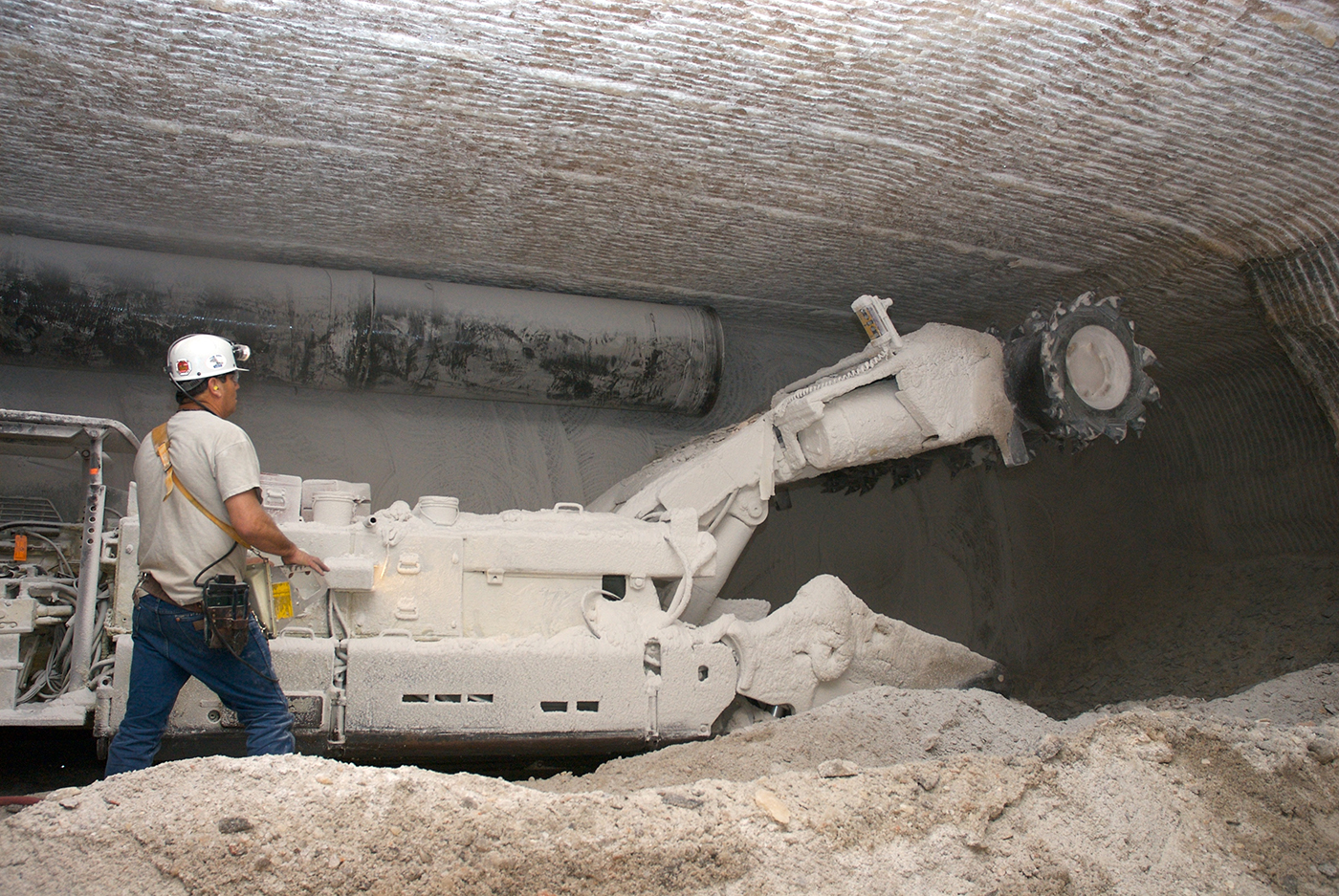
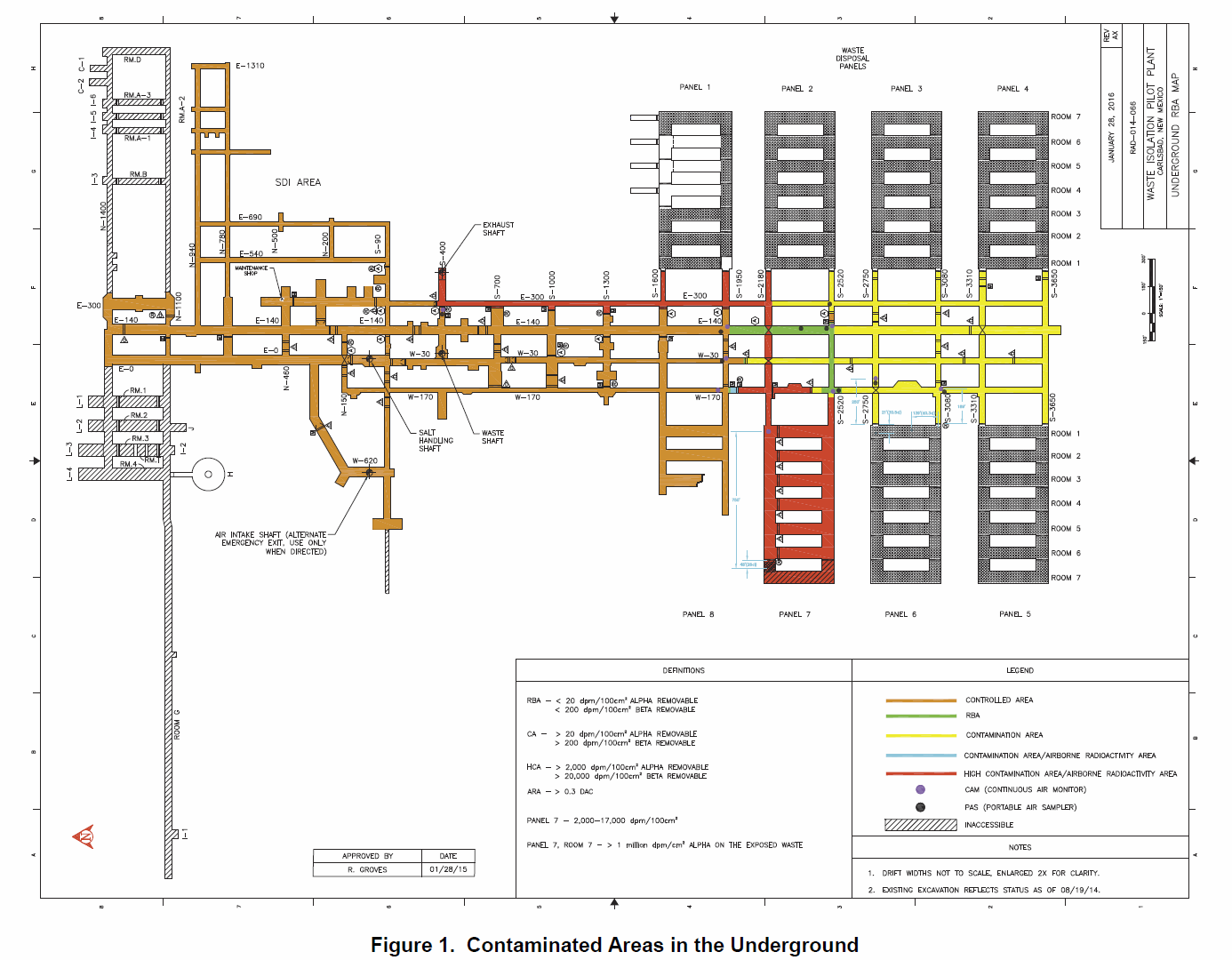
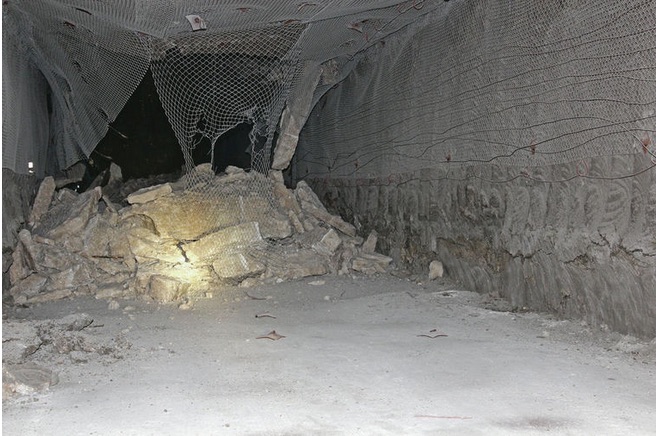
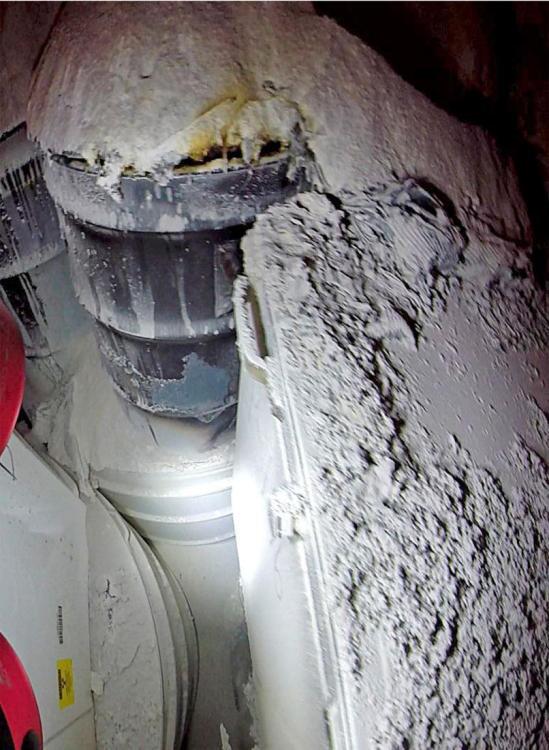
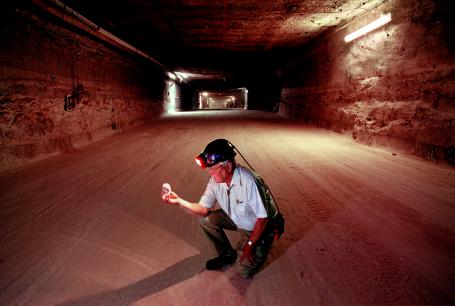
play3The Department of Energy (DOE) has submitted a proposal to the New Mexico Environment Department to construct and operate a 65,280 cubic foot waste container storage unit on the surface of the Waste Isolation Pilot Plant (WIPP) facility.  http://www.wipp.energy.gov/rcradox/rfc/com_menu.htm  WIPP is a dump for plutonium-contaminated waste generated by the research and manufacture of U.S. nuclear weapons.  The rooms where waste is emplaced are located 2,150 feet below the surface in the salt beds of southeast New Mexico.  The site has been closed since February 2014 because one or more drums of waste shipped from Los Alamos National Laboratory exploded and contaminated large portions of the mine.  DOE hopes to reopen before the end of this year for “limited operations,” despite the contamination and the inadequate ventilation. Another result of those unsatisfactory conditions is that the mine cannot be adequately maintained, and DOE has reported slabs of salt weighing several tons falling from the mine ceiling in at least four areas.

Given those problems, activists are concerned that a premature opening threatens worker health and safety and is likely to result in additional accidents. They believe that action should focus on closing up unsafe areas of the underground, rather than trying to re-open the site or expand its mission. In the past when DOE has been focused on expanding the mission and hurrying, bad things happen.

DOE’s new proposal is to store ten times the amount of radioactive and hazardous waste on the surface than has been allowed previously. The proposed facility, called a Concrete Overpack Container Storage Unit, would result in storing waste for a year, and in handling waste containers multiple times, increasing the likelihood of accidents and worker exposure.

The building is not needed.  In fact, several years ago DOE requested and received permission to have “surge” storage in the Waste Handling Building and in the parking area. http://www.wipp.energy.gov/library/Information_Repository_A/Searchable_Permit_10-2016.pdf see Sections 3.1.1.3 and 3.1.2.4.  But that “surge” storage has never been needed.  Because by law, WIPP is only for underground disposal, the new surface facility may not be legal.bo1cxqfigaeobbz

Joni Arends, of CCNS, urges DOE to withdraw its proposal for a surface storage facility because it is not needed now or in the future; because WIPP may never reopen; and because it is not legal.  To support the withdrawal of the proposal, please submit your comment to the Environment Department before the December 5th deadline. Sample comment letter –   wipp_surface_storage_comment_102016   Simply copy the text from the PDF and paste into an email to the indicated recipient, changing the highlighted portions to your relevant data (current date plus your name and email address)

Instead of spending the public and state officials time and effort on the surface storage facility, attention should be on how to close contaminated areas of the facility. A permit modification with public comment is required for such a closure.


Public Comments about Proposed Changes to New Mexico’s Water Protection Regulations Due Monday, October 17th – Sample Comments Available for Your Use

635894931041596183-fnp0128dephere2

In September, the New Mexico Environment Department released its second attempt to eviscerate the public participation requirements provided in the New Mexico Ground and Surface Water Protection Regulations.  https://www.env.nm.gov/gwb/  Comments are due to the Department on Monday, October 17th by 5 pm Mountain Daylight Time.  Please submit them electronically to NMENV.GWQBrulerev@state.nm.us  Sample public comments are available for your use at CCNS’s website at samplecommentltrnmwaterstds101716rev

Reducing public participation is clearly the goal of the Martinez administration.  One glaring example was revealed in a November 2015 Department document entitled, “Hit [L]ist for Regulation Changes,” which was released to the New Mexico Environmental Law Center in response to their Inspection of Public Record Request.  http://nuclearactive.org/wp-content/uploads/2016/08/GWQB-HIT-LIST-FOR-REGULATION-CHANGES.pdf  Number One on the Hit List is to “figure how to further reduce [public notice and participation requirement] efforts.”

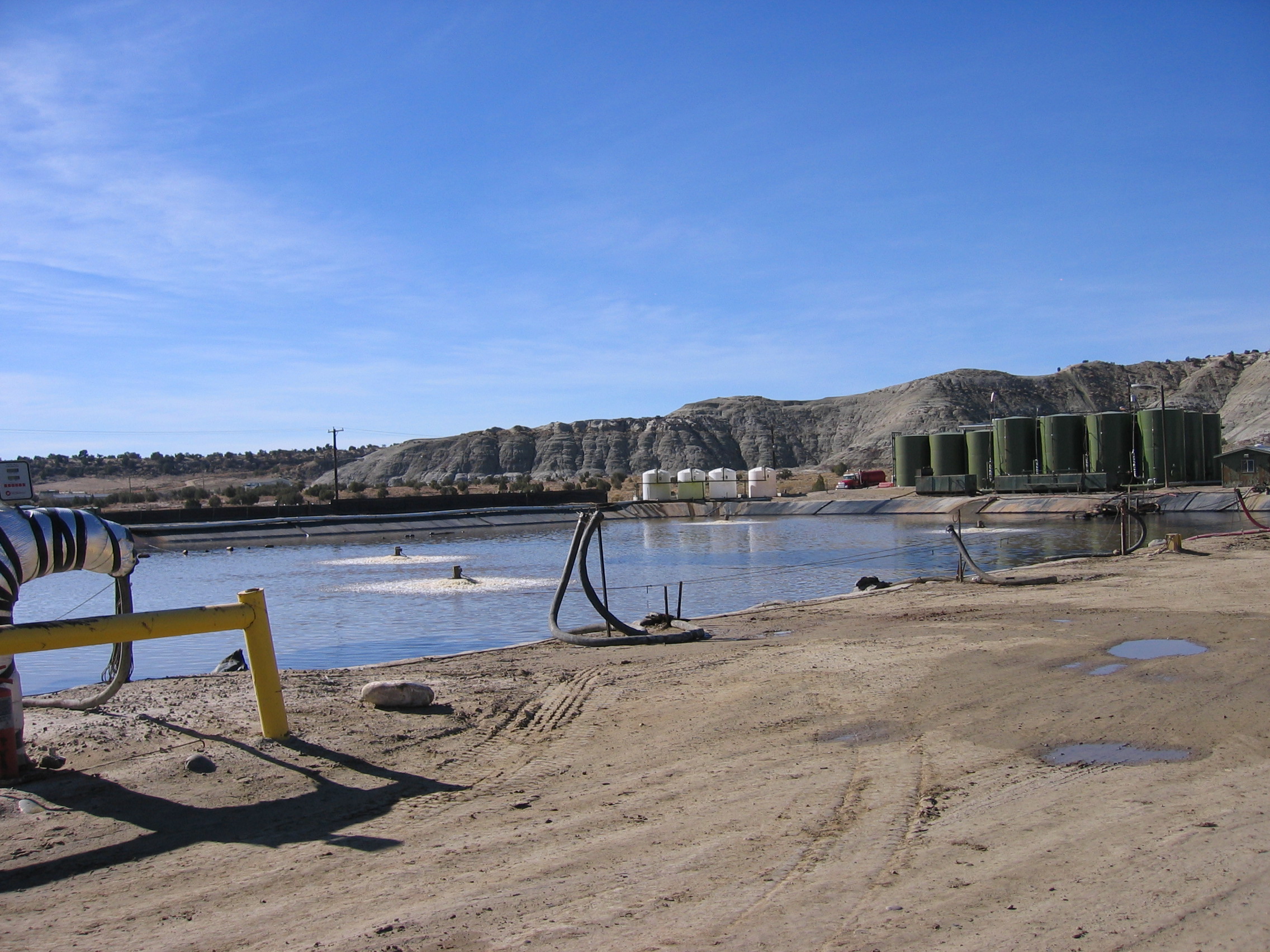
If a person wants to discharge a pollutant into water, the New Mexico Water Quality Act requires that they apply for a discharge permit.  Recent requests for renewal of the five-year permits include the discharge of up to 7.5 million gallons per day of brine tailing water from a potash mine to a brine management area [Mosaic Potash Carlsbad, Inc., Discharge Permit No. 1399, Public Notice 1, published on August 26, 2016 at https://www.env.nm.gov/gwb/NMED-GWQB-PublicNotice.htm ] and 4.6 million gallons per day of treated water to the Red River [Chevron Questa Mine, Discharge Permit No. 1539, Public Notice 2, published on September 8, 2016 at https://www.env.nm.gov/gwb/NMED-GWQB-PublicNotice.htm ].  Requests for new permits or renewal of existing permits require public notice, opportunities for public review and comment of the draft permit, and an opportunity to request a public hearing.

In several cases, the Department is proposing to exceed its authority granted by the New Mexico Water Quality Act and the Water Quality Control Commission regulations.  For example, despite the fact that the New Mexico Water Quality Act limits the Department to renewal or modification of a permit, the Department is proposing to “amend” a discharge permit with no requirements for public notice and participation.  Proposed 20.6.2.7.D(4) NMAC.  The Department also is proposing to allow a polluter to discharge a new pollutant without providing public notice and opportunities for participation.  Proposed 20.6.2.7.D(4)(d) NMAC.

Further, the Department is proposing to double the concentration of chromium that may be released into the environment from 0.05 milligrams per liter (mg/L) to 0.1 mg/L.  Proposed 20.6.2.3103.A(6) NMAC.  The federal drinking water standard for chromium is 0.1 mg/L.  The New Mexico Water Quality Act does not preclude New Mexico from having more protective drinking water standards than the federal standards.  The federal standards are a floor, not a ceiling.  The Commission clearly had good reason to set the chromium standards at the more protective 0.05 mg/L.  The Department has not provided any justification for such a significant weakening of this standard.

Toxic chromium, at 24 times the current New Mexico standard, has been found in the regional drinking water aquifer below Los Alamos National Laboratory.  It is migrating towards Pueblo de San Ildefonso.  Doubling the standard would mean less cleanup of the regional drinking water aquifer.10-common-diseases-caused-by-polluted-water

In order to change the regulations, the New Mexico Water Quality Control Commission must hold a public hearing, which is planned for next spring.

On the positive site, the Department is proposing to increase permitting fees for many dischargers.  The current fees for state discharge permit applications are outrageous low and do not begin to cover the cost to the state’s taxpayers of issuing, monitoring and enforcing state discharge permits.  The proposed fee increases are long overdue.  If approved by the Commission, an annual review would be conducted and the fees adjusted to the consumer price index.  Proposed 20.6.2.3114 NMAC.

The Department is also proposing to strengthen many state standards to the more protective federal standards.  The Department should be encouraged to maintain these proposed changes in the final proposal.


Twentieth Annual Gathering for Mother Earth Set for October 15th and 16th in Pojoaque

earthday

play3The twentieth annual Gathering for Mother Earth, sponsored by Tewa Women United and the newly organized Mother Earth Ecological Wellness Collaborative, is scheduled for Saturday and Sunday, October 15th and 16th, in Pojoaque. The weekend event, which is open to people of all cultures and ages, seeks to honor Mother Earth for her Lifegivingness.  The Gathering is a time for community unity to protect the most vulnerable people, including pregnant women, infants and farmers, especially those living around production sites for nuclear weapons.  http://www.tewawomenunited.org

The Mother Earth Ecological Wellness Collaborative is comprised of Tewa Women United, Traditional Native American Farmers Association, New Mexico Acequia Association, Red Willow Center, Four Bridges Traveling Permaculture Institute, Local Collaborative 18, and Honor Our Pueblo Existence.

Both days will begin with a sunrise service at 6:30 am around the sacred fire circle.  Saturday’s program will begin around 9 am and include mini-gathering circles and workshops with an emphasis on farming, seeds, medicines and nutrition.  Local Native dance groups and others will perform, including the Black Eagle Drummers, Indigie Femme and others proclaiming “Viva La Aqua!”  At 10 am, Tewa Women United’s Indigenous Women’s Health Program will bless mothers and babies.

A delicious communal lunch will be served with collaboration, love and highlighted by the youthful pride of the Agro Kids.  Talking circles, raffle prizes, solar cooking, arts and crafts, food and more will fill out the weekend’s events.  Afternoon mini-gathering circles and workshops will allow participants to spend more intimate time with wisdom keepers and inspirational singers and drummers.

The Sunday, October 16th, sunrise service will include a blessing of the runners participating in the Relay Run for Healing Mother Earth.  At 7:30 am, the runners will begin at Tsankawi, the ancestral Pueblo homelands near Los Alamos, and end at the Gathering site.  To participate in the run, pre-registration is required at http://www.tewawomenunited.org

The Gathering will close around 1 pm on Sunday afternoon. 148514_10151289613026368_410942746_n

Kathy Sanchez, of Tewa Women United and an organizer of the Gathering, said, “Let us all celebrate cultural ways of sharing love and gratitude for our Earth Mother.  Each person who plants and eats food grown locally is stopping the violence model of domination and destruction on many levels and choosing to promote self-care, health and well being.  When youth connect with nature, they learn valuable life-skills that relate to the core values of loving, caring and nurturing in a healthy way for safety, securing good thoughts within mind, heart and spirit.”

The Gathering will be held at Pojoaque Ben’s Gathering Grounds on Highway 502, 1.8 miles west of the interchange with Highways 285 and 84, near the Pojoaque High School.  Watch for the signs.  Please also bring your own dishes and water bottle.  To volunteer, please call (505) 747-3259 or visit http://www.tewawomenunited.org

To view the event flyer click here….gathering_for_mother-earth_october2016


Kirtland Overstated Technical Conclusions about Jet Fuel Plume

fuelspill_wikicommons

play3Kirtland Air Force Base recently admitted to Citizen Action New Mexico that it overstated “technical conclusions” about the forward movement of the jet fuel plume having been halted toward Albuquerque’s drinking water wells.  Citizen Action demanded to see the technical data that supported such a conclusion, but the Air Force and the New Mexico Environment Department could not provide it.  http://www.radfreenm.org/

Citizen Action New Mexico, a non-profit organization based in Albuquerque, has led the effort to address the toxic plume of ethylene dibromide (EDB) from the spill that has moved in the aquifer to less than a mile from Albuquerque’s most productive drinking water wells, located in the Ridge Crest neighborhood.

An estimated 24,000,000 gallons of aviation gas and jet fuel spilled for decades from the pipeline at Kirtland’s bulk fuel facility.  EDB was used as an anti-knock chemical in aviation gasoline.  It is very mobile and travels in groundwater.  EDB is one of the most toxic and carcinogenic chemicals on the planet in only parts per trillion. A half-teaspoon of EDB can contaminate 13,000,000 gallons of water.  A half-teaspoon of EDB was in every one of the millions of gallons of spilled aviation gas.  http://www.envirotools.msu.edu/factsheets/contaminants/EDB.shtml

As an interim cleanup measure, Kirtland has been using a pump and treat extraction technology.  From the 106,000,000 gallons that have been pumped from the aquifer by the three extraction wells, only about 9 teaspoons of EDB has been removed.  Kirtland proposes to install a fourth extraction well this winter, however, where to put the treated water is a problem without an answer.

Kirtland has scheduled a public meeting and workshop in Albuquerque for the jet fuel spill for Veterans’ Day weekend.  The public meeting is currently scheduled for Thursday, November 10th at the African American Performing Arts Center, located at 310 San Pedro Northeast from 5:30 to 8:30 pm.  The workshop is scheduled for Saturday, November 12th at the Christ United Methodist Church, located at 2600 Gibson Southeast from 9 am to 1 pm.  For more information, please go to Kirtland’s project specific website at http://www.kirtlandjetfuelremediation.com/girl_drinking-water-png

Dave McCoy, Executive Director of Citizen Action New Mexico, said, “A petition to create a public Remediation Advisory Board was filed many months ago with Kirtland.  Kirtland officials seem to oppose a public advisory board and the choice of the meeting time at the Veteran’s holiday seems designed to reduce public attendance.  So far the public has been excluded from any ongoing technical meetings and timely information about the jet fuel spill.  Kirtland has rejected calls for independent oversight of the jet fuel spill that were made by the New Mexico legislature in 2014.” https://nmlegis.gov/Legislation/Legislation?Chamber=S&LegType=M&LegNo=42&year=14


Two Saturday, October 1st Peaceful Demonstrations to Support Trinity Downwinders at Entrances to White Sands Missile Range

635952276357292266-trinity2

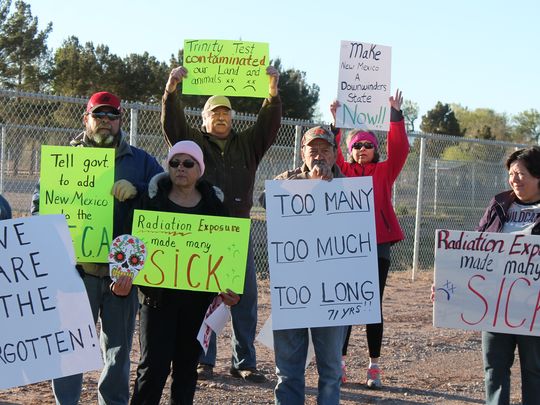
play3The Tularosa Basin Downwinders Consortium is organizing peaceful demonstrations for Saturday, October 1st at two of the White Sands Missile Range entrances to support those who have been negatively affected by radiation exposure from the July 16, 1945 Trinity Atomic Bomb Test.  http://nuclearactive.org/wp-admin/upload.php?item=1315  The White Sands Missile Range holds an open house twice a year for the public to view the site of the Trinity Test.  http://www.wsmr.army.mil/PAO/Trinity/Pages/Home.aspx  The Consortium will be at the Stallion Range Station and the Tularosa Gate.

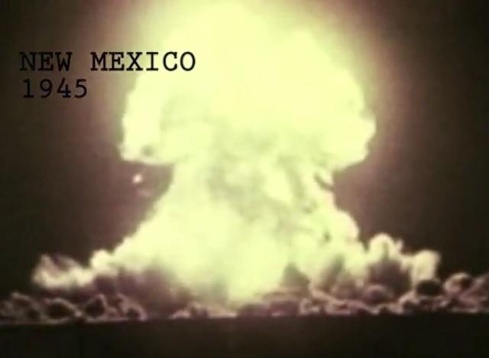
On July 16, 1945, just before dawn, the U.S. government conducted the first test explosion of a nuclear device in the Tularosa Basin in south central New Mexico at the White Sands Army base.  Without warning, the 40,000 people living in the immediate vicinity were engulfed in a radioactive cloud that continued to rain down radioactive particles for days.

After the test, the U.S. Government packed their bags, turned their backs and walked away. For 71 years the U.S. Government has taken no responsibility for the health repercussions to the People.  The cancer rates in the four counties surrounding the Trinity Site are four to eight times higher than the national rates.

The Consortium has been working for 11 years to expand the federal Radiation Exposure Compensation Act (RECA) to provide medical care and compensation to the People of New Mexico, and particularly to the Trinity Downwinders.  The fund has paid out over $2 billion in claims thus far to the downwinders of the Nevada Test Site, and more importantly, has provided lifetime health care coverage, with no co-payments, no deductibles and no premiums to those affected.  Proposed RECA amendments include the Trinity Downwinders.  See Senate Bill 331 https://www.congress.gov/bill/114th-congress/senate-bill/331?q={%22search%22%3A[%22\%22s331\%22%22]}&resultIndex=1 and House Bill 994 at https://www.congress.gov/bill/114th-congress/house-bill/994?q={%22search%22%3A[%22\%22hr994\%22%22]}&resultIndex=1

Beginning at 7:30 am on Saturday, October 1st, Consortium members will gather at the Tularosa Gate in Tularosa. 1-jpg

Beginning at 9 am, Consortium members will gather at the Stallion Range Station entrance, located on Hwy. 380 just east of San Antonio.

You are cordially invited to join the Consortium in the peaceful demonstrations.  Please bring your own water, chair and poster. Please see this flyer for more details – october-1-poster-1

Tina Cordova, of the Tularosa Basin Downwinders Consortium, said, “As we once again demonstrate at the Trinity Site open house we reflect on all that we’ve lost to the test that was conducted there.  We continue to count our loved ones as we place them in the ground and wonder when is our government going to come back and right this horrific wrong.  We intend to hold the next U.S. Congress that will be elected shortly responsible for this injustice.”

For more information, please contact Tina Cordova at tcordova@queston.net   or call her at 505-897-6787.  http://www.trinitydownwinders.com/


New Mexico Approves Land Purchase for Proposed High-Level Radioactive Waste Storage Facility

4-hi-storm-umax

play3The New Mexico State Board of Finance approved the sale of 1,000 acres by the Eddy Lea Energy Alliance (ELEA) to Holtec International for a possible consolidated storage facility for much of the nation’s commercial spent high-level radioactive waste fuel generated in nuclear power plants.  The Board of Finance approval to sell the site to Holtec by July 31, 2017 is contingent upon an appraisal and other matters.  See Agenda Item 14, p. 2 at http://www.nmdfa.state.nm.us/uploads/files/Board%20of%20Finance/2016/July/7_19_16%20Actions%20Corrected.pdf

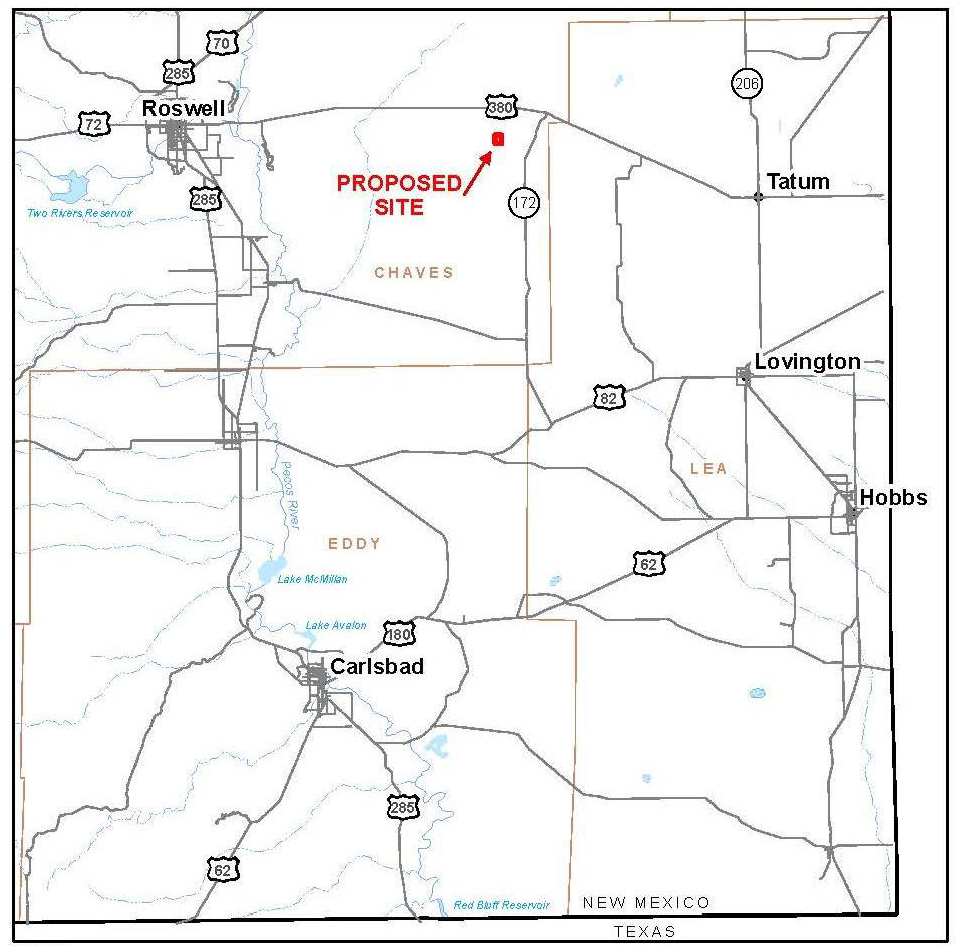
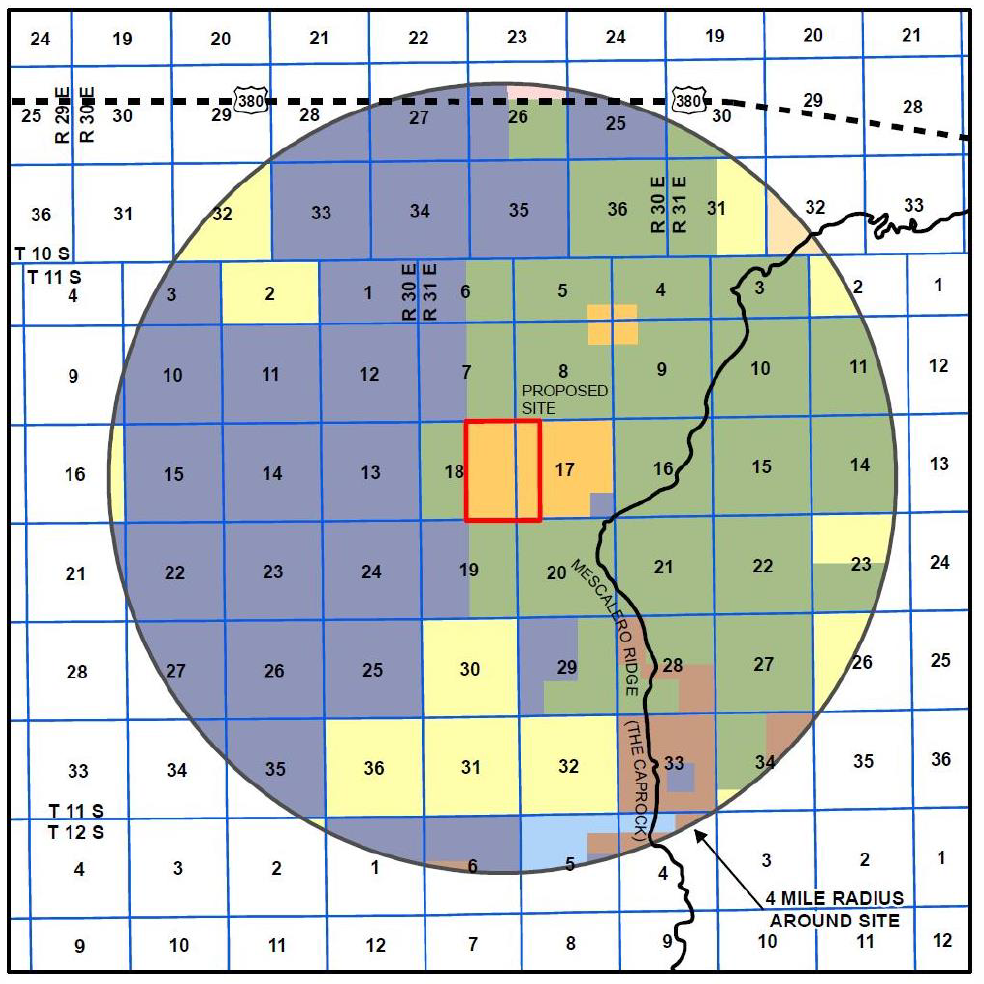
The site is located in Lea County, midway between Carlsbad and Hobbs, on Highway 62.  The site is now owned by the Alliance, a limited liability corporation composed of the Lea County Commission, Hobbs City Council, Eddy County Commission, and Carlsbad City Council.  In 2006, the Alliance proposed the site for nuclear fuel reprocessing, which never occurred because it is not economically viable and creates large amounts of waste.  http://www.world-nuclear-news.org/WR-Plans-announced-for-New-Mexico-used-fuel-store-3004154.html

In a September 13, 2016 release, Holtec stated, “The Holtec-ELEA Team has tremendous State and local support and consent.”  http://www.holtecinternational.com/2016/09/strong-support-for-the-hi-store-consolidated-interim-storage-facility-in-new-mexico/  The company has delayed the submission of its license application to the Nuclear Regulatory Commission until sometime in 2017.  The details of its plans will not be known until the application is made public.

Nevertheless, bringing waste to the privately owned site cannot happen without Congress substantially changing the 35-year-old Nuclear Waste Policy Act and providing billions of dollars to pay for the site’s operations and transportation of thousands of railcar loads of waste from across the nation.

In May 2015, when the Alliance and Holtec announced that they planned to build the storage facility, New Mexico U.S. Senators Tom Udall and Martin Heinrich opposed the proposal.  Senator Udall stated, “Several aspects of this proposal concern me.  No matter where it’s built, I will not support an interim disposal site without a plan for permanent disposal [of the waste].”  http://www.tomudall.senate.gov/?p=press_release&id=1947

Senator Heinrich agreed and said, “But we can’t put the cart before the horse.”  http://www.tomudall.senate.gov/?p=press_release&id=1947 photo-2-1000x563

There is strong local and statewide opposition to the plan. Noel Marquez, of Artesia, expressed his concern, “As a citizen of Eddy County who does Not Consent to bringing the waste to our region, I am extremely disappointed to see my community expressing No Consent rendered invisible and our beautiful lands proposed as a permanent Wasteland for the Nuclear Industry.”

A resident of Hobbs, Mena Ramos, said, “I’m not well informed on that but it is scary to know that that is coming to our town.”

Don Hancock, of Southwest Research and Information Center in Albuquerque, stated, “The large majority of New Mexicans, like people in other states, do not support consolidated storage. The nuclear utilities must provide safe storage for their waste at their sites.”  http://www.sric.org/


NMED Holding Listening Sessions in Las Cruces and Albuquerque about Proposed Changes to State’s Water Protection Regulations

water-release-of-industrial-waste-1

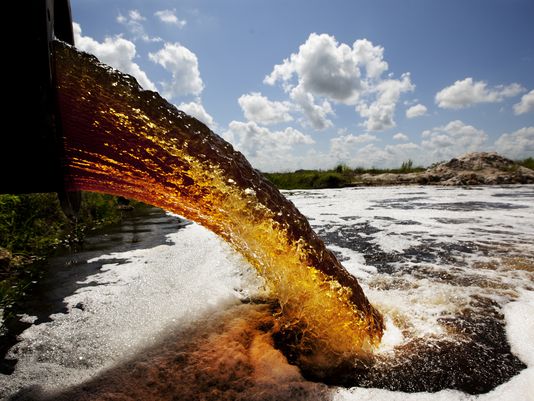
play3The New Mexico Environment Department is attempting to eviscerate the public participation requirements provided in the New Mexico Ground and Surface Water Protection Regulations.  Reducing public participation is clearly the goal of the Martinez administration.  One glaring example is found in a document entitled, “Hit [L]ist for Regulation Changes,” which was released by the Department following an Inspection of Public Record Request made by the New Mexico Environmental Law Center.  Number One on the Hit List, created last November by the Department’s Ground Water Quality Bureau, is to “figure how to further reduce [public notice and participation requirement] efforts.”  GWQB HIT LIST FOR REGULATION CHANGES

This summer the Department released its initial draft changes to the regulations for public review and comment.  In August, CCNS, other non-governmental organizations and individuals submitted extensive comments to the Department.  20160817-ccns-20-6-2-nmac-comments

This week the Department announced that it would host two listening sessions, one in Las Cruces and one in Albuquerque, about their proposed revisions.  The Department is working to host additional sessions in Farmington and Roswell.  https://www.env.nm.gov/gwb/

The New Mexico Water Quality Act requires that if a person or entity wants to discharge a pollutant into water, they are required to obtain a discharge permit from the Department.  The regulatory process requires opportunities for public review and comment of the draft permit and an opportunity to request a public hearing.  Once issued, permits may be modified and are renewed every five years, both of which require additional public participation.

In order to change the regulations, the Department is required by state law to present the proposed revisions to the New Mexico Water Quality Control Commission.  Inevitably, there will be a public hearing before the Commission about the proposed changes next spring.

In the next week or two, the Department plans to post revised regulations on its website and to open a public comment period prior to submitting the final proposed changes to the Water Quality Control Commission.

The first listening session is scheduled for Tuesday, September 20th in Las Cruces at the New Mexico State University, Environmental Health and Safety Office, the Academic Research C, Room 110, located at 1620 Standley Drive, from 5:30 to 7:30 pm.

The second listening session is scheduled for Thursday, September 22nd in Albuquerque, at the Erna Fergusson Library meeting room, located at 3700 San Mateo Northeast, again from 5:30 to 7:30 pm.

Joni Arends, of CCNS, said, “If you are concerned about water, please attend one or more of the Department’s listening sessions and let your voice be heard.”

If you would like to receive updates about the Department’s process, please contact Steve Huddleson, manager of the Pollution Prevention Section of the Ground Water Quality Bureau, at (505) 827- 2936 or Steven.Huddleson@state.nm.us.  In the alternative, you may sign up to received “General News” from the Ground Water Quality Bureau at https://www.env.nm.gov/gwb/#GWQBnews (bottom of page).


N.M. Nuclear Safety Group Blasts Results of Government Reports

N M Nuclear Safety Group Blasts Results of Government Reports / Public News Service

August 29. 2016

Nuclear safety advocates are speaking out after a series of audit reports show cost overruns and delays at New Mexico nuclear labs. (Geralt/Pixabay)

SANTA FE, N.M. — A local nuclear safety group is speaking out after four government reports released in August on the country’s nuclear stockpile show management issues, delays and cost overruns at eight labs across the country, including two in New Mexico.

The audit reports from the Government Accountability Office and the Department of Energy’s Inspector General were part of a program which will spend a trillion dollars over the next 30 years to modernize the nation’s nuclear weapons.

Joni Arends, executive director of Concerned Citizens for Nuclear Safety in Santa Fe, questioned the need for such a massive investment in nuclear technology.

“The Department of Energy and its contractors want to move forward with programs that will provide profit to the private corporations that run the Department of Energy sites such as Los Alamos National Laboratory or Lockheed Martin at Sandia National Laboratory,” Arends said.

According to the Department of Energy, the upgrades are necessary to make the weapons more precise at varying altitudes.

But there is a movement at the United Nations to ban nuclear weapons, Arends said, and the money would be much better spent elsewhere.

“The Department of Energy should be using this money to clean up these dumps,” she said, “to store the waste in buildings where it can be monitored rather than having it disposed in unlined dumps threatening our water supplies in New Mexico.”

Arends is spearheading a campaign encouraging voters to write to their representatives and ask them to put a halt to these projects until management problems are corrected.

Suzanne Potter, Public News Service – NM