New Article about “Participatory Democracy in Action” Describes WIPP Permit Negotiations

 In an essay for NYU’s Democracy Project, David F. Levi, a former federal judge and director emeritus of the Bolch Judicial Institute at Duke Law, reflected on the negotiations he facilitated in New Mexico about the renewal of the hazardous waste permit for the Waste Isolation Pilot Plant (WIPP), a deep geologic repository for plutonium-contaminated waste generated in the fabrication of nuclear weapons. Judge Levi’s essay is entitled “Participatory Democracy in Action.” He wrote:
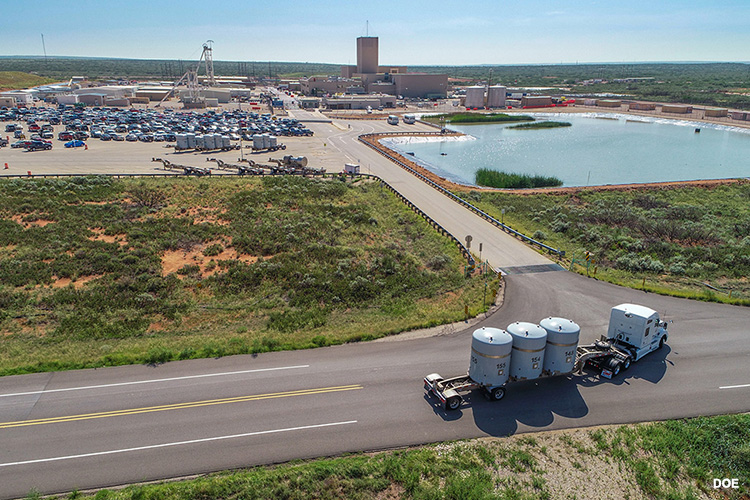 “A couple of years ago, I was asked to mediate a dispute between the U.S. Department of Energy (DOE) and the New Mexico Environment Department (NMED) concerning the renewal of a required state permit for DOE’s Waste Isolation Pilot Plant (WIPP), the nation’s only deep underground nuclear waste storage facility, located outside of Carlsbad, New Mexico. I thought I could help the two government entities but quickly came to realize that under the mediation procedures followed by New Mexico, the mediation would also involve citizen groups whose ultimate concurrence was essential to any complete resolution. This was entirely new to me.
“In this case, there were seven such citizen groups entitled to participate and representing a variety of points of view. There was one group representing some of the government and business leaders of the town of Carlsbad who favored permit renewal on terms ensuring the continued long-term operation of WIPP. There were six groups expressing a variety of concerns about nuclear waste coming to New Mexico. They sought a more restrictive permit.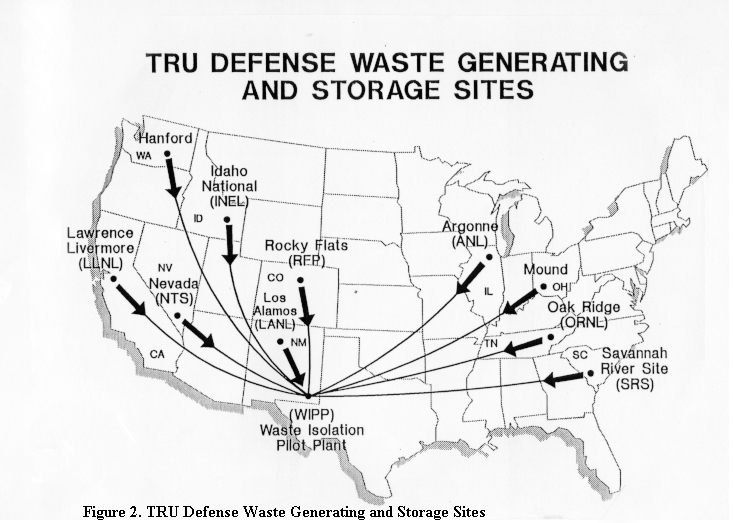
“To my astonishment, over the course of four full days, we worked through the multitude of issues and came to complete agreement. Something magical had happened. Thanks to the goodwill of the DOE and its contractor, the remarkable daily attendance and attentiveness of the NMED Secretary and the measured and well-informed way in which the various citizen groups made their points, we were able to find consensus and craft permit language that was acceptable to everyone.
“For me, as a former judge and mediator, the experience was thrilling. It was an experience of participatory democracy in action that made me proud of our fellow citizens and our government. Three aspects of the experience stand out. First, everyone in the room had taken responsibility for the way in which our nation’s only deep underground nuclear storage facility would be operated for the next 10 years. The citizen participants were not just making suggestions; they were assuming many of the attributes of decision makers. Second, all participants were advocating, compromising, and collaborating on behalf of what they saw as the public interest. These are the essential skills of democracy—the civic virtues so central to the Founders’ vision of what would make democracy work in America—and they require practice. Finally, over four days around a table, the citizens were able to take the measure of the DOE and NMED representatives. They came to realize, as I did, that these public servants, as well as the DOE contractor, were very well-informed, experienced, and intentioned. The government representatives had a similar experience of coming to appreciate the citizen questions and points of view. A government that relies on trust needs this kind of interaction to maintain that trust.
“It seems our democracy would be strengthened if we could extend the benefits of this kind of participatory structure to other areas of our legal and regulatory systems.”
“In Democracy in America, Alexis de Tocqueville made some of these points in reference to the jury trial in civil cases. He emphasized the importance of the civil jury trial as a free “public school” [https://contextus.org/Tocqueville,_Democracy_in_America_(1835),_Book_I,_Chapter_XVI_Causes_Mitigating_Tyranny_In_The_United_States_(Part_II).13?ven=Gutenberg&lang=en] 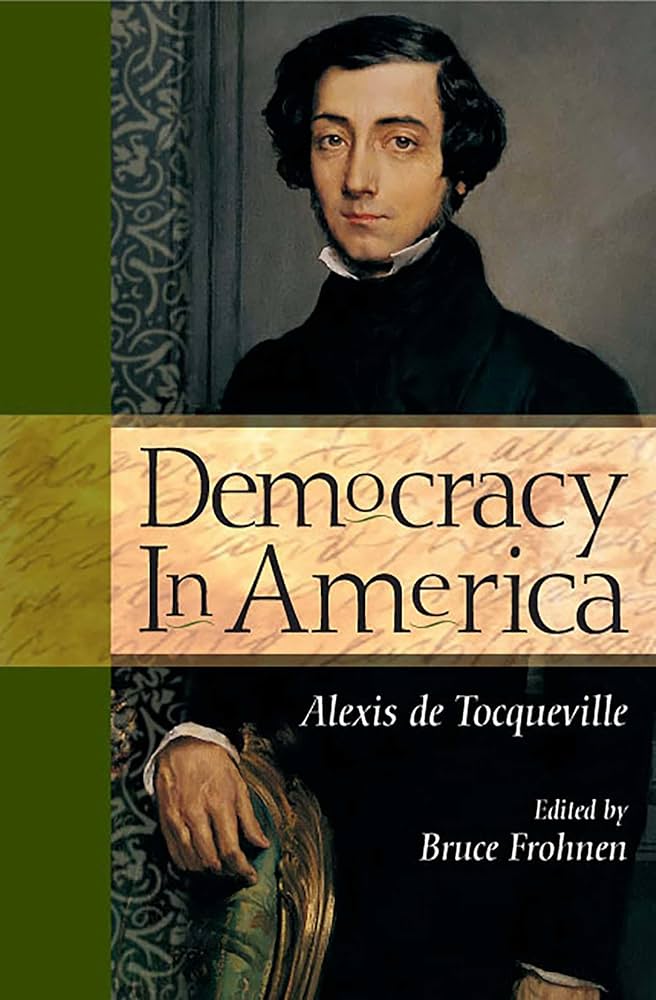 educating jurors in the democratic virtues and skills and teaching them to assume responsibility. In the same vein, every trial judge I know would attest to the importance of the jury experience for building confidence in the courts. After a trial, judges often hear words of gratitude from jurors who are deeply impressed by the legal process and are honored to have participated despite their initial dismay at being called to jury service. Sadly, the number of jury trials has diminished, particularly in federal court. Reversing that trend is a worthy goal, particularly for a branch of government that depends so heavily on public confidence.
“As a final reflection: any persons involved as litigants will have an experience of the legal system. The experience can advance their sense of agency and participation, their ability to disagree civilly, and their trust in the courts. But how can these objectives be obtained when so many Americans cannot afford a lawyer? We can do so much better to provide understanding of and access to our justice system.”
The six New Mexico based non-governmental organizations were Citizens for Alternatives to Radioactive Dumping (CARD), Concerned Citizens for Nuclear Safety (CCNS), Conservation Voters New Mexico (CVNM), Nuclear Watch New Mexico, Southwest Alliance for a Safe Future (SAFE), and Southwest Research and Information Center (SRIC). The individual was Steve Zappe, a grandfather and former NMED WIPP Program Manager.

- Friday, October 10th from noon to 1 pm –
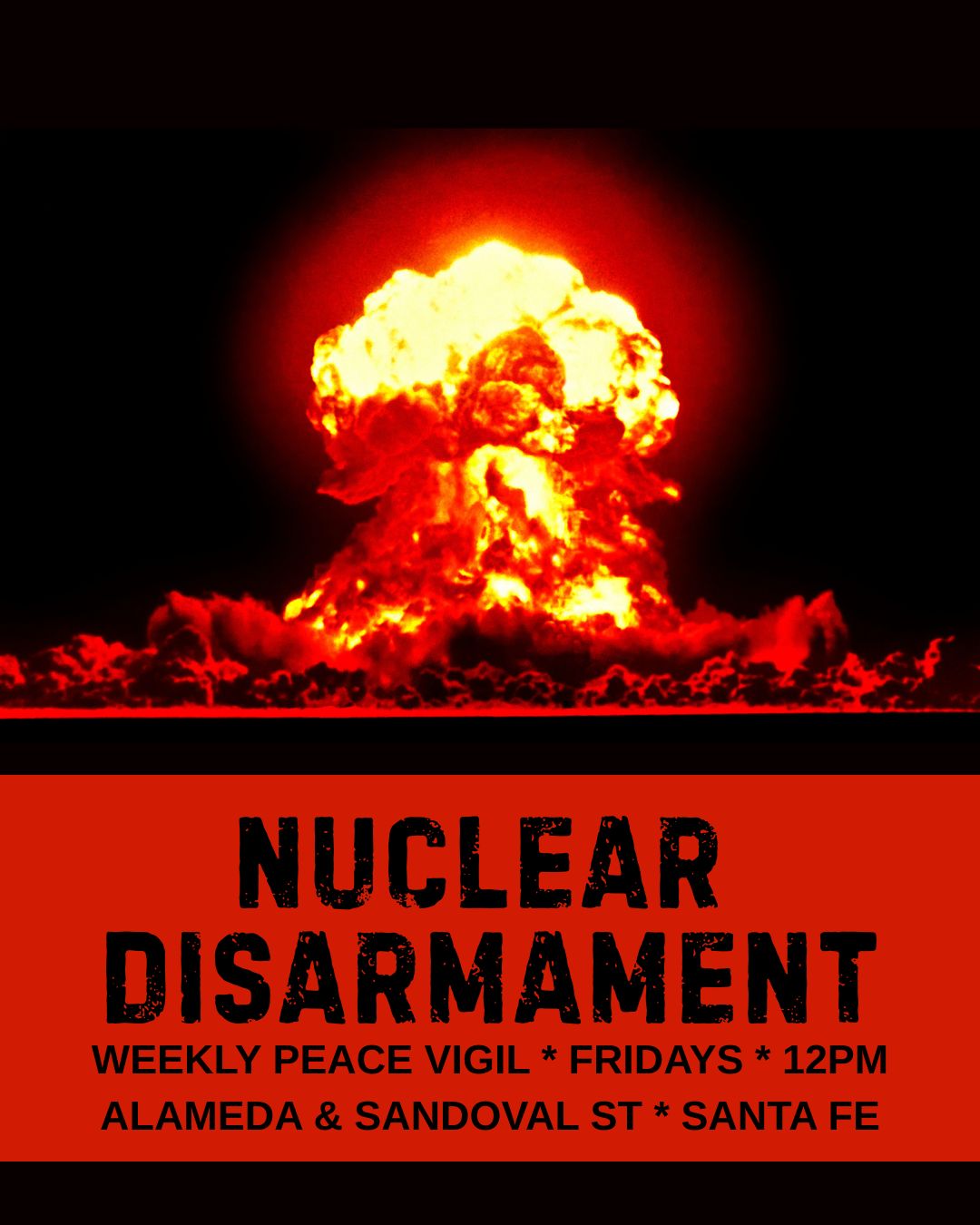
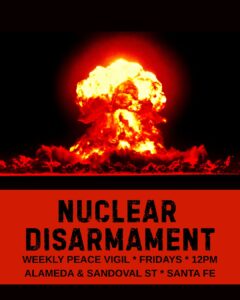 Join us at the intersection of East Alameda and Sandoval for the weekly one-hour peaceful protest for nuclear disarmament and against expanded plutonium pit production at LANL. Join with Veterans for Peace, CCNS, Nuclear Watch NM, Loretto Community, New Mexico Peace Fest, Pax Christi and others. Bring your flags, signs and banners in support of nuclear weapons disarmament and the Treaty on the Prohibition of Nuclear Weapons.
- Tuesday, October 14th –
 Public comment period ends for the NMED’s draft amendments to the NM Standards for Interstate and Intrastate Surface Waters, 20.6.4 New Mexico Administrative Code (NMAC), which is also named the “2026 Triennial Review,” an administrative process run by the NMED Surface Water Quality Bureau (SWQB),
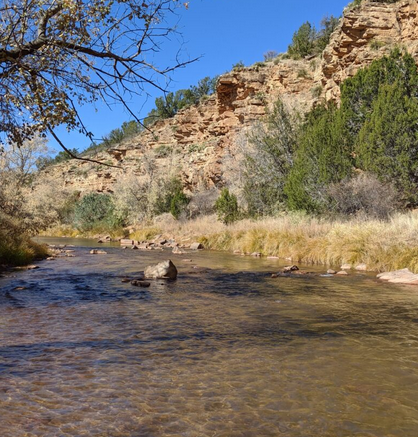
In accordance with Section 303(c)(1) of the CWA and 20.6.4.10 NMAC, States are required to hold public hearings at least once every three years to review, amend, and adopt water quality standards, as applicable. This is referred to as a “Triennial Review.” Pursuant to Section 74-6-4(F) of the WQA, the Water Quality Control Commission (WQCC) delegated NMED the responsibility for organizing and proposing amendments to the state’s surface water quality standards. NMED is initiating the 2026 Triennial Review process by providing NMED’s draft amendments to the public for comment. For more information: https://www.env.nm.gov/surface-water-quality/2026-triennial-review/ You may also sign up for the Surface Water Quality Bureau’s email list at: https://www.env.nm.gov/surface-water-quality and click on the “Subscribe to SWQB News” button on the bottom of the home page.
- Tuesday, October 14th from 7 to 9 pm in Pajarito Room at Fuller Lodge –
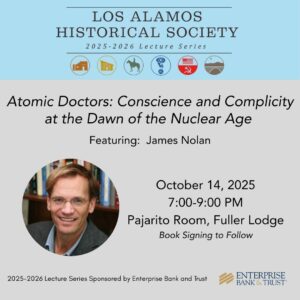 Los Alamos Historical Society hosts Dr. James Nolan, Washington Gladden 1859 Professor of Sociology at Williams College, about his latest book, Atomic Doctors: Conscience and Complicity at the Dawn of the Nuclear Age. Nolan’s grandfather, Dr. James F. Nolan, was an ob-gyn radiologist in Los Alamos during the Manhattan Project. He “cared for scientists in Los Alamos, organized safety and evacuation plans for the Trinity test, escorted the ‘Little Boy’ bomb to the Pacific, and was among the first Americans to enter Hiroshima and Nagasaki after the bombings.” Nolan, Jr. learned about his grandfather’s involvement when his mother brought him a box of documents….
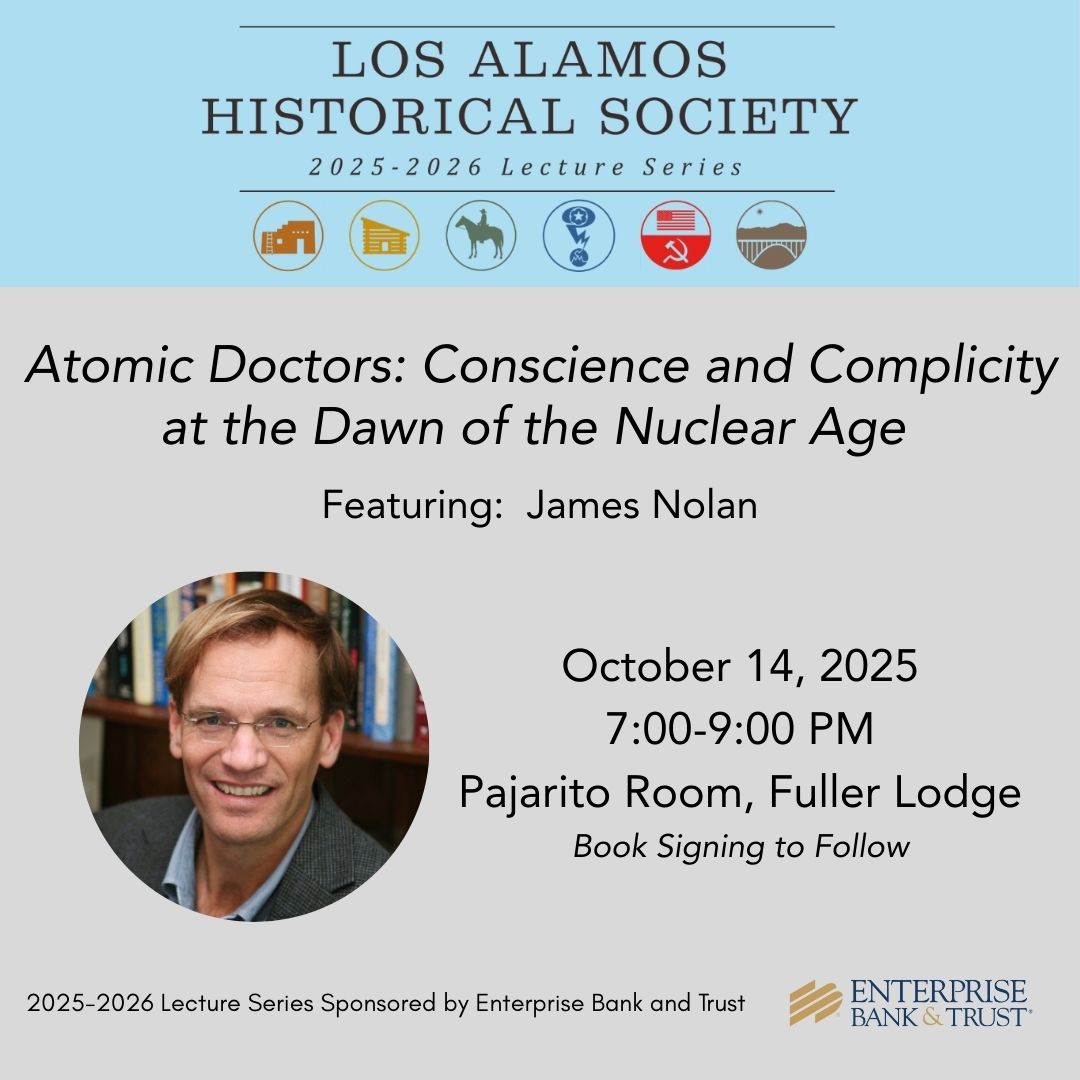
Three days after the presentation, a YouTube video will be posted on the Los Alamos Historical Society webpage at https://www.youtube.com/@LosAlamosHistoricalSociety/videos
- Wednesday, October 15th (new meeting date) at 9 am –
 New Mexico Radioactive & Hazardous Materials Committee hybrid meeting at the Barbara Hubbard Room of the Pan American Center at 1810 East University Avenue in Las Cruces. The agenda will be posted when available at: https://www.nmlegis.gov/Committee/Interim_Committee?CommitteeCode=RHMC
- Saturday, October 18th –
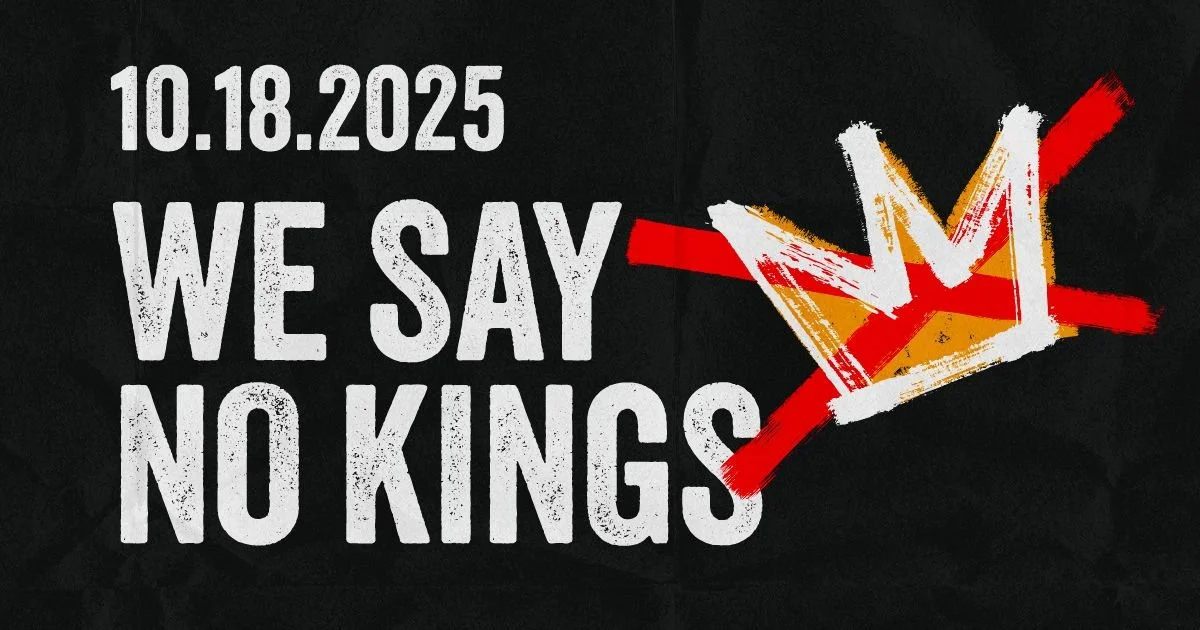
 No Kings Day – the next nationwide day of protest and resistance.
- Saturday, October 18th from 8 am to 2 pm
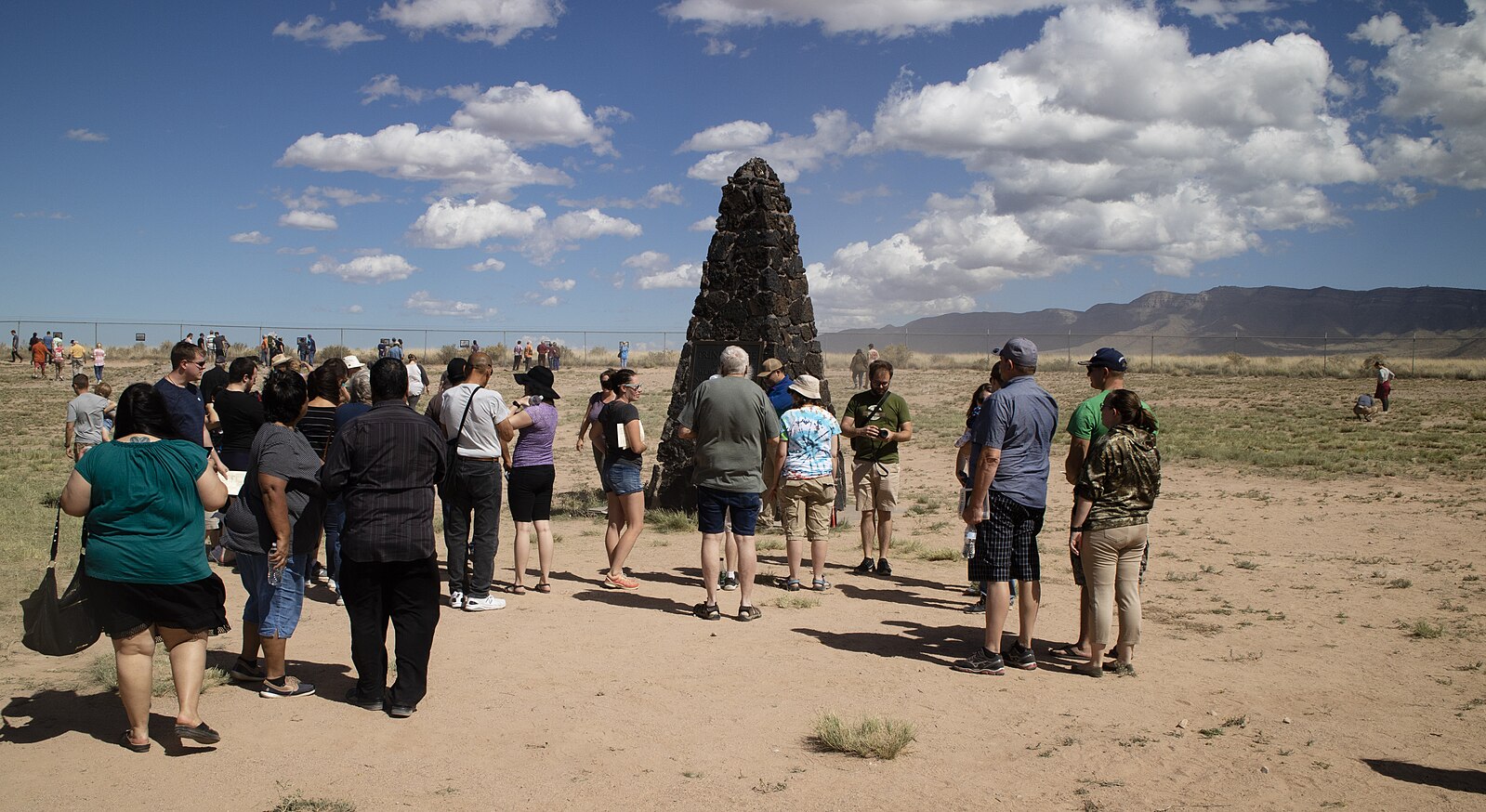
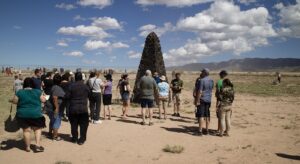 with the gate closing and the event ending at 3:30 pm – Trinity Site Open House. Entry only through the Stallion Gate located off U.S. Highway 380. https://home.army.mil/wsmr/contact/public-affairs-office/trinity-site-open-house
- Thursday, October 23rd –
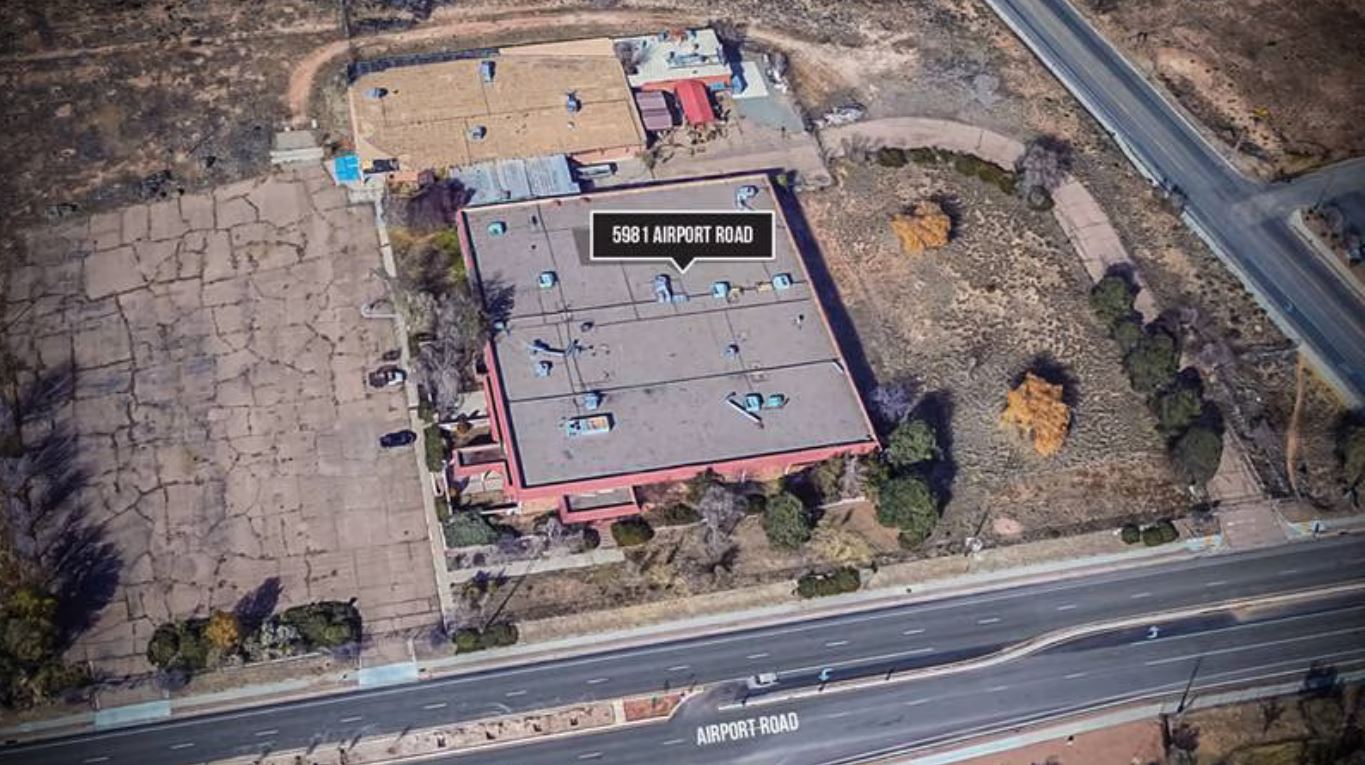
 Public comment period ends for the draft Decommissioning Plan Thermo-Eberline Facility on Airport Road, Santa Fe. For more information, scroll down to the bottom of this page: https://www.env.nm.gov/rcb/public-notices-of-radioactive-materials-licensing-actions-and-rulemakings/
- Tuesday, October 28th –
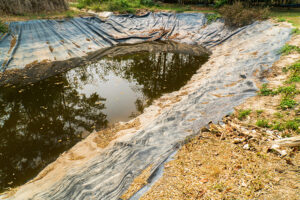 Public comment period ends for the draft NM Environment Department amendments to the NM Standards for Ground and Surface Water Protection at 20.6.2 NMAC and the new NM draft regulations known as the New Mexico Pollutant Discharge Elimination System (NMPDES) at 20.6.5 NMAC. For more information: https://www.env.nm.gov/events-calendar/?trumbaEmbed=view%3Devent%26eventid%3D189342697
- Thursday, November 13th and Friday, November 14th –
 International Uranium Film Festival at the Navajo National Museum in Window Rock. For more information, visit: https://uraniumfilmfestival.org/
Tags: Alexis de Tocqueville, Bolch Judicial Institute at Duke Law, David F. Levi, Democracy in America, Department of Energy, DOE, New Mexico Environment Department, NMED, NYU’s Democracy Project, participatory democracy, Waste Isolation Pilot Plant, WIPP, “Participatory Democracy in Action, “public school






Comments
No comments so far.