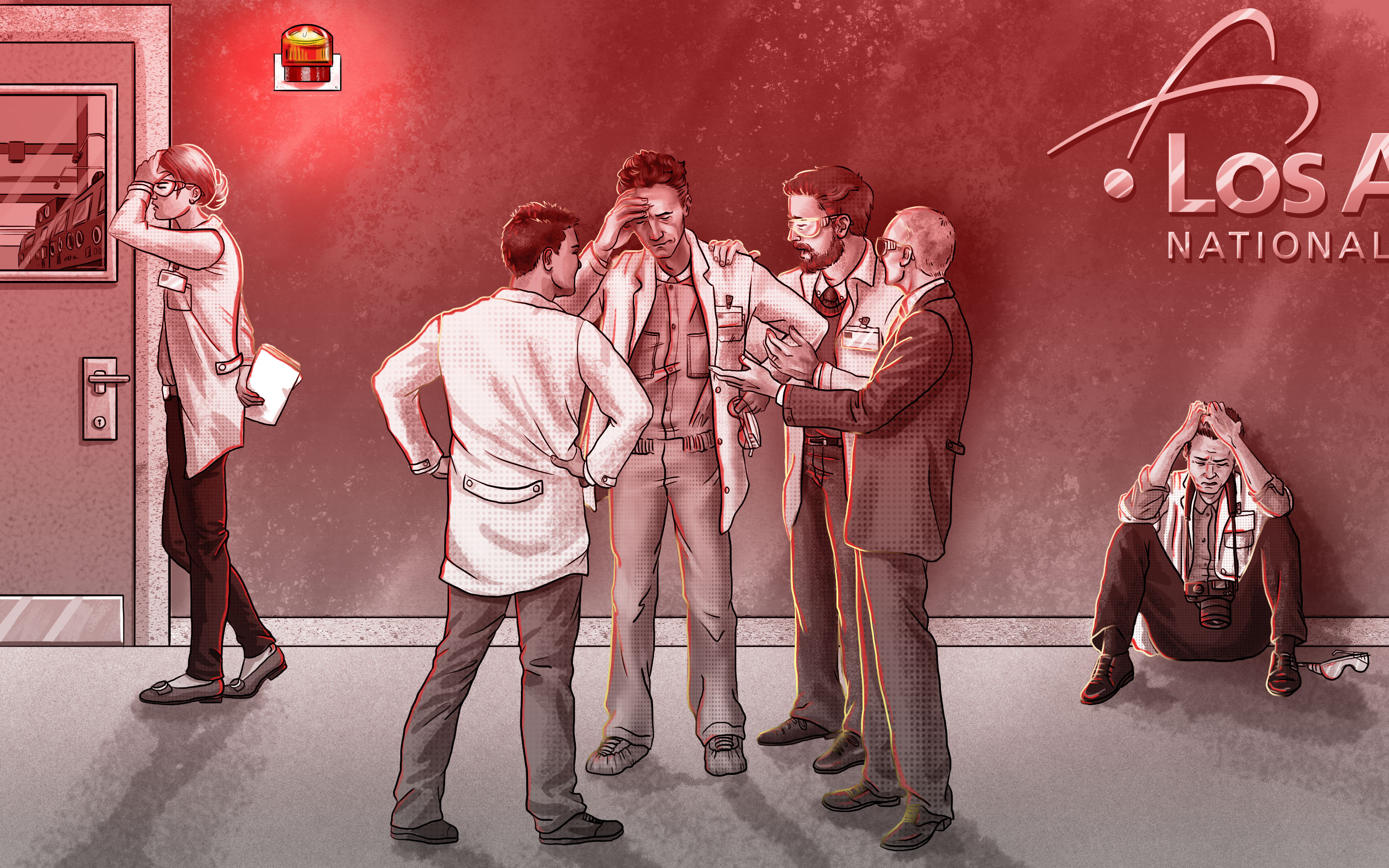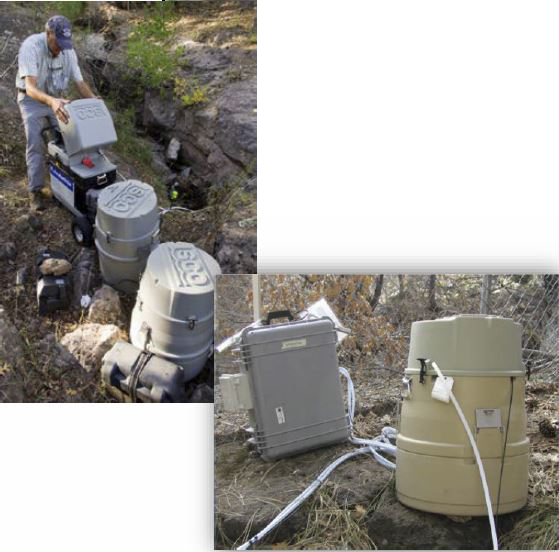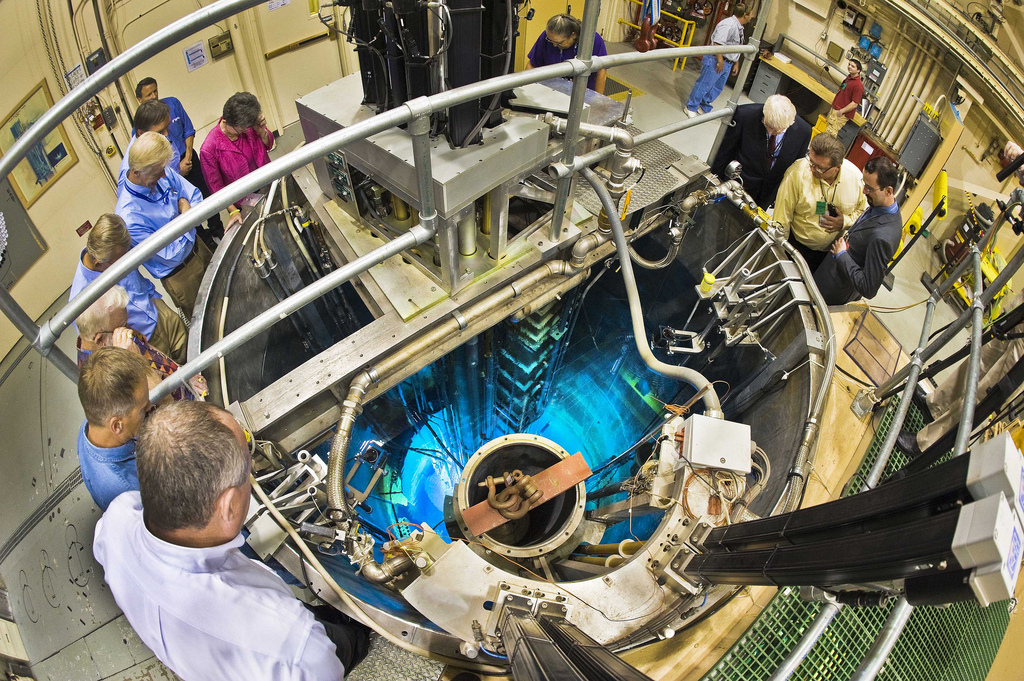

The New Mexico Environment Department has scheduled an April public hearing about a proposed ground water discharge permit for the Radioactive Liquid Waste Treatment Facility at Los Alamos National Laboratory (LANL) even though the New Mexico Water Quality Act does not authorize the issuance of the permit. Because the Radioactive Liquid Waste Treatment Facility no longer discharges to the environment, the Water Quality Act does not apply.
For decades, LANL worked to make the liquid treatment facility into a “zero-discharge” facility. Such a facility would no longer discharge thousands of gallons a day of treated radioactive and hazardous liquid wastes through a discharge pipe into a tributary of Mortandad Canyon. That goal was accomplished in November, 2010 when the facility discharged its last drop through the pipe.
Last week, the Communities for Clean Water (CCW) filed a Motion to Dismiss the proceedings with the Hearing Officer arguing that the New Mexico Water Quality Act does not apply. Further, even if the permit were issued, it would only become effective “on the date the discharge begins.” No discharge has occurred in more than seven years, and there are no plans for a discharge. A permit would be a nullity and would remain a nullity. Over the years, CCW raised this issue by providing extensive public comments to the Environment Department and through active involvement in negotiations with the Department and LANL.
Further, CCW argues that the facility should be regulated by the New Mexico Hazardous Waste Act because it treats, stores, and disposes of hazardous waste. The hazardous waste law is more protective of human health and the environment because it would regulate the entire facility, not just the discharge. Nevertheless, LANL has operated the facility on the basis that it is exempt from hazardous waste laws and regulation.
In New Mexico, however, conflicts between the Water Quality Act and the Hazardous Waste Act are mediated by a provision in the Water Quality Act that states that a facility subject to the Hazardous Waste Act cannot be regulated by the Water Quality Act. 180316 Motion to Dismiss DP-1132
The public hearing is scheduled for Thursday, April 19th beginning at 9 am, and will continue as needed, at the Fuller Lodge Art Center, Pajarito Room, at 2132 Central Avenue, Los Alamos, NM. https://www.env.nm.gov/gwb/NMED-GWQB-PublicNotice.htm
CCW is an alliance of five community organizations located in five Northern New Mexico communities located downstream and downwind of LANL and the location of the 1960s-era Radioactive Liquid Waste Treatment Facility. CCNS is a founding member of CCW, which includes Tewa Women United, based in Santa Cruz; Honor Our Pueblo Existence, based at Santa Clara Pueblo; Amigos Bravos, based in Taos; and the Partnership for Earth Spirituality, based in Albuquerque. http://ccwnewmexico.org/
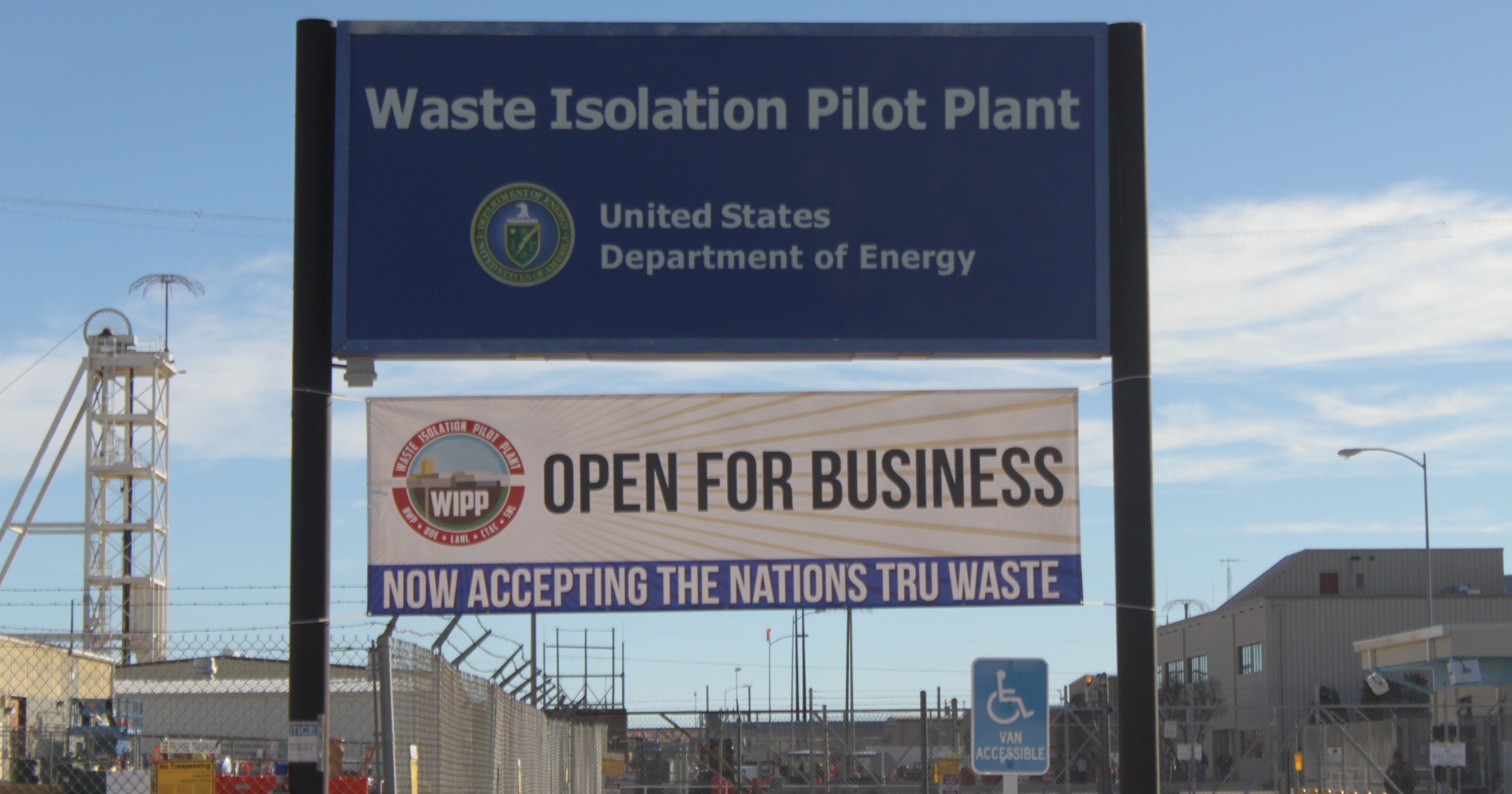
On January 31, 2018, the Department of Energy (DOE) and its contractor, Nuclear Waste Partnership (NWP), submitted a Class 2 Permit Modification Request to change the way that waste is measured at the Waste Isolation Pilot Plant (WIPP), the repository for defense plutonium-contaminated or TRU waste, located in southeastern New Mexico. Public comments can be submitted to the New Mexico Environment Department until Tuesday, April 3. http://www.wipp.energy.gov/rcra-com-menu.asp
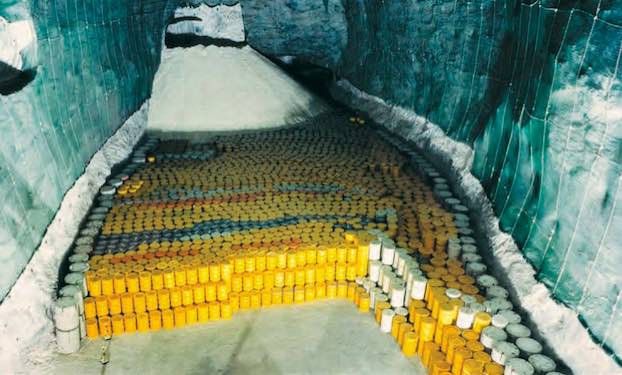
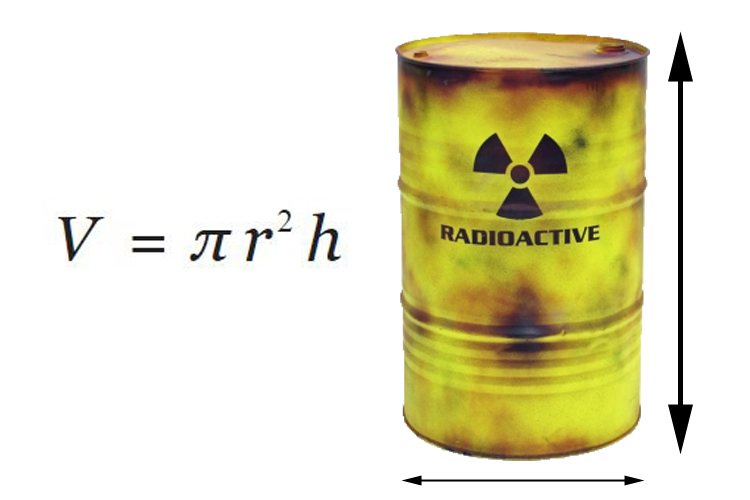
Because the federal WIPP Land Withdrawal Act limits the amount of waste to 6.2 million cubic feet, how to measure the amount of waste is important. Waste emplaced at WIPP has always been measured based on the volume of the container. By container volume is the way DOE has always reported to Congress how much waste is at WIPP. By container volume is how DOE contractors have been paid and received performance bonuses. By container volume is the way that the WIPP Permit and permits in other states calculate the amount of waste. https://www.env.nm.gov/hazardous-waste/wipp/
The modification request would create an additional measurement, called the “Land Withdrawal Act TRU Waste Volume of Record [which] means the volume of TRU waste inside a disposal container.” The request explains that the effect of the change would reduce the amount of waste emplaced in WIPP as of December 6, 2017, from 3,238,673 cubic feet to 2,307,708 cubic feet.
Thus, if approved, the new measurement would expand the amount of waste allowed by more than 930,000 cubic feet, or a more than 28 percent increase.
An unstated reason for the proposed measurement is that space for more than 1,000,000 cubic feet of waste has been forfeited or lost because of bad DOE management, poor contractor performance, and inefficiencies during the past 19 years of WIPP’s operations.
The public can submit comments so that the Environment Department either denies the request or considers it as a class 3 modification request. Class 3 modifications require more public participation and public hearings where witnesses would testify under oath and be cross-examined.
Permit regulations require such a Class 3 process when there is significant public concern, or if the change is complex, or when there is a 25 percent or greater increase in the facility storage capacity.
Don Hancock, of Southwest Research and Information Center, explained that through their comments the public can demonstrate significant public concern. He added, “Such a large expansion in the amount of waste at WIPP should require Congress to pass a law. Any such expansion certainly is not allowed as a Class 2 permit modification.” http://www.sric.org/
Public comments can be submitted by Tuesday, April 3, 2018 by emailed to ricardo.maestas@state.nm.us or mailed to
Mr. Ricardo Maestas
New Mexico Environment Department
Hazardous Waste Bureau
2905 Rodeo Park Drive E, Building 1
Santa Fe, New Mexico 87505
After the release of the Trump Administration’s Nuclear Posture Review, the Department of Energy (DOE) and its semi-autonomous National Nuclear Security Administration released its own document to support a nearly 50-fold increase in plutonium use at Los Alamos National Laboratory (LANL). DOE wants to increase the amount of plutonium used in its Radiological Laboratory Utility Office Building (RLUOB) from 38.6 grams of plutonium-239 equivalent to 400 grams. https://www.energy.gov/nepa/ea-2052-proposed-changes-analytical-chemistry-and-materials-characterization-radiological
CCNS argues that any proposal to increase the amount of plutonium in the RLUOB must begin with the last NEPA document released for public review and comment. That document is the 2003 environmental impact statement, which restricted the amount of plutonium to 8.4 grams.
Further, the RLUOB was not designed, nor equipped, to handle 38.6 grams of plutonium equivalent, let alone 400 grams. The RLUOB was limited to 8.4 grams because the majority of plutonium work was planned for the Nuclear Facility, which was canceled in 2012 by the Obama Administration when project costs exploded from $600 million to $6.5 billion.
Despite the on-going serious concerns about plutonium operations at LANL, DOE is moving forward with the release of a draft environmental assessment for a 30-day public review and comment period. Comments are currently due on Monday, March 26th, the day after Holy Week begins.
Scheduling a comment period during Passover and Easter is typical for DOE. For example, a public comment period for open burning and open detonation of hazardous waste ended the day after Easter. It is a sign of disrespect for many cultures and traditions in Northern New Mexico.
Obviously, the proposal is complicated and more time is needed for the comment period. This week, Nuclear Watch New Mexico submitted a sign-on letter to DOE asking for a 60-day extension of time to submit comments. They wrote, “Given the importance of the CMRR RLUOB and serious public interest, we believe that there will be a substantial number of citizens interested in providing public comment.” They also asked DOE to hold a public meeting about the proposal. NWNM RLUOB Sign-on Ltr 3-7-18
Last Friday, in response to claims of discrimination, the New Mexico Environment Department (NMED) released three new policies for the public process in permitting polluting facilities. Following a public process involving a hazardous waste facility in southeastern New Mexico where discriminatory permitting was evident, in 2002, Citizens for Alternatives to Radioactive Dumping (CARD), and two other groups, filed a successful civil rights complaint with the Environmental Protection Agency (EPA). After 15 years, in January, 2017, EPA and the Environment Department settled the matter with an Informal Resolution Agreement, which required the creation of the three policies. http://nuclearactive.org/card-civil-rights-complaint-to-epa-about-triassic-park-thirteen-years-and-no-resolution/ and http://nuclearactive.org/epa-reaches-informal-resolution-of-14-year-old-civil-rights-complaint-against-nmed/ Despite numerous requests to participate in the policy creation, CARD and other community groups were excluded from the process. It shows.
In New Mexico, approximately 36 percent of the population speaks a language other than English at home. One of the issues raised by CARD in its complaint was for people with limited English proficiency, public notices and key vital documents were not translated into the languages spoken in their homes and communities.
One of the new Environment Department’s policies, the Limited English Proficiency (LEP) Accessibility and Outreach Policy, requires the Environment Department to provide LEP persons and populations “… substantially equal opportunities to learn about and participate in [the Environment Department’s] exchange and interaction with the public.” Providing “substantially equal opportunities” is not the same as “fully equal opportunities.” The new policy is clearly discriminatory under Title VI of the Civil Rights Act of 1964, which prohibits discrimination on the basis of race, color, or national origin.
Further, fees that facilities pay the Environment Department for a permit are dismal from the aspect of the taxpayer. Huge facilities sometimes pay $100 for a permit, which does not even begin to adequately cover the Environment Department’s costs, let alone staff time. The new policies allow the Environment Department to forego public outreach and providing necessary LEP services if they do not have the funding.
Noel Marquez, of the Alliance for Environmental Strategies, based in Eddy County in southeast New Mexico, and one of people signing the original civil rights complaint with CARD, said, “I don’t know what planet [the Environment Department] is on, but there is no positive realistic working relationship between [it] and our communities, which are being sacrificed by a state government willing to allow our communities to be turned into radioactive waste dumps.”
He offered, “If [the Environment Department] were willing to start a relationship, we are always ready to respond, cooperate and volunteer our time to defend our lands and people, which we feel the state of New Mexico should be doing in their role if we aspire to be an honest democracy.”
Community Groups Outraged by New Mexico Environment Department’s Release of Policies
New Mexico Environment Department Releases Civil Rights Policies Without Public Input
(February 27, 2018 / Santa Fe & Eddy County, NM) On February 26, 2018, Citizens for Alternatives to Radioactive Dumping (CARD) and other community groups raised serious concerns about the New Mexico Environment Department’s (NMED) failure to include community voices before releasing new policies intended to comply with civil rights laws. CARD’s reaction came on the heels of the release by NMED of Public Participation and Limited English Proficiency (LEP) policies late Friday, February 23, that outline the agency’s plans to include New Mexican communities in the process for permitting industrial facilities.
Grupos comunitarios indignados con proceso exclusivo del Departamento de Ambiente de Nuevo México
Departamento de Ambiente de Nuevo México emite política sobre derechos civiles sin consultar al público
(27 de febrero de 2018 / Santa Fe & Eddy County, NM) El 26 de febrero de 2018,Citizens Against Radioactive Dumping (CARD) y otros grupos comunitarios levantaron quejas serias que el Departamento de Ambiente de Nuevo México (NMED) no incluyera las voces de la comunidad antes de emitir nuevas políticas indicadas para cumplir con las leyes de derechos civiles. La reacción de CARD se hizo poco después de la emisión por el NMED de las políticas de Participación Pública y de Fluidez de Inglés Limitada (LEP) en la tarde del viernes 23 de febrero, las cuales bosquejan los planes de la agencia para incluir las comunidades de Nuevo México a lo largo del proceso de permiso para los establecimientos industriales.
You are cordially invited to attend the First Annual Benefit for the Trinity Downwinders on Sunday, March 11th from 2 to 7 pm at the Albuquerque Moose Lodge. Featured local artists include Roberto Perea, Freddie Chavez, Paul Pino and the Tone Daddies, No Complaints, and Franc Chewiwie and the Latin Jazz Allstars. The artists and the Tularosa Basin Downwinders Consortium are joining together to raise funds to send a New Mexico delegation to Washington, DC to testify before Congress in support of the proposed amendments to the Radiation Exposure Compensation Act (RECA) that would include the Trinity Downwinders. Currently, the Downwinders are not eligible for compensation because they are not included in RECA. Hearings may be scheduled this spring or summer.
The Downwinders will testify about the over exposure to radiation they received following the July 16, 1945 atomic bomb test and the resulting health hazards it had, and continues to have, on the people who have lived in and around the Trinity Test Site.
The Downwinders documented the harm in their 2017 health impact assessment, entitled, “Unknowing, Unwilling, and Uncompensated: The Effects of the Trinity Test on New Mexicans and the Potential Benefits of a Radiation Exposure Compensation Act (RECA) Amendment.” https://www.trinitydownwinders.com/health-impact-assessment
Between the musical acts, presentations about RECA will be made. RECA was created in 1990 and has paid out over $2.2 billion dollars in compensation and health care to Downwinders in parts of Nevada, Utah, Idaho, Colorado, and Arizona, but not to New Mexico Downwinders. RECA provides the best health care coverage available with no limits, deductibles, or co-payments. https://www.justice.gov/civil/common/reca
The wonderful musicians include: Native Albuquerquean Roberto Perea now plays guitar and piano in Austin, Texas and is recording his music at Spitshine Recording Studio. Freddie Chavez sings with the Freddie Chavez Foundation. https://www.freddiechavezsings.com/ Paul Pino and the Tone Daddies play a variety of original songs that have been included on three of KANW Radio’s “Best of New Mexico” CDs. http://paulpino.com/tone-daddies/ Formed last August, No Complaints is an eight-piece multi-cultural ministry team committed to providing a spirited bilingual message of hope and encouragement to audiences often judged, forgotten and/or written off. Franc Chewiwie is an international pianist and recording artist, composer, bandleader, and publisher. He plays piano with The Latin Jazz Allstars.
Tina Cordova, co-founder of the Tularosa Basin Downwinders Consortium, is grateful to the musical artists who are donating their time and talents. She said, “There are amazingly generous people in this world who see the value of what we are trying to achieve, which is bringing back the justice we’ve been waiting for all these many years. Every dollar raised or donated is important and very appreciated. When we show up at the hearings with eight to ten people who represent the New Mexico Downwinders, it will have true impact.”
The Albuquerque Moose Lodge is located at 2121 Edith Boulevard, Northeast. https://www.facebook.com/pages/Loyal-Order-of-Moose-Lodges/117439954941628 Tickets are available by calling 505-235-3427. There will be a silent auction. Table sponsorships are available, which include live acknowledgements at the benefit, as well as acknowledgement in the materials submitted to Congress. For more information, please visit trinitydownwinders.com/
CCNS is challenging an Environmental Protection Agency (EPA) Clean Water Act permit that allows a daily discharge of up to 40,000 gallons of treated water from the Radioactive Liquid Waste Treatment Facility at Los Alamos National Laboratory (LANL) through Outfall 051. https://www.env.nm.gov/swqb/NPDES/Permits/NM0028355-LANL.pdf The facility treats radioactive, hazardous, and toxic liquid waste and then stores the drums of sludge containing hazardous waste. It would normally be regulated by the New Mexico Hazardous Waste Act, which calls for detailed regulation and provides for enhanced public participation. But, under an EPA rule, called the Wastewater Treatment Unit exemption, if a facility is regulated under a Clean Water Act permit, that facility is exempt from the Hazardous Waste Act.
Nevertheless, since November 2011, no discharge has occurred from Outfall 051. In order to have coverage under the Clean Water Act, there must be a discharge. Over seven years ago, LANL began its zero-discharge system by evaporating the discharge into the air.
LANL has struggled to keep the Clean Water Act exemption. In a 1998 report about conversion to a zero-discharge system, LANL acknowledged that if it stopped discharging through Outfall 051, it could lose the exemption, and the “[L]oss of this exemption would mean that the [Facility] would be required to meet additional [hazardous waste] regulatory guidelines regarding waste treatment practices. … The [Facility] would need to manage the [pollutants] in the waste stream and so have much better knowledge of, and control over, waste discharged to it for treatment.” It also acknowledged that enhanced public participation would be required.
The New Mexico Hazardous Waste Act and its regulations provide a higher level of regulation of the facility. The regulations are very specific about protecting human health and the environment from the generation, handling, treatment, and storage of hazardous waste and providing information to the public. Specifically, close regulation of the operation of the entire liquid waste system, including all the pipes and systems that deliver liquid waste to the treatment facility, the facility itself, and the pipes and tanks that are downstream are required.
In June 2016, CCNS, through its attorneys, Jon Block with the New Mexico Environmental Law Center, and Lindsay A. Lovejoy, requested EPA’s Region 6 office in Dallas to terminate Outfall 051 from the permit. http://nmelc.org/ and http://lindsaylovejoy.com/ In August 2017, EPA denied CCNS’s request. In September, CCNS appealed the Region 6 denial to the EPA’s Environmental Appeals Board in Washington, DC. The Board scheduled an oral argument for Thursday, February 22, 2018, in Washington, DC.
Lindsay Lovejoy, who will be arguing CCNS’s case, said, “This facility should be subject to the New Mexico Hazardous Waste Act.”
In late January, the Environmental Appeals Board determined an oral argument would assist the Board in its deliberations about the Concerned Citizens for Nuclear Safety (CCNS) appeal to terminate a discharge pipe at Los Alamos National Laboratory (LANL) from the Clean Water Act industrial permit. The hearing is scheduled for Thursday, February 22nd in Washington, DC.
The pipe, known as Outfall 051, discharged liquids from the Radioactive Liquid Waste Treatment Facility from 1963 until November, 2010. Under the Clean Water Act, a facility must have a discharge in order to receive a permit. Even though no discharge has occurred in over seven years, Outfall 051 remains on the permit.
The treatment facility receives liquid wastes from facilities which handle radioactive, toxic and hazardous materials from across LANL, including the closely located Plutonium Facility. Most of the liquid wastes are generated by nuclear weapons research, development and manufacturing.
The current permit allows for the discharge of 40,000 gallons per day of treated liquids into a small canyon that flows into Mortandad Canyon. Since LANL adopted zero discharge, it uses a mechanical system to evaporate treated water into the air.
Leaving the outfall on the permit has serious impacts. The treatment facility manages drums of hazardous waste. It would normally be regulated by the New Mexico Hazardous Waste Act, which calls for detailed regulation and provides for enhanced public participation. But, under an Environmental Protection Agency (EPA) rule, called the Wastewater Treatment Unit exemption, if a facility is regulated under a Clean Water Act permit, that facility is exempt from the Hazardous Waste Act.
LANL has struggled to keep this exemption. In a 1998 report about conversion to a zero-discharge system, LANL acknowledged that if it stopped discharging through Outfall 051, it could lose the exemption, and the “[L]oss of this exemption would mean that the [Facility] would be required to meet additional [hazardous waste] regulatory guidelines regarding waste treatment practices. … The [Facility] would need to manage the [pollutants] in the waste stream and so have much better knowledge of, and control over, waste discharged to it for treatment.” It also acknowledged that enhanced public participation would be required.
In June 2016, CCNS, through its attorneys, Jon Block with the New Mexico Environmental Law Center, and Lindsay A. Lovejoy, requested EPA to terminate Outfall 051 from the permit. In August 2017, EPA denied CCNS’s request. In September, CCNS appealed the denial to the EPA’s Environmental Appeals Board in Washington, DC.
Joni Arends, of CCNS, said, “Your support for this important and essential work is greatly appreciated. To make a tax-deductible contribution, please visit our website at nuclearactive.org. Thank you!”
Proposed amendments to the federal Nuclear Waste Policy Act would accelerate two proposals to bring some of the nation’s commercial high-level radioactive waste to New Mexico and West Texas. Congressman John Shimkus introduced the proposed amendments which would accelerate thousands of shipments of spent fuel rods on trucks, rail, and barges. The bill, numbered H.R. 3053, would also restart the forced licensing of Yucca Mountain, a Department of Energy (DOE) site located 90 miles north of Las Vegas, Nevada, in a seismic and volcano-ridden area. It is interesting that Congressman Shimkus represents Illinois, which has the largest number of nuclear power plants in the nation, with 11. https://www.congress.gov/bill/115th-congress/house-bill/3053
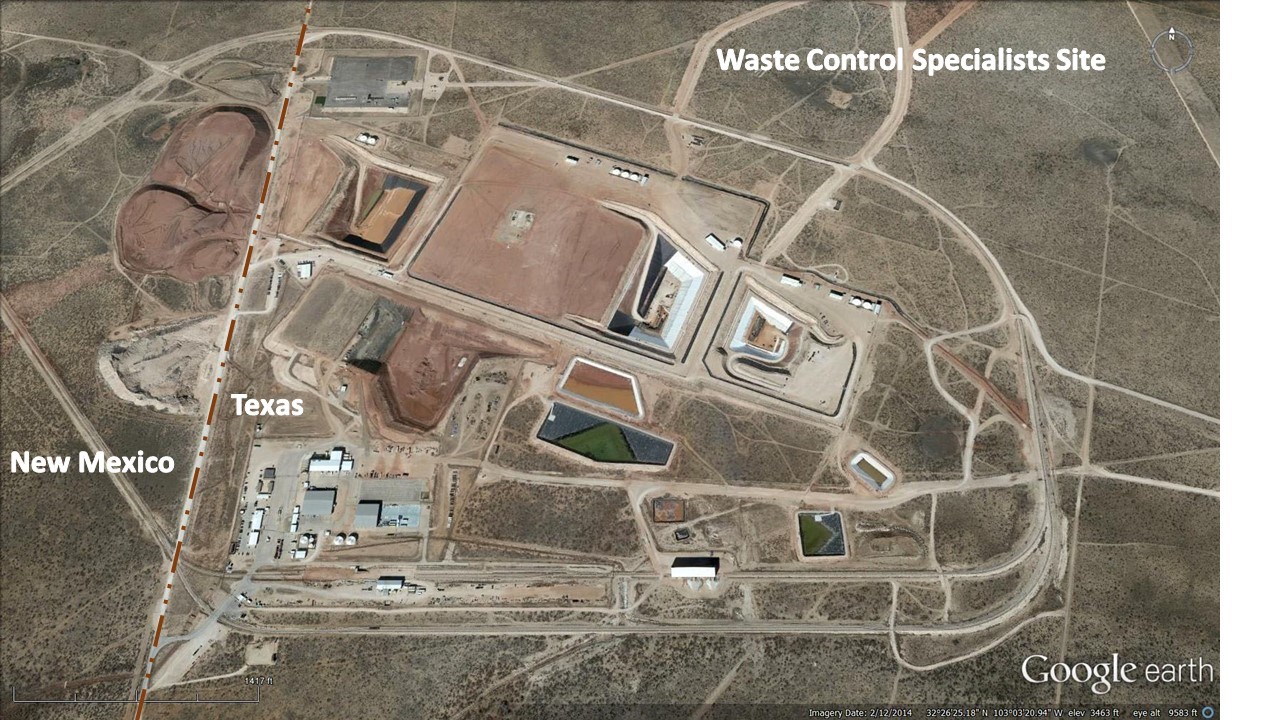
Both privately held corporations, Holtec, International, and Waste Control Specialists, LLC (WCS), have submitted license applications to the Nuclear Regulatory Commission for consolidated interim storage facilities. The Shimkus bill brings back a term from the past – “monitored retrievable storage,” or MRS, to describe these proposed facilities. If approved, the bill would allow some, but not all, of the waste currently stored at nuclear power plants around the country, to be shipped to New Mexico or the WCS facility on the Texas-New Mexico border.
Holtec is asking to store 100,000 tons of plutonium fuel at a site halfway between Hobbs and Carlsbad, New Mexico, in Lea County. WCS is asking to store 40,000 tons of plutonium fuel at its hazardous, toxic and radioactive storage and disposal dump located in Andrews County, five miles east of Eunice, New Mexico.
Last Friday, WCS announced a private equity firm, J.F. Lehman & Co., bought the 14,900-acre facility. Lehman also owns NorthStar Group Services, a nuclear decommissioning specialist, that could supply a pipeline of waste to WCS.
Despite DOE spending millions of taxpayer dollars to explore Yucca Mountain, it is not a viable solution for disposing of high-level radioactive waste. Even though some people hope Yucca Mountain would open, the transportation threats alone would impact millions living along the truck and rail transportation routes over a period of 50 years. See State of Nevada’s January 24, 2018 powerpoint presentation, Yucca Mountain Update and Transportation Impacts, to the U.S. Conference of Mayors Winter Meeting, Washington, DC at http://www.state.nv.us/nucwaste/news2018/pdf/nanp180124mayors_conf.pdf
The Shimkus bill continues the policy of the 1987 Nuclear Waste Policy Act to deny Nevada a voice. The 1987 law designated Yucca Mountain as the only proposed site for DOE to study as a geologic repository. Another bill, H.R. 456, called the Nuclear Waste Informed Consent Act, would give consent options to Nevada and affected local and tribal governments regarding Yucca Mountain. https://www.congress.gov/bill/115th-congress/house-bill/456For Nevada’s analysis, please see, State of Nevada’s Comments on Nuclear Waste Policy Amendments Act of 2017, H.R. 3053,” by Robert Halstead, Nevada Agency for Nuclear Projects, dated January 19, 2018 at https://titus.house.gov/sites/titus.house.gov/files/wysiwyg_uploaded/NV%20NWPAA%20Final%20Comments.pdf
Joni Arends, of CCNS, urged the public to, “Please contact your congress people to urge them to oppose H.R. 3053, the Shimkus bill, and support H.R. 456, the Nuclear Waste Informed Consent Act.”
The Department of Energy (DOE) is proposing to expand the Waste Isolation Pilot Plant (WIPP) again. This time, to build and operate an above ground storage facility to increase storage capacity by seven times and expand storage time to one year or more. Five acres would require fencing on WIPP’s southern side.
DOE argues that the storage pad is needed “to improve transuranic[, or TRU,] waste shipping throughout the DOE complex and the WIPP disposal process efficiency by adding the capability to temporarily store TRU mixed waste above ground in concrete overpack containers at the WIPP site.”
Currently DOE has five other expansion proposals. These include disposal of “surplus” plutonium from nuclear weapons; disposal of high-level waste from the Hanford and Savannah River sites; disposal of commercial “Greater Than Class C” radioactive waste; disposal of commercial waste from West Valley, New York; and the storage of elemental mercury.
Nevertheless, DOE recently proposed more expansion, including the installation of a fifth vertical shaft; expanding the underground footprint; and changing the waste calculation for disposed waste.
None of the historic legal documents about WIPP included a proposal to store such a huge volume of waste above ground. For instance, the 1992 WIPP Land Withdrawal Act stated the 16-square miles could be used for the “construction, experimentation, operation, repair and maintenance, disposal, shutdown, monitoring, decommissioning, and other authorized activities associated with the purposes of WIPP.” There was no provision for long-term, above-ground storage.
The proposal must be abandoned. In the alternative, a supplemental WIPP environmental impact statement is required.
DOE describes the operations as plutonium-contaminated radioactive and hazardous waste would be shipped to WIPP in the TRUPACT-II and HalfPACT shipping containers as it has been since March 26, 1999. The waste would then be transferred into one of 408 concrete overpack containers and stored on the storage pad for up to one year or longer, since it could stay on the surface. If approved, the expansion would result in an additional 65,280 cubic feet of waste stored above ground.
Don Hancock, of SRIC, said, “DOE should stop wasting taxpayer dollars on an illegal storage pad and other expansion ideas and focus on safe operations of the site.” http://www.sric.org/index.php
***The file is in PDF format. Simply click on the link, select and copy all the text and paste it into an email addressed to: WIPP.EA@WIPP.ws Then fill in your name at the end after the closing “Sincerely,”
At a public meeting on Wednesday, a legacy waste cleanup program manager at Los Alamos National Laboratory (LANL) resolved a long-time question: Does funding drive cleanup, or does cleanup priorities drive funding? Doug Hintze, a Department of Energy (DOE) manager in the LANL Environmental Management Program, admitted that funding drives cleanup.
After the admission, there were many questions about the funding mechanisms for LANL cleanup. Hintze explained DOE’s complicated three-year budget cycle. He explained that LANL will soon submit its 2020 proposed budget to DOE, while at the same time LANL is waiting to learn the amount of funding it will receive from Congress through a continuing resolution.
Wednesday’s meeting was held by the New Mexico Environment Department, as required by Section VIII of the 2016 Consent Order, which superseded the 2005 Consent Order for LANL cleanup. https://www.env.nm.gov/wp-content/uploads/2016/05/June-2016-CO-modified-Feb-2017.pdf The DOE Environmental Management, Los Alamos Office, made two presentations to a crowd of approximately 50 at the new Los Alamos County Council Chambers.
Hintze presented information about the current cleanup budget of approximately $190 million. He explained that if a new well is needed to, for example, explore contamination, funding will be diverted from other priorities. As a result, the end date for the Consent Order would be extended beyond the 2035 deadline. EMLA LCC Update AppB Meeting 1_16_18
Arturo Duran, a LANL Compliance and Permitting Manager, also with the DOE Environmental Management Office, gave a detailed presentation about what work was completed during fiscal year 2017, a period between October 1, 2016 to September 30, 2017. Duran 2016 Consent Order 1-16-18
Duran also presented the fiscal year 2018 cleanup work that has been prioritized by the Environment Department, DOE, and LANL, and the future work targeted for fiscal years 2019 and 2020. Seventeen campaigns have been identified in the 2016 Consent Order. See Appendix B “Milestones and Targets” to the Consent Order. https://www.env.nm.gov/wp-content/uploads/2016/05/LANL-CO-APPENDIX-B-2018.pdf
For fiscal year 2018, the number one campaign is the chromium plume in the regional drinking water aquifer below Mortandad Canyon, which borders Pueblo de San Ildefonso. The number two priority is the RDX high explosive plume in the deep perched aquifer below Water Canyon, near the Bandelier National Monument. Other campaigns include the submittal of the annual ground water and soil and sediment reports to the Environment Department.
Staff from the new cleanup contractor, Newport News Nuclear BWXT – Los Alamos, LLC, were in the audience “to get the lay of the land.” They are putting together a public meeting in Los Alamos for early February to introduce themselves to the community. Upon learning about that meeting, CCNS’s Joni Arends suggested that they also set up meetings to introduce themselves in downwind and downstream communities, such as Taos, Española, Santa Fe, and Albuquerque.