Current Activities

Activists Sue to Block Plans to Bury 3.6 Million Pounds of Nuclear Waste Near California Beach

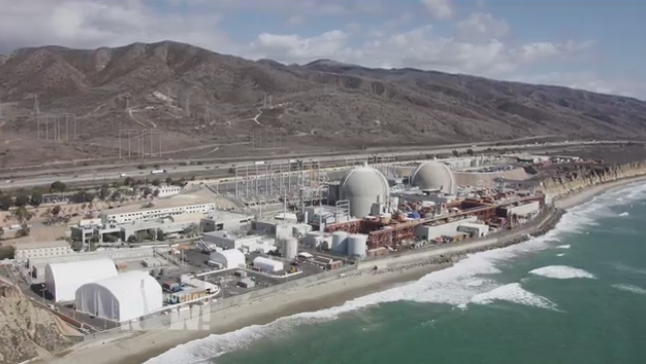
Environmental activists in California are fighting plans to store 3.6 million pounds of highly radioactive nuclear waste on a popular beach in San Diego County. In 2012, a radioactive leak at the San Onofre nuclear power plant forced an emergency shutdown. The plant was fully closed by June 2013. Now residents are fighting the permit issued by the California Coastal Commission to store the millions of pounds of nuclear waste in thin, stainless steel canisters, within 100 feet of the ocean. We speak to Ray Lutz, founder of Citizens’ Oversight, which has filed a lawsuit challenging the expansion of the nuclear waste storage facility.

AMY GOODMAN: This is Democracy Now!, democracynow.org, The War and Peace Report. I’m Amy Goodman. We’re ending the show here in San Diego, where environmental activists are fighting plans to store 3.6 million pounds of highly radioactive nuclear waste on a popular beach in San Diego County, just about an hour north of here.

In 2012, a radioactive leak at the San Onofre nuclear power plant forced an emergency shutdown. The plant was fully closed in June of 2013. Now residents are fighting the permit issued by the California Coastal Commission to store the millions of pounds of nuclear waste in thin, stainless steel canisters within a hundred feet of the beach. The facility began the decommissioning.

We are joined now by Ray Lutz, founder of Citizens’ Oversight, which has filed a lawsuit challenging the expansion of the nuclear waste storage facility.

We just have a few minutes, Ray. Explain what’s happening.

RAY LUTZ: Well, this is a ridiculous move by this for-profit corporation to avoid public scrutiny—the 3.6 million pounds, only a hundred feet from the ocean, only inches above the salt water line at high tide. And, you know, now they have authority to leave this here forever, according to the Department of Energy, because there is no alternative, they say. Our lawsuit, though, we’re saying, you know, they didn’t investigate any alternatives, and there are other places, better places, to put this than right here, right next to the beach.

You know, this is just a government-regulators-plus-corporate-profiteers-equals-insanity sort of math equation that you get out of this—these for-profit corporations. You know, it all comes back down to the military-industrial complex is forcing these—you know, the mindset, sort of Trump mindset, of we want to be first in the nuclear world, as these plants are very uneconomic. They shouldn’t be used at all. Plus we’ve got all this waste that’s piling up at a hundred places around the county, which are virtually terrorist targets now.

So we need, as a community, to really look at and make sense of what these decisions are. And if you leave it to the for-profit corporations like Edison to decide these things that may be here for decades, if not centuries, based on their next quarterly report, you’re going to get really bad decision-making. That’s what it comes down to in this case.

You know, meanwhile, we have the $3.3 billion price tag they want the community to pay for this closed plant, due to Southern California Edison’s own mistakes in their design process for the steam generators. Shutdown in 2012, a radioactive leak, and now we know that it’s because they were trying to uprate this plant to try to get more out of it through the design, pushing the design more than it should have been with these new steam generators. And we’re glad that it shut down. You know, this is a great thing to have this plant, this waste-generating plant, shut down. But now they want the customers to pay for the plant for 10 years, as if it’s still operating, and for them to even make a profit on it after their failure. So that’s also in a mediation mode.

AMY GOODMAN: Well, Ray Lutz, we have 10 seconds. What is the larger message you feel is important to send regarding the decommissioning of nuclear plants around the country, dealing with their nuclear waste? Ten seconds.

RAY LUTZ: This is the biggest human blunder of all time. These nuclear plants are uneconomic. They should be all shut down. We’ve got to really push hard to get this industry to stop. Thank you.

AMY GOODMAN: Ray Lutz, I want to thank you for being with us, founder of Citizens’ Oversight.

As we continue our tour around the country, tonight I’ll be in Los Angeles at the Immanuel Presbyterian Church at 3300 Wilshire Boulevard speaking, then Thursday at noon in Los Angeles at Skylight Books. And at 7:00 p.m. on Thursday night, I’ll be in Santa Barbara at La Casa de la Raza; Friday in Santa Fe, New Mexico; and on Saturday in Arizona and Houston.


 

CCNS Heads to Washington to Press Congress, Trump Administration for Cleanup, Dismantlement, and “Accountability Audit” of DOE and its Contractors

Concerned Citizens for Nuclear Safety will visit Washington, DC from May 21st to 24th to encourage policymakers to “shift attention from wining a nuclear arms race to winning for the human race” by reassessing the U.S. Department of Energy (DOE) nuclear weapons projects, including increasing the number of plutonium triggers manufactured at Los Alamos National Laboratory (LANL).  CCNS will meet with leading members of Congress, congressional staffers on key committees, and top administration officials with responsibility for U. S. nuclear policies.  The goal is to promote health and wellness of communities impacted by over 70 years of detrimental nuclear weapons programs and policies, as recently demonstrated by the delay in cleaning up a railroad tunnel storing rail cars packed with radioactive and hazardous waste at the Hanford site, which collapsed.  http://www.nbcnews.com/nightly-news/video/radioactive-scare-at-hanford-nuclear-site-in-washington-state-940936259981, https://www.washingtonpost.com/news/post-nation/wp/2017/05/09/tunnel-collapses-at-hanford-nuclear-waste-site-in-washington-state-reports-say/?utm_term=.876ec9880f93, and http://progressive.org/dispatches/tunnel-collapse-at-hanford-nuclear-dump-accelerates-the-coll/#.WRPOcPO7XXA.email  A shift must take place to prioritize and fund comprehensive environmental cleanup, and restoration of communities harmed by the U.S. nuclear weapons complex.

The New Mexico delegation includes Joni Arends of CCNS, Tina Cordova of the Tularosa Basin Downwinders Consortium https://www.trinitydownwinders.com/, Don Hancock of Southwest Research and Information Center http://sric.org/, and Jay Coghlan and Scott Kovac of Nuclear Watch New Mexico https://nukewatch.org/.  They will collaborate with colleagues and youth from a dozen other states participating in the 29th annual Alliance for Nuclear Accountability (ANA) “DC Days.”  http://www.ananuclear.org/  The advocates will meet with Senators and Representatives from New Mexico, leaders of congressional committees that oversee nuclear issues, and key federal agency staffers.  They will share copies of ANA’s new report, “Accountability Audit,” a 20-page plan and recommendations for reducing risks by cleaning up the mess and saving billions of dollars across the U.S. nuclear weapons complex.  It is available at http://www.ananuclear.org/

Joni Arends, of CCNS, said, “Effective accountability and public oversight – rarely exhibited by DOE – can result in cleanup of the radioactive and toxic mess.  At the same time, these initiatives will increase protections for workers and downwind and downstream communities.  Ultimately, cleanup would enhance U.S. national security far more than building new bomb plants or modernizing nuclear weapons.”

ANA is a network of three-dozen local, regional and national organizations, which represent concerns of communities downwind and downstream of U.S. nuclear weapons sites.  As part of DC Days 2017, ANA will sponsor an Awards Reception honoring leaders of the movement for accountable nuclear policies and protection of their communities on Tuesday evening, May 23rd.  CCNS nominated Cordova for her work on behalf of the Trinity Downwinders, and will present the award to her during the reception in Room 562 of the Dirksen Senate Office Building from 5:30pm to 7:30pm.


Otero County Fights Nuclear Borehole Project

Press Release
FOR IMMEDIATE RELEASE
6 A.M. MT, May 8, 2017

(Weed, NM, May 8, 2017) On Friday, May 12, 2017, starting at 8:45 am protesters will picket the Otero County building located at 1101 New York Avenue in Alamogordo, NM. The Otero County Commissioners will be in session discussing the Deep Borehole project. Opposition to the project is wide spread and bound to clash with the Department of Energy contractor.

The $35 million dollar, tax payer funded, project calls for a 3.1 mile deep hole with perhaps more holes to follow. The contract requires that DOE contractor, TerranearPMC, obtain public
acceptance.

Opponents to the project point to the long history of broken promises in Otero County by various federal agencies. Many do not trust DOE and believe that the “test” will become a nuclear waste disposal site.

The Deep Borehole(s) will be drilled in the controversial Otero Mesa and will penetrate the largest fresh water aquifer in New Mexico. Opponents point to DOE’s poor public safety performance (recent WIPP accident and Los Alamos pollution mismanagement are often mentioned). They argue that the possible damage to this water resource in New Mexico and Texas is not worth any claimed project benefits to nuclear waste disposal.

For more information, visit weed-skies.org, email: walt@weed-skies.org call: Walt Coffman: 575-687-2634


Unanimous Tucumcari City Commission Passes Resolution Opposing DOE’s Deep Borehole Test

Citing overwhelming public opposition, risks to area resources, and distrust of the Department of Energy (DOE) contractors, on April 25th, 2017, the Tucumcari City Commission unanimously passed a resolution opposing DOE’s proposed Deep Borehole Field Test in Quay County.  Neighboring government bodies also passed resolutions opposing the proposal, including the Quay County Commission, Harding County Commission, and the Union County Commission.

DOE proposed drilling a borehole three miles deep in order to study the crystalline formation at a privately-held site near Nara Visa.  Although the borehole is part of a geologic study, people are very concerned that it could be a precursor for siting a nuclear waste dump there.

The idea grew out of President Obama’s Blue Ribbon Commission on America’s Nuclear Future, which met and held public meetings across the country from March 2010 and January 2012.  Its mission was to “conduct a comprehensive review of policies for managing the back end of the nuclear fuel cycle and recommend a new strategy.”  One of its goals was for communities to volunteer or “consent” as a place for America’s growing nuclear waste disposal needs.  https://energy.gov/ne/downloads/blue-ribbon-commission-americas-nuclear-future-report-secretary-energy

Currently, DOE is exploring four sites – one in South Dakota, one in Texas, and two in New Mexico.  The other New Mexico site is located on the Otero Mesa in rural southeastern Otero County.  DOE hired four contractors to gain consent.  The contractors are required to establish community support during Phase I of the project, which ends May 31st.  ENERCON is the contractor in Quay County.  TerranearPMC is the contractor in Otero County.

In Otero County, the Public Land Use Advisory Committee is recommending the Otero County Commission oppose the project during its regular meeting on May 12thhttp://www.alamogordonews.com/story/news/local/community/2017/04/26/pluac-opposes-controversial-borehole-project/100957366/   To support the people opposing the project and sign their petition, please go to https://www.facebook.com/drillnot/

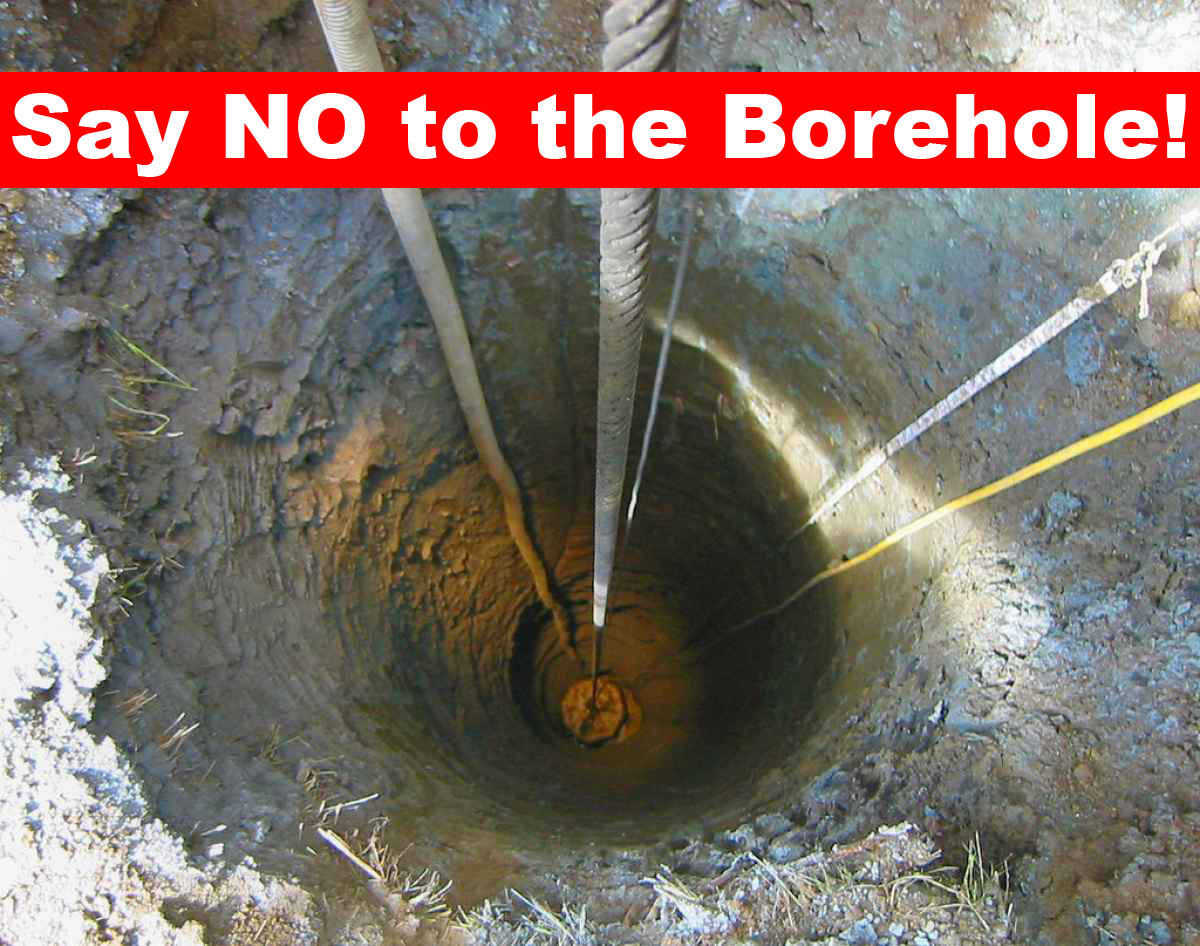
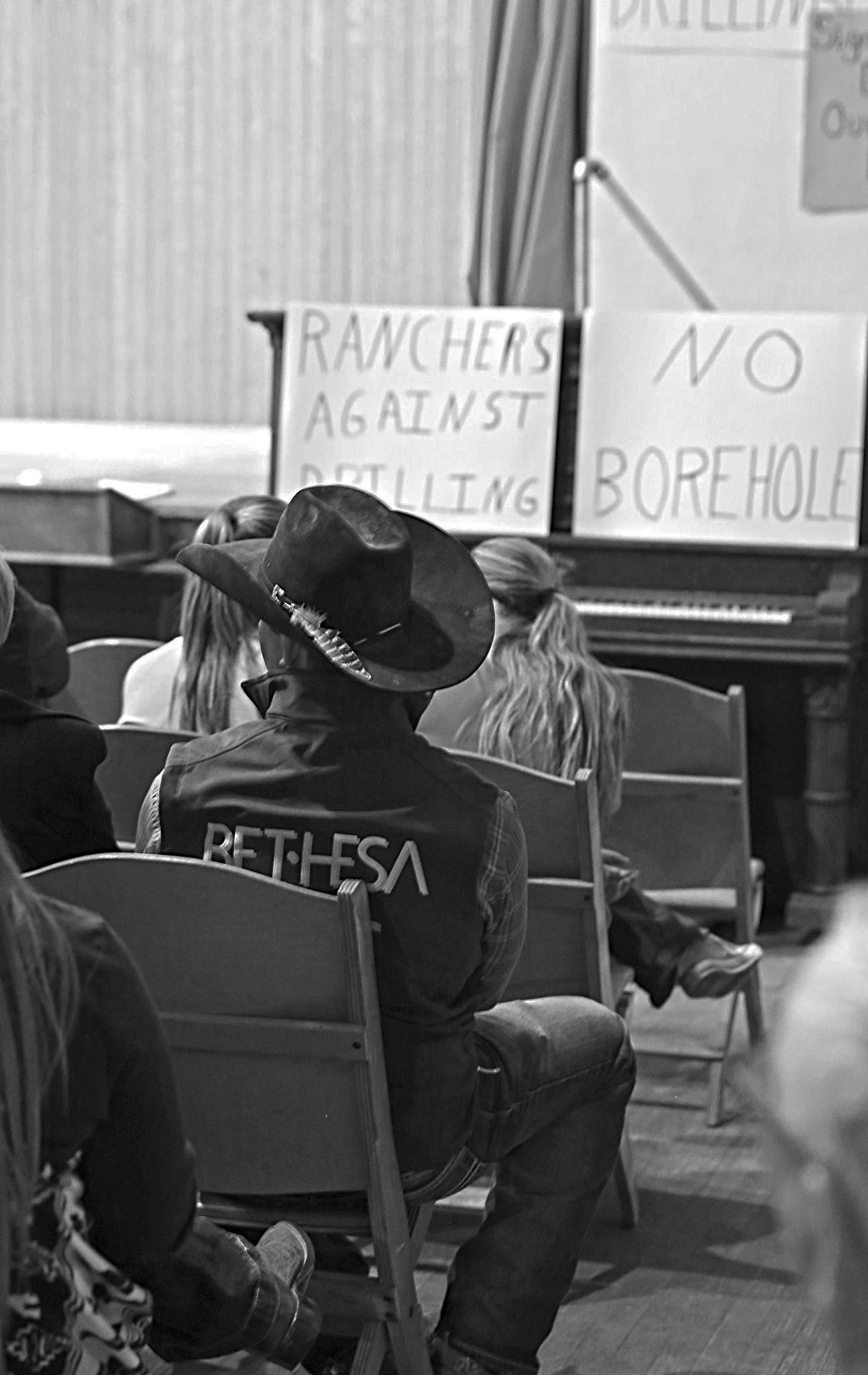
Taking matters into their own hands, the Say NO to the Borehole! group in Quay County held five public meetings in New Mexico and Texas.  https://www.facebook.com/groups/1822548207994770/  ENERCON promised to attend at least two of the group’s public meetings, but only attended the first meeting, claiming hurt feelings over attendees calling them liars.  ENERCON representatives refused to attend any further public meetings held in Quay County.

ENERCON held a meeting last week in Clovis, more than 100 miles from the proposed Nara Visa test site.  At the close of the meeting, the facilitator took an audience poll which revealed approximately three were in favor of the borehole, eight “learned something new,” and the remaining fifty opposed the project.

After the Clovis meeting, Ed Hughs, a Nara Visa native, said, “Even 100 miles away, in a different county, and in a meeting controlled by ENERCON, they still can’t get support.”


CCNS Public Scoping Comments to the Nuclear Regulatory Commission about Waste Control Specialists, LLC

CCNS submitted its public scoping comments to the Nuclear Regulatory Commission (NRC) about Waste Control Specialists, LLC (WCS) proposal to construct and operate a Consolidated Interim Storage Facility (CISF) (aka “de facto parking lot dump”) at its Andrews, Texas facility.  The scoping comments are the first step in a National Environmental Policy Act (NEPA) process that NRC is conducting about the proposal.  CCNS described what it believes the “scope” of the draft environmental impact statement should include.  CCNS urged NRC to deny WCS’s application and remand it back to WCS.  We argued that the NEPA process should be “halted until such time as WCS submits an application that addresses the environmental, public health and safety, environmental justice, and short-term and long-term risks as outlined in these comments and those raised in opposition comments submitted by others, including Deborah Reade on March 12, 2017.”

CCNS NRC WCS Scoping Comments 4-28-17


Comments due to NMED about WCS Discharge Permit on Tuesday, May 2nd

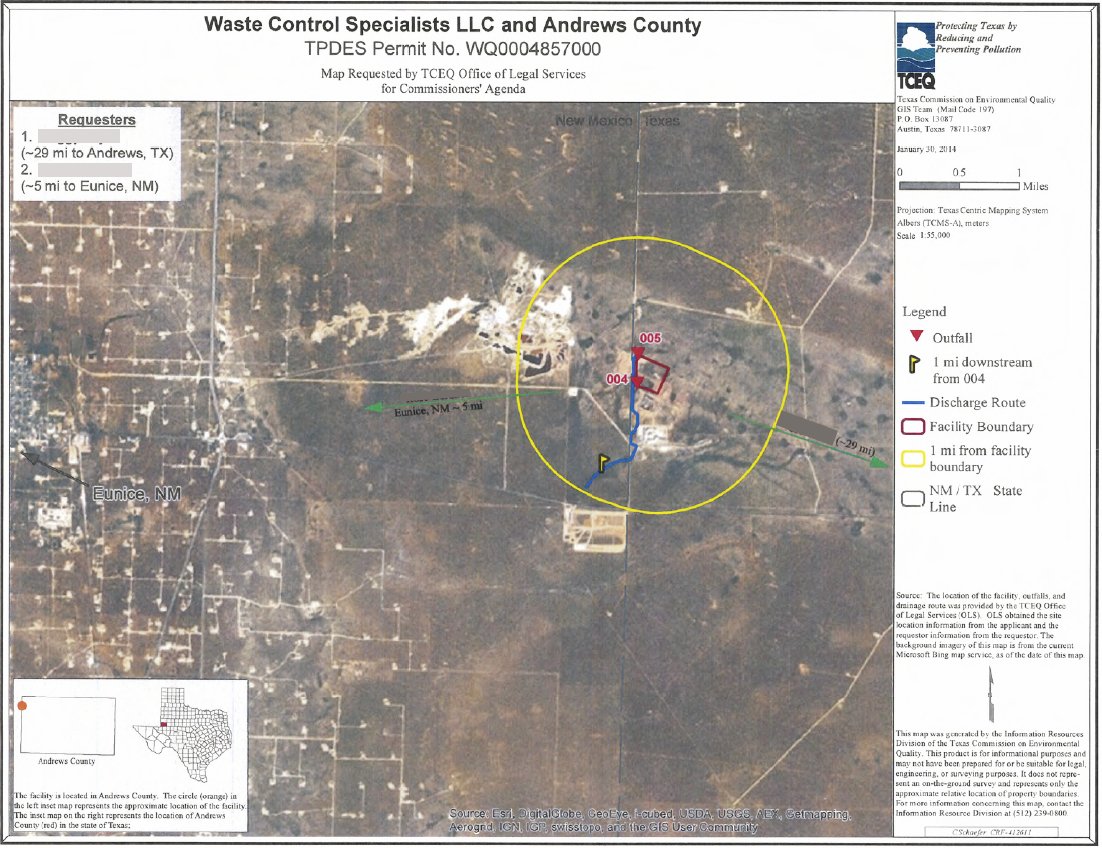
After nearly four years of start and stop negotiations with Waste Control Specialists (WCS), on March 3rd, the New Mexico Environment Department released a draft permit for the discharges of 170,500,000 gallons per day from the 14,900-acre radioactive and hazardous waste storage and disposal facility located in Texas on the Texas-New Mexico border, five miles east of Eunice, New Mexico.  The main outfall is located approximately 100 yards from the New Mexico state line.  CCNS has prepared a sample public comment letter you can use to submit comments to the Environment Department by 11:59 pm MST on Tuesday, May 2nd.  WCSSamplePublicComments042717

An immediate concern is the discharge volume of approximately 532-acre feet of industrial waste water and storm water that would flow from the dump every day to unnamed ditches in Texas and New Mexico, to the Monument Draw that flows in New Mexico and Texas, and then to the Rio Grande.  The permit contains contingencies for monsoons and flooding; even so, it is a huge volume of water.  NMEDWCSDRAFTGROUNDWATERPERMIT0302017

Texas also regulates the discharge.  http://www.wcstexas.com/pdfs/licenses/(1)%20Texas%20Pollutant%20Discharge%20Elimination%20System%20Permit-Byproduct%20Facility.pdf and http://www15.tceq.texas.gov/crpub/index.cfm?fuseaction=iwr.viewdocument&doc_name=Permit%2004038%2Epdfpdf&doc_id=947295212016237&format_cd=pdf  At one time it required WCS to meet New Mexico water quality standards.  For the past four years, only Texas standards apply.  In 2012, after WCS exceeded the discharge standards, WCS asked the Texas Commission on Environmental Quality to remove the New Mexico standards from the permit because WCS was working with the Environment Department to obtain a discharge permit.

On February 1st, before the Environment Department released the draft permit for public comment, WCS sent a letter asking to withdraw its application.  The Environment Department said no, “particularly given WCS’s actions in securing the removal of New Mexico effluent standards from the applicable Texas surface water permit based on representations to the Texas Commission on Environmental Quality that WCS would obtain a groundwater discharge permit from New Mexico.”  See Exhibit B [NMED February 9, 2017 Letter to WCS] at https://www.env.nm.gov/wp-content/uploads/2017/03/Waste-Control-Specialists-LLCs-Petition-for-Review-and-Notice-of-Appeal-of-the-Ground-Water-Quality-Bureau-of-the.pdf

WCS then petitioned the New Mexico Water Quality Control Commission to reverse the Environment Department’s decision.  Both parties submitted legal pleadings.  https://www.env.nm.gov/general/wqcc-17-01-a/  The Commission meets again on May 9th at the New Mexico Capitol, Room 307, in Santa Fe.  https://www.env.nm.gov/water-quality-control-commission/wqcc-meetings/

In the meantime, WCS is in court this week to oppose the Department of Justice antitrust lawsuit.  Last week, WCS asked the Nuclear Regulatory Commission to temporarily suspend review of its application for a 40-year license to build and operate a consolidated interim storage facility for 44,000 tons of plutonium fuel from nuclear power plants.  WCS Asks NRC to Pause License Application Review for High-Level Irradiated Waste Storage

Joni Arends, of CCNS, said, “Is this the type of privately-held corporation we want to be releasing its waste and storm waters into New Mexico?”


WCS Asks NRC to Pause License Application Review for High-Level Irradiated Waste Storage

CCNS anticipates that NRC will grant the WCS request.  Public comments are currently due on April 28th about the scope of the environmental impact statement.  We anticipate that the process will be halted.  We’ll let you know as soon as we know.

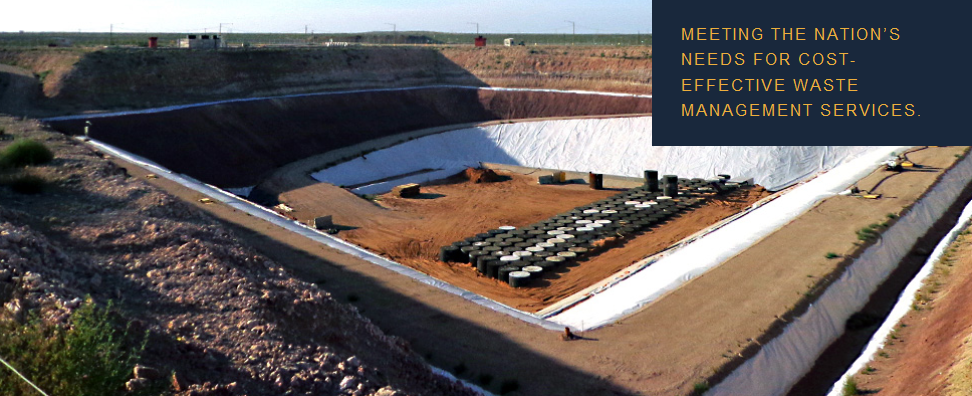
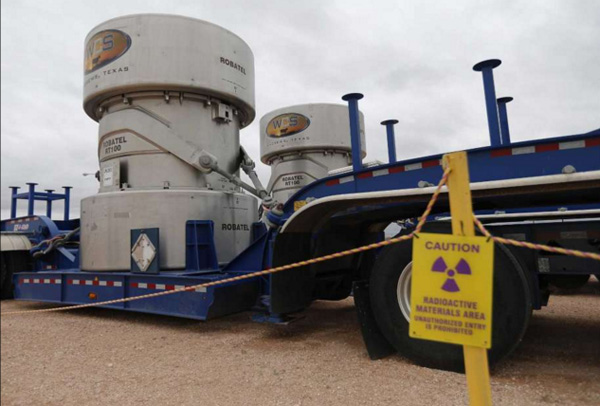
Waste Control Specialists (WCS) has too many irons in the fire and it appears they are getting burned.  On Tuesday, WCS, a privately owned corporation that operates a 14,900-acre dump on the Texas-New Mexico border, requested the Nuclear Regulatory Commission (NRC) to temporarily suspend the review of its license application for the storage of about half of the commercial irradiated fuel generated by nuclear power plants. Citing the costs associated with the NRC public participation process; the proposed sale of WCS to another waste storage and disposal company, EnergySolutions in Utah; and the upcoming trial in which the Department of Justice is challenging the proposed sale on antitrust grounds, WCS took a step back from their proposed license application to build a de facto permanent parking lot dump for up to 40,000 metric tons of irradiated fuel.  Many New Mexicans, and people in other states along the proposed transportation routes, oppose the proposals.

In the letter to the NRC, WCS President Rod Baltzer wrote, “WCS expects to go forward with this project at the earliest possible opportunity after completion of the sale.  However, due to the substantially increased application review and related costs, WCS must focus its limited financial resources on those expenditures necessary to safely run and maintain its currently licensed facilities, proceed through the trial set for April 24th, and complete the sale to EnergySolutions.”   FinalWCSSuspensionRequestToNRC041817 and FinalWCSCISFSuspensionPressRelease041817. In federal filings, WCS reported operating losses of $26.5 million in 2015 and $17.9 million in the first six months of 2016. 

In addition, just 40 miles away in New Mexico, the private nuclear company, Holtec, submitted its license application to the NRC on March 31st for a de facto permanent parking lot dump for up to 120,000 metric tons of irradiated fuel.  https://holtecinternational.com/2017/03/30/the-hi-store-consolidated-interim-storage-cis-program-reaches-a-major-milestone/

Both corporations state that the sites would not receive the highly radioactive waste unless and until federal law is changed.  Current law prohibits the Department of Energy from paying for transportation or storage at private parking lot dumps or for taking title to the waste.

Rose Gardner is a small business owner in Eunice, New Mexico who actively leads the efforts to oppose the proposed nuclear projects in the area.  She said, “Strong citizen opposition to the WCS proposal to bring irradiated commercial fuel to our area made it too expensive for WCS to proceed.  Similarly, strongly resistance to the Holtec proposal is needed.”

She continued, “We also need to tell Congress not to change the law.  The only way these proposals would work is for Congress to change the law so that taxpayer bailouts are doled out to the privately held WCS and Holtec corporations.”


NRC Extends Public Comment Period for High-Level Irradiated Waste Storage at WCS to April 28th

Southeastern New Mexico and West Texas are under threat for the storage of all of the nation’s existing irradiated commercial fuel from nuclear power plants and all that would be generated in the next 30 years or longer at two de facto permanent parking lot dumpsites.  On the Texas – New Mexico border, five miles east of Eunice, New Mexico, on a 14,900 acre-dumpsite, Waste Control Specialists (WCS) submitted an application to the Nuclear Regulatory Commission (NRC) for a 40-year license to store more than half of the commercial irradiated fuel in the U.S.  Just 40 miles away in New Mexico, the private nuclear company, Holtec, submitted its application last month for a de facto permanent parking lot dump for up to 120,000 metric tons of irradiated fuel.  Many New Mexicans, and people in other states, oppose the proposals.

While the NRC is reviewing the WCS application, it is beginning a National Environmental Policy Act (NEPA) process by soliciting comments about what the environmental impact statement should contain.  Generally, the statements examine impacts to surface and ground water, soil, air, transportation, geology, socioeconomics, historic and cultural resources, and threatened and endangered species, among other issues.

The scope of the draft environmental impact statement should include the impacts to the following aquifers:  the Dockum, Ogallala, Pecos Valley, and Edwards-Trinity.

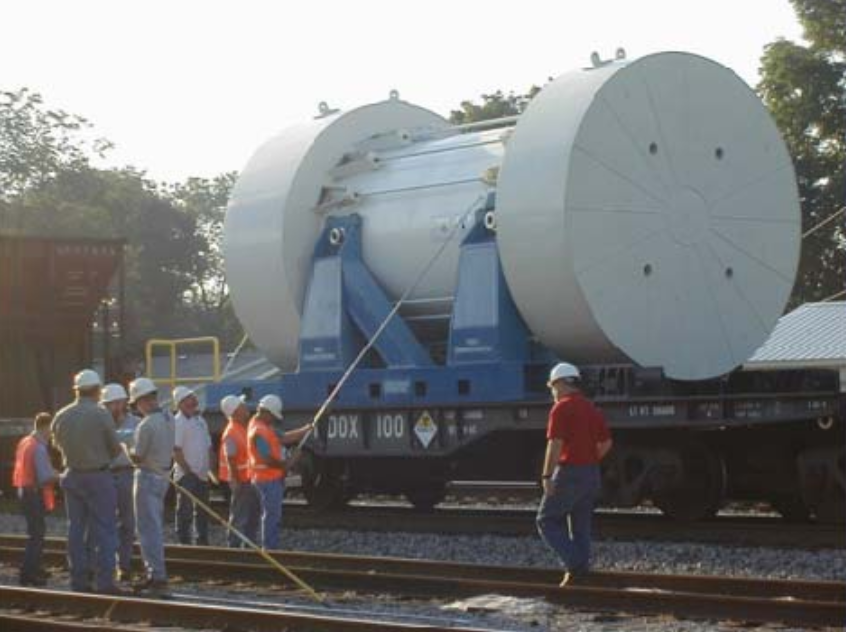
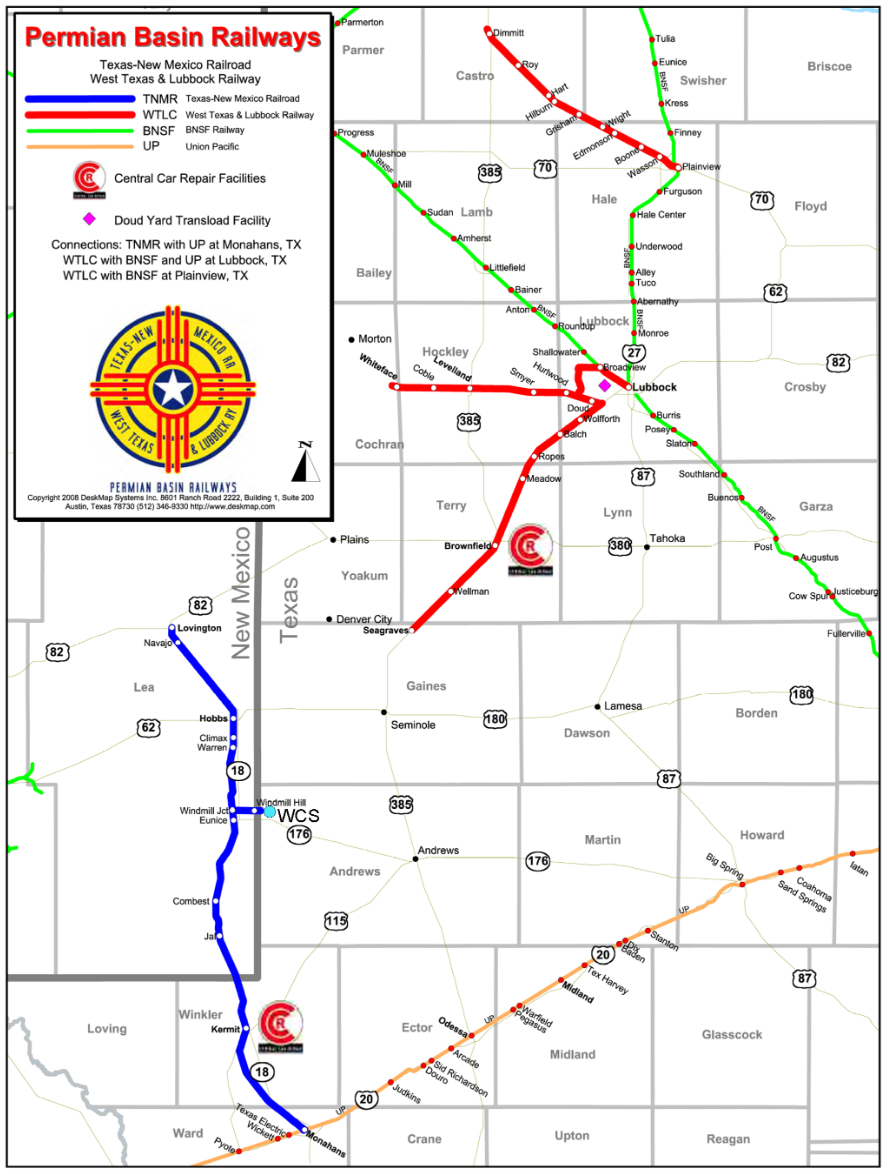
There are many concerns about the transportation of irradiated nuclear fuel across the United States on water, rail and roads, sometimes referred to as “Mobile Chernobyls” or “Floating Fukushimas.”  Since the only rail line to WCS goes through Eunice, all of the waste would go through that New Mexico community.  It is estimated that irradiated fuel would be transported for 24 years or longer if both sites operate, since they could handle all of the irradiated fuel produced for several more decades.

Proposed transportation maps are available at:  http://static1.1.sqspcdn.com/static/f/356082/27450667/1486998445013/Rail-Transport+routesWCS-1.pdf?token=wgGRSYLr7EbqxLd54LrQ0V8Jd4s%3D and http://static1.1.sqspcdn.com/static/f/356082/27010289/1462420316290/5+4+16+WCS+Transportation+Maps.jpg?token=fdXd0O9cuEa7l77eBIMXkEv0ih4%3D  and water transportation routes by state, https://web.archive.org/web/20151101154823/http://www.nirs.org/fukushimafreeways/watertransport.htm  Please share these maps with family and friends who live along the routes.

NRC recently extended the public comment period about what issues they should address in the statement to Friday, April 28th.  CCNS has prepared a sample public comment letter for you to use.  It details many of the important issues. WCSNRCComments041417   *Please note* – “The NRC cautions you not to include identifying or contact information that you do not want to be publicly disclosed in your comment submission.  The NRC posts all comment submissions at http://www.regulations.gov as well as entering the comment submissions in ADAMS [the NRC’s Agencywide Documents Access and Management System].”  82 Fed. Reg. 8771, January 30, 2017.  Please modify as you wish, but please be sure to submit your comments to WCS_CISF_EIS@nrc.gov before the Friday, April 28, 2017 11:59 pm Eastern time (9:59 pm Mountain time) deadline.  THANK YOU! 

The WCS application also states that the site would receive no irradiated fuel unless and until federal law is changed.  Current law prohibits the Department of Energy (DOE), the federal agency responsible for irradiated fuel, from paying for transportation or storage at a private parking lot dump or for taking title to the waste.  Please contact your congressional representatives and urge them to oppose changes in the law that would allow taxpayer funding for parking lot dumps.  Here is the main switchboard number for Congress – the Senate and House – in Washington, DC – (202) 225-3121.


New Mexico and Texas Targeted for Consolidated Storage of All the Plutonium Fuel from Nuclear Power Plants

Southeastern New Mexico and West Texas are targeted for the construction and operation of two de facto parking lot dumps for all of the nation’s existing irradiated plutonium fuel, also known as high-level radioactive waste, and all that would be generated in the next 30 years.  Last week, Holtec International, a private nuclear company, submitted its application to the Nuclear Regulatory Commission (NRC) for a 40-year license to store 100,000 metric tons of commercial fuel at a Highway 62 site, located halfway between Carlsbad and Hobbs, and 15 miles north of the Waste Isolation Pilot Plant (WIPP).  https://holtecinternational.com/2017/03/30/the-hi-store-consolidated-interim-storage-cis-program-reaches-a-major-milestone/  In January, Waste Control Specialists submitted its application to store more than half of the commercial fuel on its 14,900-acre dumpsite on the Texas – New Mexico border, five miles east of Eunice, New Mexico.  http://www.wcstexas.com/wp-content/uploads/2017/01/NRC.WCS_.1.27-1.pdf

Many New Mexicans and Texans oppose the proposals.  The vast majority of the nation’s nuclear power plants are located in the east.  Transportation of the fuel by ship, rail and highway creates radiation risks to those living along the routes.  The emergency preparedness and response required for a radiation release is lacking.  It is estimated that a small accidental release of radiation could minimally contaminate 42-square miles and cost $9.5 billion to cleanup contamination in a large city, and $620 million in a rural area.

Proposed transportation maps are available at:  http://static1.1.sqspcdn.com/static/f/356082/27450667/1486998445013/Rail-Transport+routesWCS-1.pdf?token=wgGRSYLr7EbqxLd54LrQ0V8Jd4s%3D and http://static1.1.sqspcdn.com/static/f/356082/27010289/1462420316290/5+4+16+WCS+Transportation+Maps.jpg?token=fdXd0O9cuEa7l77eBIMXkEv0ih4%3D  and water transportation routes by state, https://web.archive.org/web/20151101154823/http://www.nirs.org/fukushimafreeways/watertransport.htm

NRC calls the proposed parking lot dumps “consolidated interim storage facilities.”

On February 21, 2017, Bexar County, Texas passed a resolution opposing the proposals.  San Antonio is the county seat and it passed a similar resolution.  The Bexar resolution states, “Bexar County does not support or consent to consolidated interim storage of radioactive waste in Texas and nearby New Mexico, or the transportation of high-level radioactive waste on our railways or highways for the purpose of consolidated storage or permanent disposal of high-level radioactive waste in Texas or New Mexico.”  Bexar County Resolution – Feb 21 2017-1 The Commissioners Court of Dallas County Dallas Rad Waste Transport FINAL 4-4-17 and the Texas Democratic Party have passed similar resolutions.

In New Mexico, Governor Susana Martinez offered support.  State Representative James Townsend, who represents Artesia, said, “I don’t believe the community or the state will allow something to occur that they don’t believe is safe.  Look at WIPP’s track record.  Overall, we have had a very good track record, and I believe this facility will perform equally.”  https://www.nmlegis.gov/Members/Legislator?SponCode=HTOWJ

In contrast, Senator Tom Udall said New Mexico has already contributed to the nation’s waste disposal problem.  He continued, “Any future nuclear waste mission in New Mexico would need broad support throughout the state, as well as an independent scientific analysis ensuring its safety before I would consider supporting it.”  https://www.tomudall.senate.gov/


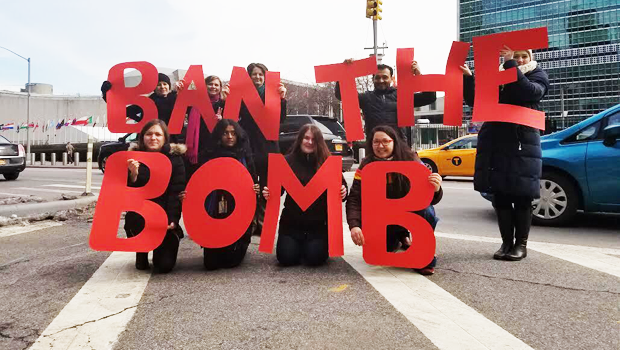
Over 120 Nations Negotiating Historic International Treaty to Ban Nuclear Weapons

This week at the United Nations in New York, a majority of the world’s governments, together with international organizations and civil society, led by the International Campaign to Abolish Nuclear Weapons (ICAN), http://www.icanw.org/, gathered to begin negotiations on a treaty to ban nuclear weapons.  The treaty process is supported by the United Nations, over 120 governments, the International Committee of the Red Cross and Red Crescent, https://www.icrc.org/en/document/speech-icrc-president-nuclear-weapons-prohibition-treaty-negotiations, the Pope, http://w2.vatican.va/content/francesco/en/messages/pont-messages/2017/documents/papa-francesco_20170323_messaggio-onu.html, and other faith-based leaders, over 3,000 scientists, https://futureoflife.org/nuclear-open-letter/, and civil society.  The UN defines civil society as the “third sector” of society, along with government and business, and comprises non-governmental organizations and institutions.

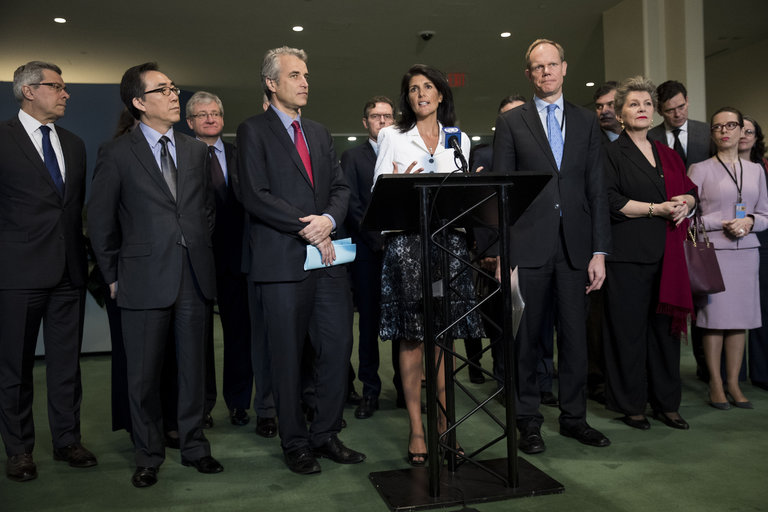
Recognizing the humanitarian impact of and suffering from the use of nuclear weapons is incalculable, the treaty process began, despite opposition from the nuclear weapons states.  On Monday, the U.S., United Kingdom, France and a number of Eastern European allies held a protest outside of the United Nations.  http://nuclearsecurityworkinggroup.org/united-states-and-allies-protest-u-n-talks-to-ban-nuclear-weapons/

In New Mexico, the incalculable humanitarian impact is evident for those exposed to radiation from the first atomic bomb test at the Trinity Site in the early morning hours of July 16, 1945.  https://www.trinitydownwinders.com/  The U.S. has not recognized their suffering and has not provided the medical care and compensation received by the Nevada Test Site Downwinders through the federal Radiation Exposure Compensation Act (RECA).

In support of the ban treaty, Downwinders from around the world spoke about the harm done, including those from Japan, the Republic of the Marshall Islands, Maralinga in Australia, and others. http://www.reachingcriticalwill.org/images/documents/Disarmament-fora/nuclear-weapon-ban/reports/NBD1.3.pdf p.4.

On Tuesday, the Alliance for Nuclear Accountability made a presentation about the proposed 11 percent increase to the U.S. nuclear weapons budget to “modernize” weapons and infrastructure.  http://www.reachingcriticalwill.org/images/documents/Disarmament-fora/nuclear-weapon-ban/reports/NBD1.3.pdf p. 3.   

Ray Acheson, a project director for the Women’s International League for Peace and Freedom, explained the work of the International Campaign to Abolish Nuclear Weapons.  She said, “While it may seem daunting, fulfilling this task is fully within our means.  In theory, it is an obvious thing to ban something so abhorrent.  We have banned chemical and biological weapons, landmines and cluster munitions, and we even preemptively banned blinding laser weapons.  We did this even without the support of users and producers of some of these weapons.”

Acheson continued, “We are motivated by the catastrophic humanitarian consequences of nuclear weapons, the risk of their use, and the deplorable waste of resources currently being sunk into the on-going arms race.  We understand the global injustice these weapons represent, and we are morally, ethically, and legally compelled to categorically prohibit these weapons of mass destruction once and for all.”

To follow the Campaign on social media, use hashtag  #nuclearban and the Twitter accounts  @RCW_ and @nuclearban.