
Current Activities

DOE Proposes a 53 Percent Increase in Waste Storage at LANL’s Plutonium Facility

Proposing to increase the generation and storage of hazardous and radioactive waste by 53 percent at the Plutonium Facility at Los Alamos National Laboratory (LANL), the Department of Energy (DOE) submitted a request to the New Mexico Environment Department to modify the hazardous waste permit, naming it “Revision 0” in anticipation of having to resubmit it.  The Plutonium Facility was recently reopened.  It is the only place in the United States for the manufacture of plutonium triggers, or cores, for nuclear weapons.  For a number of years it was closed in order to address security and safeguard issues; long-neglected maintenance; and the increased seismic risk on the Pajarito Plateau, where LANL is located.

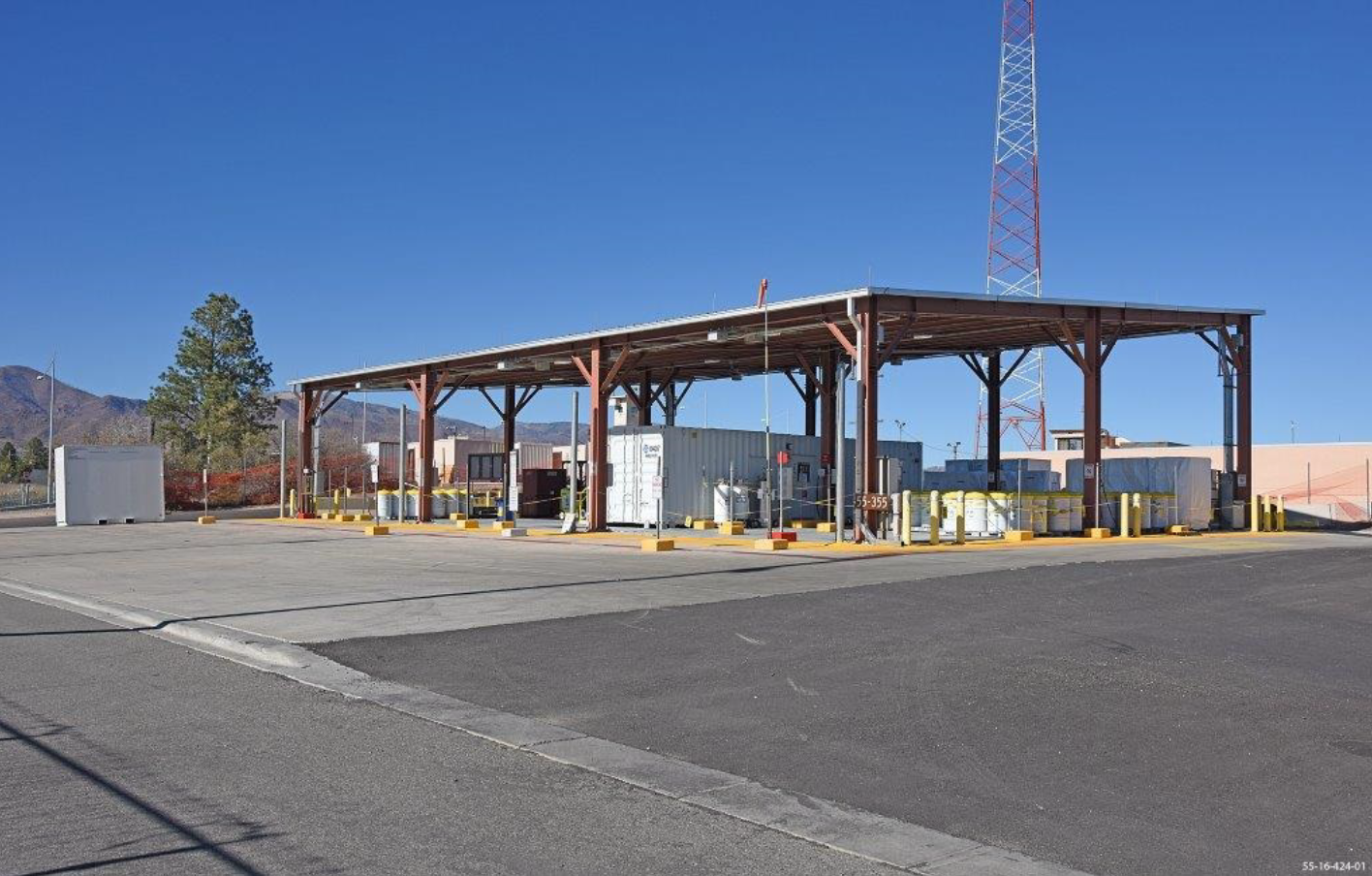
DOE wants to store 94,545 gallons of waste in three units at the Plutonium Facility.  One is an outdoor carport on a concrete pad, and the other two are in rooms in the basement.  http://permalink.lanl.gov/object/tr?what=info:lanl-repo/eprr/ESHID-602143-01

Unfortunately, there are a number of errors in the request.  For example, DOE states the classification of the request is a Class 2, which requires a public comment period.  However, it is clear that the classification should be a Class 3 because DOE is asking to increase its storage capacity at the Plutonium Facility by 53 percent.  http://permalink.lanl.gov/object/tr?what=info:lanl-repo/eprr/ESHID-602143-01 p. 13.

A Class 3 request requires a public comment period, as well as an opportunity to request a public hearing and judicial review of the final decision.  A public hearing is necessary because of the age of the Plutonium Facility, which was built more than 50 years ago; and the on-going public health concerns about the inadequate ventilation system for containing respirable particles of plutonium in emergency situations, among other issues.

The Environment Department has not released a draft permit for public comment.  Nevertheless, CCNS has prepared a sample public comment letter for you to use to the Environment Department to urge them to determine that the proposed permit modification is a Class 3, requiring more opportunities for public participation.  f DOE TA-55 permit mod request 3-17-17

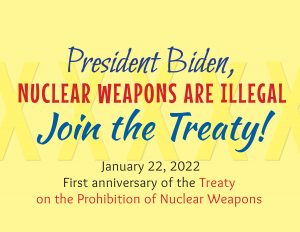
The question DOE has not answered is why does LANL continue to generate hazardous, toxic and radioactive waste associated with manufacture of plutonium triggers for nuclear weapons.  This question is extremely timely given that the United Nations will begin negotiations for a new international treaty prohibiting nuclear weapons.  Two sessions of negotiations will take place in New York.  The first session runs from Monday, March 27th to Friday, March 31st and the second, from June 15th to July 7th.  For more information, visit http://nuclearban.org/
 

Comments Due Monday, March 13th to NRC about Storage of High-Level Waste at WCS

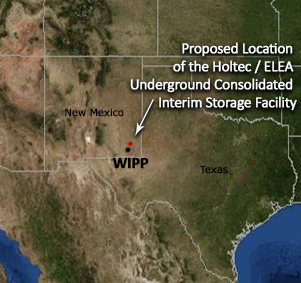
Southeastern New Mexico and West Texas are targeted for the storage of all of the nation’s existing irradiated fuel and all that would be generated in the next 30 years at two de facto permanent parking lot dump sites.  On the Texas – New Mexico border, five miles east of Eunice, New Mexico, on a 14,900 acre-dumpsite, Waste Control Specialists is asking the Nuclear Regulatory Commission (NRC) for a 40-year license to store more than half of the commercial irradiated fuel in the U.S.  Just 40 miles away in New Mexico, the private nuclear company, Holtec, is expected to submit its application in late March for a de facto permanent parking lot dump for 100,000 metric tons of irradiated fuel.  Many New Mexicans oppose the proposals.

The NRC term for a permanent parking lot dump is a “consolidated interim storage facility,” or a CISF.  https://www.federalregister.gov/documents/2017/01/30/2017-01966/waste-control-specialists-llcs-consolidated-interim-spent-fuel-storage-facility-project

At the same time NRC is reviewing the WCS application, it will prepare an environmental impact statement to examine impacts to surface and ground water, transportation, geology, soil, air, socioeconomics, historic and cultural resources and threatened and endangered species, among other issues.  You are invited to provide comments to NRC about what issues should be addressed in the statement, with comments due on Monday, March 13th to WCS_CISF_EIS@nrc.gov.  A sample public comment letter for you to use is available by clicking this link…  WCS_NRC_Scoping_Comments031017  *Please note* – “The NRC cautions you not to include identifying or contact information that you do not want to be publicly disclosed in your comment submission.  The NRC posts all comment submissions at http://www.regulations.gov as well as entering the comment submissions in ADAMS [the NRC’s Agencywide Documents Access and Management System].”  82 Fed. Reg. 8771, January 30, 2017.  Please modify as you wish, but please be sure to submit your comments to WCS_CISF_EIS@nrc.gov before the Monday, March 13, 2017 11:59 pm Eastern time (9:59 pm Mountain time) deadline.  THANK YOU! 

The scope of the draft environmental impact statement should include the impacts to the following aquifers:  the Dockum, Ogallala, Pecos Valley, and Edwards-Trinity. 

There have been concerns about the transportation of irradiated nuclear fuel across the United States on water, rail and roads, such as the interstate highway system, including questions about emergency preparedness and response capabilities.  The shipments are allowed to travel on all transportation routes. While the vast majority of the nation’s more than 100 nuclear power plants are located in the east, the only rail access to the WCS site is through Eunice, New Mexico, so all shipments would come through southeastern New Mexico over the proposed 24 years of operations.  http://static1.1.sqspcdn.com/static/f/356082/27450667/1486998445013/Rail-Transport+routesWCS-1.pdf?token=wgGRSYLr7EbqxLd54LrQ0V8Jd4s%3D and http://static1.1.sqspcdn.com/static/f/356082/27010289/1462420316290/5+4+16+WCS+Transportation+Maps.jpg?token=fdXd0O9cuEa7l77eBIMXkEv0ih4%3D  and water transportation routes by states, https://web.archive.org/web/20151101154823/http://www.nirs.org/fukushimafreeways/watertransport.htm

The statement should include specific designation of water, rail and road transportation routes and the array of potential impacts of accidents and/or terrorism incidents along the routes and at the dumpsite.  A 2014 Texas Commission on Environmental Quality report warned of potential sabotage of radioactive waste shipments and suggested that such an incident would most likely occur in a large city rather than in a rural area.


New Mexico Targeted for Deep Borehole Irradiated Fuel Disposal Facility – Upcoming Public Meetings

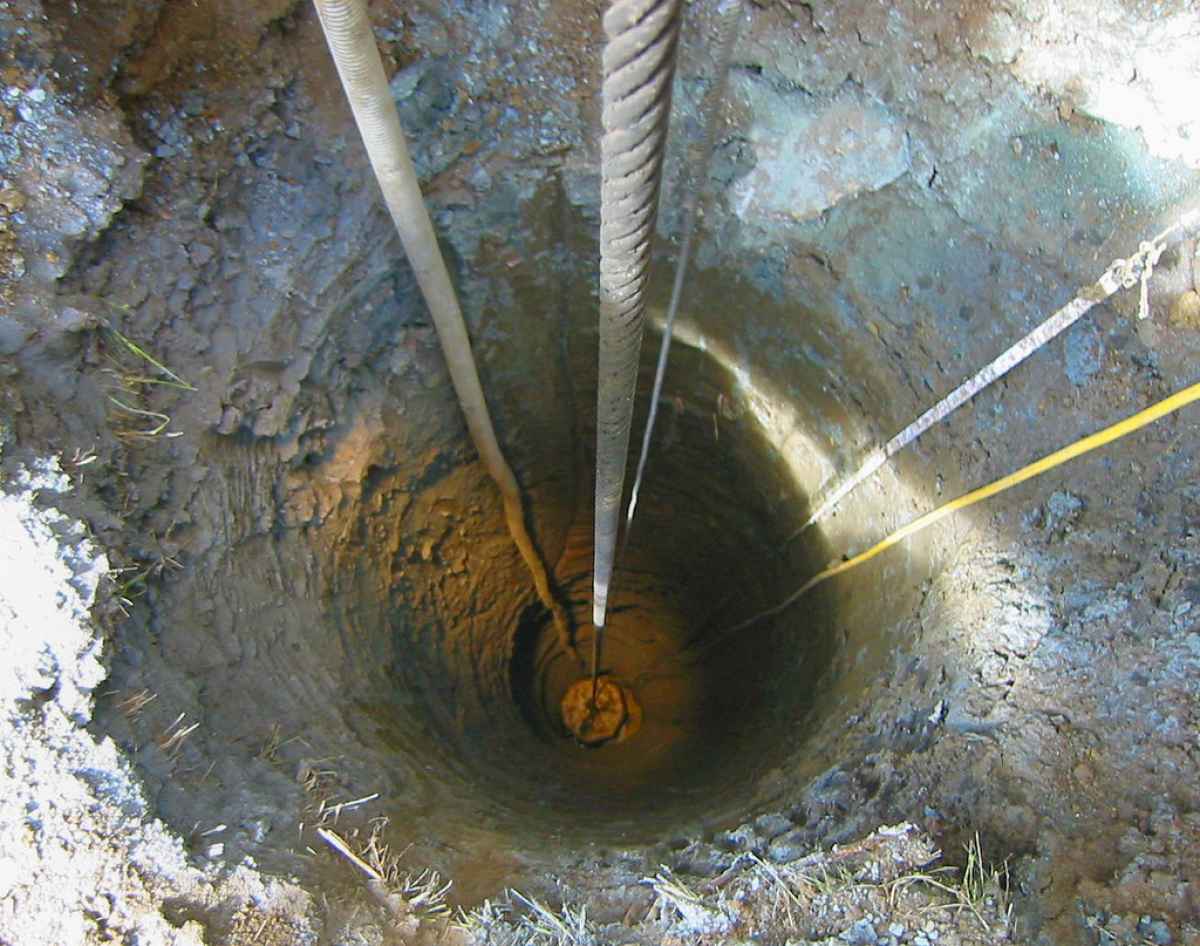
The Department of Energy (DOE) is proposing to build a deep borehole disposal facility for irradiated nuclear fuel in one of four locations in New Mexico, Texas, or South Dakota where crystalline, or granite, formations exist.  Currently there are four contractors working to find a community that is willing to sign an agreement to allow drilling of a three-mile deep test borehole.  https://energy.gov/under-secretary-science-and-energy/articles/studying-feasibility-deep-boreholes

In New Mexico, DOE is courting the Nara Visa area along the Texas border in Quay County, and the privately held Y Bar Ranch, owned by Greg Duggar, in Otero County.  DOE is saying the proposed $30 million project will bring jobs and that no nuclear waste would be disposed in the test borehole.  What they are not saying is that the test borehole may lead to deep borehole disposal facility.

The plans have been in the works since before 2012.  There has been a technical back and forth between DOE and the U.S. Nuclear Waste Technical Review Board.  In 1987, Congress created the Board in amendments to the Nuclear Waste Policy Act to evaluate the technical and scientific validity of activities undertaken by the Energy Secretary.

In 2015, the Board hosted a two-day international technical workshop about radioactive waste disposal in deep boreholes.  In January 2016, the Board submitted its findings and recommendations in a report to Congress and DOE.  The findings included a warning that the time required creating a regulatory framework, finding an acceptable site, and characterizing the geology for a deep borehole “might be comparable to that of a mined geologic repository.”  http://www.nwtrb.gov/reports/DBD_final.pdf, p. iv.

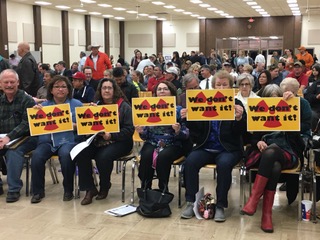
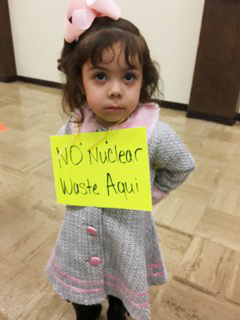
In response to the courting in Quay County, a series of “Say NO to the Borehole Public Forums” will be held in Texas and New Mexico from March 13th to April 3rd.  Cydni Wyatt, from Nara Visa, is one of the organizers.  She said, “We’re raising community awareness.  People need to understand the long-term implications of these boreholes.  A viable test borehole opens the door to a nuclear waste disposal site in the future.“

Say NO forums will be held on Monday, March 13th at 7 pm Central Standard Time at the First Baptist Church ROC in Dalhart, Texas; on Tuesday, March 14th at 7 pm Mountain Standard Time at the Logan Civic Center in Logan, New Mexico; on Monday, March 20th at 7 pm at the Herzstein Museum in Clayton, New Mexico; on Monday, March 27th at 7 pm at the Tucumcari Convention Center; and on Monday, April 3rd at 6 pm at the San Jon Community Center.

Enercon, the DOE contactor in Quay County, is expected to attend.

The contractor in Otero County is Terranear PMC.  They will be holding a public meeting on Tuesday, March 14th from 4 to 5 pm at the Patron’s Hall, 1106 N. New York Avenue, in Alamogordo.  Terranear PMC will host meetings throughout Otero County and plans to announce the schedule soon.


Storage of High-Level Waste at WCS? Comments Due Monday, March 13th to NRC

Last spring, Waste Control Specialists (WCS) submitted an application to the Nuclear Regulatory Commission (NRC) for a 40-year license to store up to 40,000 metric tons of commercial irradiated nuclear fuel on de facto permanent parking lot dumps at its site located in West Texas, on the New Mexico border.  Currently, this volume is more than half of the commercial irradiated fuel in the U.S.  The NRC term for a permanent parking lot dump is a “consolidated interim storage facility.”  https://www.federalregister.gov/documents/2017/01/30/2017-01966/waste-control-specialists-llcs-consolidated-interim-spent-fuel-storage-facility-project

The 14,900-acre dumpsite is located five miles east of Eunice, New Mexico and 32 miles west of Andrews, Texas on Highway 176 West.  It is licensed to dispose of hazardous and toxic waste and to process and store low-level radioactive waste.  http://www.wcstexas.com/

WCS was licensed while Rick Perry was Governor of Texas, despite the lack of protection of the four aquifers below the site – the Ogallala, the Dockum, the Pecos Valley, and the Edwards-Trinity Plateau, among other things.  The Simmons family, owner of WCS, is a large political contributor to Perry.  The patriarch, Harold Simmons, contributed $620,000 to Perry’s campaigns.  http://www.counterpunch.org/2017/01/09/radioactive-waste-is-good-for-you-or-how-i-learned-to-stop-worrying-and-love-rick-perry-as-energy-secretary/

Next week, it is expected the U.S. Senate will confirm Rick Perry as President Trump’s Department of Energy (DOE) Secretary.  https://www.energy.senate.gov/public/index.cfm/2017/1/nomination-hearing-of-the-honorable-rick-perry-for-secretary-of-energy  At his confirmation hearing, Perry re-affirmed his support for surface storage facilities at WCS, even though current federal law prohibits DOE from owning or paying for storage and transportation at such privately owned sites.  WCS’s license application states that it will only operate if DOE does own the waste and pays the costs.

While the vast majority of the nation’s more than 100 nuclear power plants are located in the east, the only rail access to the WCS site is through Eunice, New Mexico, so all shipments would come through southeastern New Mexico.  For more information, please see these maps:  http://static1.1.sqspcdn.com/static/f/356082/27450667/1486998445013/Rail-Transport+routesWCS-1.pdf?token=wgGRSYLr7EbqxLd54LrQ0V8Jd4s%3D and http://static1.1.sqspcdn.com/static/f/356082/27010289/1462420316290/5+4+16+WCS+Transportation+Maps.jpg?token=fdXd0O9cuEa7l77eBIMXkEv0ih4%3D  and water transportation routes by states, https://web.archive.org/web/20151101154823/http://www.nirs.org/fukushimafreeways/watertransport.htm  Many New Mexicans oppose the dumpsite.

NRC will prepare an environmental impact statement to examine surface and ground water, transportation, geology, soil, air, socioeconomics, historic and cultural resources and threatened and endangered species, among other issues.  You are invited to provide comments to NRC about what issues should be addressed in the statement, with comments due on Monday, March 13th.  CCNS posted a sample public comment letter for you to use. NRC_WCS_Scoping_Comments022317  *Please note* – “The NRC cautions you not to include identifying or contact information that you do not want to be publicly disclosed in your comment submission.  The NRC posts all comment submissions at http://www.regulations.gov as well as entering the comment submissions in ADAMS [the NRC’s Agencywide Documents Access and Management System].”  82 Fed. Reg. 8771, January 30, 2017.  Please modify as you wish, but please be sure to submit your comments to James.Park@nrc.gov before the Monday, March 13, 2017 deadline.  THANK YOU! 

Just 40 miles away in New Mexico, the private nuclear company, Holtec, is expected to submit its application in late March for a de facto permanent parking lot dump for 100,000 metric tons of irradiated fuel.   http://www.currentargus.com/story/news/local/2016/02/05/eddy-lea-alliance-moves-nuclear-storage-site/79893524/

Thus, if both sites are approved, all of the nation’s existing irradiated fuel and all that would be generated in the next 30 years could come to those two sites.


Uranium Workers’ Day at New Mexico State Capitol on February 27th

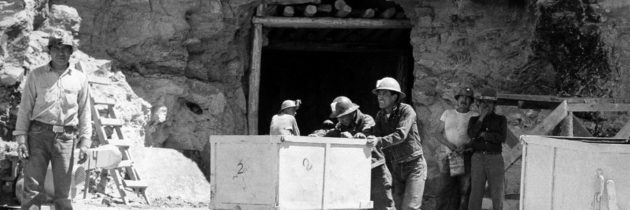
The Multicultural Alliance for a Safe Environment (MASE) is organizing a Uranium Workers’ Day at the New Mexico State Capitol for Monday, February 27th, in order to raise awareness about the continuing health and environmental impacts from uranium mining faced by many New Mexicans.  https://swuraniumimpacts.org/uranium-workers-day-february-27-2017/  Navajo Nation President Russell Begaye will attend the event.  Laguna Pueblo President Virgil Siow will be unable to attend, but will send the Pueblo Tribal Secretary in his absence.

Beginning at 10 am, MASE will hold a training about how to lobby your state senators and representatives.  It will be held at the Garrett’s Desert Inn, located at 311 Old Santa Fe Trail.  At noon, a press conference in the Capitol Rotunda will be held.

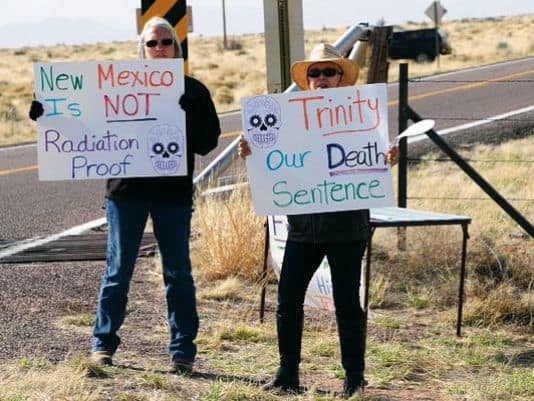
Participants will then speak with their state senators and representatives about their concerns and show support for Senator John Pinto’s Senate Memorial 85 https://www.nmlegis.gov/Legislation/Legislation?Chamber=S&LegType=M&LegNo=85&year=17 and Representative Wonda Johnson’s House Memorial 40  https://www.nmlegis.gov/Legislation/Legislation?Chamber=H&LegType=M&LegNo=40&year=17  The memorials call for the expansion of compensation and health care for uranium workers, Trinity Test Downwinders and New Mexicans as proposed in the recently introduced U.S. Senate Bill 197 that amends the federal Radiation Exposure Compensation Act (RECA).  https://www.congress.gov/bill/115th-congress/senate-bill/197

Senator Pinto and Representative Johnson represent residents in McKinley and San Juan counties where uranium has been mined and milled.  The House Memorial is co-sponsored by Representative Eliseo Lee Alcon, Representative Georgene Louis, and Representative Patricia A. Lundstrom.

RECA is a federal law originally passed by the United States Congress in 1990 to award financial reparations to downwinders of the above-ground atomic tests at the Nevada Test Site, on-site test participants during atmospheric nuclear weapons tests, and uranium miners and millers who developed cancer and/or other specific illnesses as a result of radioactive fallout or radon gasses to which they were exposed.  Radon gasses are found in uranium mines.

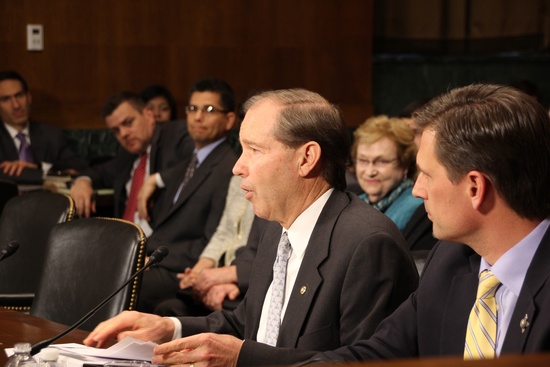
U.S. Senate Bill 197 expands RECA to include the uranium miners and millers who worked after 1971, as well as the Trinity test downwinders and New Mexicans exposed to radiation.  It is co-sponsored by Senator Tom Udall and Senator Martin Heinrich of New Mexico.  A companion bill will be introduced in the U.S. House of Representatives the week of February 27th.

Representative Johnson’s House Memorial 40 is scheduled to be heard on Thursday, February 23rd at 8:00 am before the House State Government, Indian and Veterans’ Affairs Committee in the New Mexico State Capitol, Room 309.  Please join MASE in support of House Memorial 40.

For more information, please contact Susan Gordon, Coordinator for MASE, at sgordon@swuraniumimpacts.org, or 505 577-8438.


Tularosa Basin Downwinders Consortium Releases Its Trinity Test Health Impact Assessment at February 15th Albuquerque Public Meeting

The Tularosa Basin Downwinders Consortium will release its Health Impact Assessment report entitled, “Unknowing, Unwilling, and Uncompensated:  The Effects of the Trinity Test on New Mexicans and the Potential Benefits of Radiation Exposure Compensation Act (RECA) Amendments,” on Wednesday, February 15th beginning at 6 pm at the Albuquerque Peace and Justice Center, located at 202 Harvard Drive, Southeast.  The public is invited to attend and enjoy a light dinner.

The Health Impact Assessment focuses on the harm done by the July 16, 1945 Trinity Test on New Mexicans and the potential benefits of the Radiation Exposure Compensation Act (RECA) amendments for the residents of the Tularosa Basin.

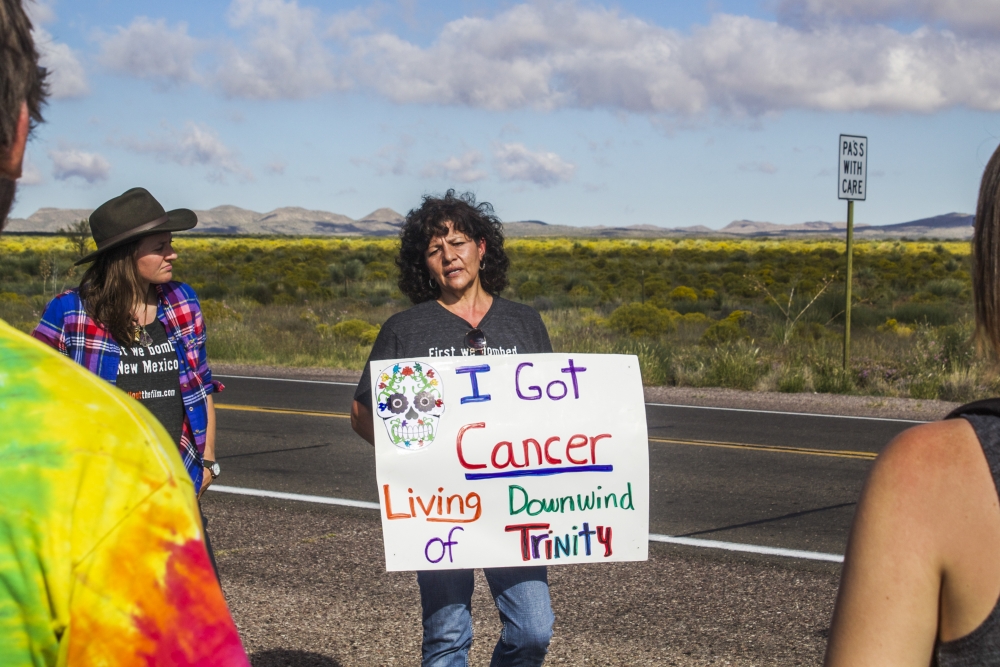
RECA, a federal law first passed by Congress in 1990, awarded financial reparations to Nevada Test Site downwinders, on-site test participants during atmospheric nuclear weapons tests, and uranium miners and millers who developed cancer and/or other specific illnesses as a result of radioactive fallout or radon gasses to which they were exposed.  Trinity Test downwinders in New Mexico were not included in the original Act, nor were they included in the amendments passed in 2000.

Residents of southern New Mexico, in particular, have historically experienced high levels of cancer and related illnesses since the first atmospheric nuclear test at the Trinity site in southcentral New Mexico.

Last month, Senator Tom Udall and Senator Martin Heinrich introduced amendments to RECA that would include New Mexico, and potentially award Trinity downwinders reparations to account for their unknowing and unwilling participation as bystanders to the Trinity test.  The proposed amendments expand RECA to provide medical benefits and other compensation to the post-1971 uranium miners, and to the people affected by testing in New Mexico, the Pacific Islands and throughout the West who are experiencing health problems due to radiation exposure.  https://www.congress.gov/bill/115th-congress/senate-bill/197

Senator Udall said, “During the Cold War, many New Mexicans and others across the West sacrificed their health and safety for our nation.  While we can’t undo the damage and suffering, it’s long past time for the federal government to provide care and fair compensation for the Americans who developed cancer and other illnesses after working in uranium mines or being inadvertently exposed to radiation from nuclear bomb testing.” 

Senator Heinrich said, “Congress needs to pass the Radiation Exposure Compensation Act Amendments to provide medical assistance and compensation to those who bore the health costs of our nation’s nuclear history. I will continue to fight for the justice these communities deserve.”

The New Mexico Health Equity Partnership, an initiative of the Santa Fe Community Foundation, provided funding for the Health Impact Assessment.  http://nmhep.org/

A press advisory is available at http://www.trinitydownwinders.com/.  The Health Impact Assessment will be available for download following the Albuquerque public release event at  http://www.trinitydownwinders.com/.

Please join the Tularosa Basin Downwinders Consortium for the release of the Health Impact Assessment on Wednesday, February 15th at 6 pm at the Albuquerque Peace and Justice Center.


Tularosa Basin Downwinders Consortium Releases Its Health Impact Assessment Report about the 1945 Trinity Test at Three Public Meetings

After nearly 72 years since the 1945 Trinity atomic bomb test, the Tularosa Basin Downwinders Consortium has culled information from almost 800 health surveys filled out by individuals and families impacted by the radiation released by the test, and will release its Health Impact Assessment report at three public meetings, beginning on February 10th in Tularosa.  A Health Impact Assessment relies on various data sources, prioritizing stakeholder feedback, to demonstrate how a policy or program would impact the health of the affected communities and make recommendations to mitigate health risks within the decision-making processes.

The assessment focuses on the potential benefits of the proposed 2017 amendments to the Radiation Exposure Compensation Act, which includes the Trinity Downwinders as recipients of health care and $150,000 in compensation.  New Mexico Senators Tom Udall and Martin Heinrich introduced the proposed amendments last week.  https://www.congress.gov/bill/115th-congress/senate-bill/197

Senator Udall said, “Our bill is about fairness for the victims of the Trinity test site in New Mexico, the former uranium miners and their families in the Four Corners region, and other victims across the West who have been left out of the original law but deserve recognition and compensation for their hardships.”  http://www.tomudall.senate.gov/?p=press_release&id=2529  Further, a national day of remembrance for those affected downwind from the aboveground nuclear weapons testing was declared for Friday, January 27, 2017.  https://www.congress.gov/bill/115th-congress/senate-resolution/25

No major health study by the U.S. government or other entity has ever been focused on the people living downwind and downstream of the world’s first atmospheric nuclear test.  The Tularosa Basin Downwinders Consortium is the first group to complete a study and release it to the public.  The Health Impact Assessment focuses on the harm done in the downwind counties of Lincoln, Otero, Sierra, and Socorro.

Three public events will be held.  A light meal will be served at each event.  The first event will occur in Tularosa on Friday, February 10th at 6 pm at the Tularosa Community Center, 1050 Bookout Road.  The second event will occur in Socorro on Saturday, February 11th at noon at the Socorro Youth Center, 1002 Ake Boulevard.  The third event will occur in Albuquerque on Wednesday, February 15th at 6 pm at the Albuquerque Peace and Justice Center, 202 Harvard, Southeast.

Tina Cordova, co-founder of the Tularosa Basin Downwinders Consortium, invites you to join the Consortium in the release of the Health Impact Assessment.  She said, “It has been a long time coming, but this Assessment is witness to what the people in the communities living adjacent to the Trinity test site have been living with for 72 years.  We have suffered for so long without any recognition for our sacrifices.  We still have work to do, but I am immensely proud of the Health Impact Assessment work and the report.”

The New Mexico Health Equity Partnership, an initiative of the Santa Fe Community Foundation, provided funding for the Health Impact Assessment.  http://nmhep.org/

A press advisory is available at http://www.trinitydownwinders.com/.  A copy of the report will be available on the http://www.trinitydownwinders.com/ website following the public release events.

To support the work of the Consortium, please download the attached sample public comment letter to Senator Crapo, the sponsor of Senate Bill 197 to amend RECA and newest member of the Senate Judiciary Committee, and co-sponsors, Senator Udall and Senator Heinrich, about holding hearings in the Senate Judiciary Committee at the earliest possible date.  RECA_Senate_Ltr_020317


EPA Reaches Informal Resolution of 14-Year-Old Civil Rights Complaint Against NMED

Sample Public Comment Available Here to Ask for Extension of Time Following the Translation of Vital Documents into Spanish

On January 19th, the U.S. Environmental Protection Agency and the New Mexico Environment Department signed an informal agreement resolving a civil rights complaint that was originally filed 14 years ago.  https://www.epa.gov/ocr/external-civil-rights-compliance-office-new-developments  When the Environment Department issued the 2002 hazardous waste permit for Triassic Park, a dump east of Roswell, Citizens for Alternatives to Radioactive Dumping (CARD), the Water Information Network, Conservative Use of Resources and the Environment (CURE), and two individuals filed the complaint with the EPA’s Office of Civil Rights.  It alleged violations of Title VI of the 1964 Civil Rights Act based on race and national origin, and that in permitting Triassic Park the Environment Department “failed to require or perform a scientific investigation into possible disparate impacts; failed to ensure that limited-English proficient Spanish speaking residents were provided a meaningful opportunity for effective public participation in the permitting process; and has a statewide pattern and practice of similar discriminatory permitting and lack of access for limited-English proficient residents to the public participation and permitting process.” http://sacredtrustnm.org/epa-nmed-come-to-settlement-agreement/

Because the Department receives EPA funding, it is subject to anti-discrimination laws and regulations.

Deborah Reade, CARD’s longtime Research Director and one of the authors of the complaint, described the permitting process, stating, “People who would be directly affected by a hazardous waste dump simply weren’t being involved in the discussion of whether Triassic Park should or should not be built.”

Following the 2002 public hearing, the Department issued a ten-year permit for the treatment, storage and disposal of hazardous waste to Gandy-Marley, Inc.  https://www.env.nm.gov/HWB/tpperm.html  The 480-acre facility was never built.

In 2011, Gandy-Marley submitted the first of several permit renewal applications and NMED issued a draft permit in June of 2016.  Extended several times, the public comment period ended on January 20th, the day following the signing of the agreement requiring the Department to improve its work with impacted communities.  Such work includes creating a public participation policy; employee training in non-discrimination throughout all of the Department’s programs; implementation of written procedures to provide meaningful access to limited-English proficient individuals; and translation of vital documents to make them accessible to all affected communities. Despite timely requests for an extension of time to submit public comments following the translation of vital documents into Spanish, the Department has yet to agree to reopen the public comment period.  TO SUBMIT A REQUEST FOR AN EXTENSION OF TIME, PLEASE DOWNLOAD THE SAMPLE PUBLIC COMMENT LETTER HERE. f Triassic Park comment 1-26-17

Noel Marquez, of Communities for Environmental Justice, said, “At a minimum, we would like to see a successful effort by [the Department] to publicly inform our communities about the nature of the Triassic Park Dump, to reach all communities in a 60-mile radius of Triassic Park, in English and Spanish.”

CCNS reached out to both EPA and NMED for a comment, but did not receive anything for inclusion in this Update.

To learn more about the permitting history and the communities’ response, please search for Triassic Park on our website at http://www.nuclearactive.org


Public Comment about Proposed Expansion of Storage Capacity at WIPP due Friday, February 3rd

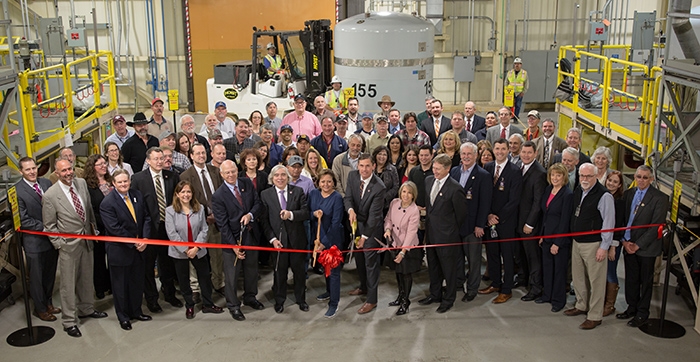
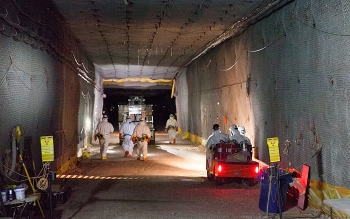
The U.S. Department of Energy (DOE) and its contractor, Nuclear Waste Partnership, LLC, reopened the Waste Isolation Pilot Plant (WIPP) on Wednesday, January 4th with the disposal of two pallets of plutonium contaminated radioactive and hazardous waste that had been stored in the Waste Handling Building since 2014 into the underground salt mine.  Workers were required to wear personal protective equipment to protect them from radiation exposure.  An official ribbon-cutting ceremony was held on Monday, January 9th with DOE Secretary Ernest Moniz and New Mexico Governor Susana Martinez, as well as other dignitaries, who did not wear protective equipment when they descended into the uncontaminated areas of the dump.  WIPP was reopened following a truck fire and a radiation release that contaminated a large portion of the mine in February 2014.

Once all of the waste containers stored in the Waste Handling Building are disposed of, shipment from other DOE sites could begin.  It is anticipated that shipments from the Idaho National Laboratory would have priority because it has about 20,000 nuclear waste containers ready to go.

Activists question bringing shipments from other sites when necessary mine safety work is needed now.  The work includes installing roof bolts in the ceiling to keep it from falling; required improvements to the ventilation system, which will not be completed until at least 2021; and closing 60 percent of the contaminated areas where recently slabs of salt have fallen.

The current WIPP hazardous waste permit, issued by the New Mexico Environment Department, allows for storage of waste containers in the Waste Handling Building and the Parking Area for a maximum of 90 days.  [Correction:  Normal storage time limits at WIPP are 60 calendar days, not 90. See Sections 3.1.1.7. CH TRU Mixed Waste Storage Time Limit; 3.1.1.10. RH TRU Mixed Waste Storage Time Limit; and 3.1.2.6. Storage Time Limit (Parking Area Unit).]  The permit also allows for “surge” storage of a third of the existing capacity.  http://www.wipp.energy.gov/library/Information_Repository_A/Searchable_Permit_10-2016.pdf, see Sections 3.1.1.3 and 3.1.2.4.  Despite the allowance for surge, WIPP had never used the surge storage until the February 2014 shutdown when the Waste Handling Building surge has been used.

Nevertheless, DOE recently requested permission from the Environment Department to expand operations by constructing a 65,280 cubic foot waste container storage unit on the surface at WIPP, next to the Waste Handling Building and Parking Area.  DOE’s proposal would expand surface storage ten times the volume currently allowed in the Waste Handling Building.

The proposed facility, called a Concrete Overpack Container Storage Unit, would store waste above ground for up to a year.  Unlike the current system where containers are delivered and disposed of, waste containers would be delivered, placed in the storage unit, removed from the storage unit, processed in the Waste Handling Building, and then disposed of.  Waste containers would be handled multiple times, increasing the likelihood of accidents and worker exposures.

Don Hancock, of Southwest Research and Information Center, said, “The outside surface storage facility is contrary to the law and is unnecessary.  It’s important for people to tell the Environment Department to deny the surface storage permit request.”  NoSurfaceFacilityFactSheetrev3 

CCNS and our colleagues have prepared a sample comment letter for you to use, which is available at  WIPPSurfaceStorageComment011917 Simply copy the text from the PDF and paste into an email to the indicated recipient, Ricardo.Maestas@state.nm.us, changing the highlighted portions to your relevant data (current date plus your name and email address)

Please submit those comments by February 3rd, 2017 at 5 pm Mountain Time to Ricardo.Maestas@state.nm.us


Robert H. Gilkeson, Scientist, Whistleblower and Community Hero, Memorial Celebration on Sunday, January 15th

Please join CCNS, Citizen Action New Mexico and Citizens for Alternatives to Radioactive Dumping as we celebrate the extraordinary life of Robert H. Gilkeson, an independent registered geologist, on Sunday, January 15 from 6:30 pm to 9 pm at the Albuquerque Peace and Justice Center, 202 Harvard S.E., one block south of Central, in Albuquerque.  A simple meal will be served.  http://www.abqpeaceandjustice.org/

Bob was a wonderful friend, storyteller, educator, and advocate.  When he arrived in New Mexico from the University of Illinois Geological Survey, he worked for a contractor to the Los Alamos National Laboratory (LANL) in environmental cleanup and groundwater protection.  Through his work, Bob witnessed the attempts to mask the detection of radionuclides and other hazardous materials in the regional drinking water aquifer.  After leaving LANL in 1999, he worked as a private consultant in Arizona.  Upon completing his work there, he returned to New Mexico and learned that the masking had continued.

In 2004, Bob met with Joni Arends, of CCNS, to learn how he could assist CCNS for better cleanup of the over 18 million cubic feet of buried waste on the Pajarito Plateau, where LANL is located.  Bob worked pro bono on a number of issues, including the lack of proper monitoring of the chromium plume in the regional drinking water aquifer; documenting the migration of LANL contaminants to the Buckman Direct Diversion Project; and the increased seismic hazard on the Pajarito Plateau which challenged the proposed, and then defeated, $6 billion bomb factory, officially called the Chemistry and Metallurgy Research Replacement Project – Nuclear Facility.

Bob and CCNS presented their concerns about the increased seismic risk several times to the Defense Nuclear Facilities Safety Board, an independent federal agency that oversees Department of Energy nuclear facilities.  http://nuclearactive.org/gilkeson/

Chuck Montano, a LANL whistleblower, author of Los Alamos:  Secret Colony, Hidden Truths – A Whistleblower’s Diary, and CCNS Board member, said, “Bob was an inspiration to me as a former lab employee and whistleblower.  His unwavering support for justice, in the face of his own struggles, is what I admired.”  http://www.losalamosdiary.com/

Bob first met Dave McCoy of Citizen Action New Mexico in 2006 at a meeting in the New Mexico Environment Department.  Bob had analyzed the groundwater monitoring wells at Sandia Lab’s Mixed Waste Landfill and told the Environment Department they provided junk data. Bob would say, “Bad data is worse than no data at all,” because the wrong decisions are made.

Bob and Dave went through 20,000 pages of the administrative record for the dump and found that the regulators knew the groundwater monitoring wells were all defective.  After filing a complaint with the Environmental Protection Agency, the Department of Energy had to install four new monitoring wells at the dump.  Bob and Citizen Action produced a 300-page document regarding the defective groundwater monitoring network and advocated for excavation of the dump.  http://www.radfreenm.org/images/PDF/MWL/MWL_exec_rpt_1-2011.pdf  Bob and Citizen Action also were able to compel the installation of four new monitoring wells at the chemical waste landfill.

He worked to stop the federal government from leaving dangerous wastes in place that presently, and in the future, pollute the drinking water for hundreds of thousands of people in New Mexico.

Bob was a hero in his persistent and thorough analysis of the law and technical issues.  In 2007, Bob was given the Alliance for Nuclear Accountability Whistleblower Award for his work “protecting the public by exposing systemic problems with groundwater characterization wells at Los Alamos and Sandia Laboratories and blowing the whistle on the attempt to hide contamination in New Mexico’s regional aquifers.”

Please join us to honor Bob Gilkeson and to understand how we can carry on his work on Sunday evening from 6:30 to 9 pm at the Albuquerque Peace and Justice Center, 202 Harvard Southeast.