As we celebrate Earth Day and commemorate the 35th anniversary of the Chernobyl nuclear disaster in 1986, three free virtual events are taking place between now and Friday, April 30th. They are the Taos Environmental Film Festival and Conference; the Building Political Support for the Nuclear Ban Treaty webinar; and the Native American Forum on Nuclear Issues.
In honor of Earth Day, Thursday, April 22nd, two outstanding New Mexico Poets Laureate, Catherine Strisik of Taos, and Elizabeth Jacobson of Santa Fe, will read their poetry beginning at 7:30 pm. For more information and zoom links, please visit https://taosenvironmentalfilmfestival.com/somos-information-1/
The free and virtual Taos Environmental Film Festival begins on Friday, April 23rd and continues through Sunday, April 25th. For a listing of the films, please visit https://taosenvironmentalfilmfestival.com/
Along with the Film Festival, an Earth, Wind, Fire, Water and Spirit Conference, with a focus on the Environmental and Peace, will be held virtually. Local, national and international leaders will speak about the two existential threats, nuclear weapons and climate change, as well as the military, forests, oceans, education, social justice, and peace. The free zoom conference takes place from Friday, April 23rd through Sunday, April 25th from 11 am to 1 pm Mountain Daylight Time. There will be two one-hour sessions, one at 11 am and the other at noon. For more information and registration, please visit https://taosenvironmentalfilmfestival.com/conference-information/
On Saturday, April 24th, the International Campaign to Abolish Nuclear Weapons, Massachusetts Peace Action, and Nuclear Ban US host a virtual webinar, Building Political Support for the Nuclear Ban Treaty. Speakers include U.S. and international lawmakers. The webinar will take place from 8:30 am to 10:45 am Mountain Daylight Time. To register, please visit http://www.nuclearban.us/
On Monday, April 26th, the Native Community Action Council, in partnership with Native Americans for Restorative Stewardship, will present a virtual and free five-day speaker series. A number of well-known speakers and artists concerned about the impacts of nuclear issues on Native American communities will present. The event, named the 2021 Native American Forum on Nuclear Issues, will commence on Monday, April 26th and continue until Friday, April 30th, beginning each evening at 6 pm Mountain Daylight Time.
Speakers include Winona LaDuke, Tom Goldtooth, Carletta Tilousi, Steve Newcomb, Kandi White, Myron Dewey, Tommy Rock, Manny Pino, Joe Kennedy, and Ian Zabarte. Featured artists include Jack Malotte, Sorren Thunder Richards, Sarah Caligiuri, and Bryan Hudson, among others. To register for your complimentary ticket, please visit https://tosavetheworld.ca/events/the-native-american-forum-on-nuclear-issues-nafni-2021/
Did You Know? We are Podcasting!
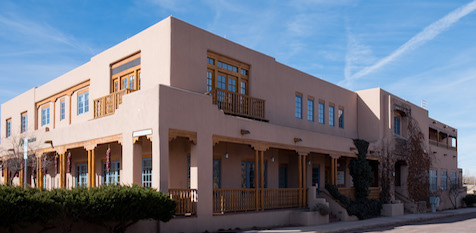
1. Every Friday and Saturday from noon to 1 pm – Protest LANL signing a 10-year lease (for the former Descartes building) to establish itself “permanently” in Santa Fe at the corner of Guadalupe and W. Alameda. JOIN Veterans for Peace, CCNS, Nuclear Watch NM, and others. We’ll have banners. Please bring a sign.
2. TONIGHT: Th. April 22nd from 6 to 7:30 pm– Virtual open house for the Kirtland Air Force Base Bulk Fuels Facility. You will need to download Adobe Connect software to participate. See excerpts below from a KAFB email:
“Attendees will need to download the free Adobe Connect software to join the virtual meeting. It is suggested this be done in advance of the meeting date and time. The updated software can be downloaded at https://helpx.adobe.com/adobe-connect/connect-downloads-updates.html.
“An updated presentation will be provided that will include a project status update and a question and answer period. To submit questions, e-mail brannon.lamar@us.af.mil.
“If you would like additional information, please contact Brannon Lamar at 377 Air Base Wing Public Affairs at (505) 639-8420 or by email, brannon.lamar@us.af.mil.
3. Wed. April 28th – Communities for Clean Water (CCW) will be a featured community organization, as part of the Peace Development Fund “Healing Our Communities and Our Land,” during its Grassroots Funding Week.CCNS is a founding member of CCW. Please support our collective work to hold LANL accountable on surface and groundwater issues by making a donation. Thank you! https://www.mightycause.com/story/Supportcommunitiesforcleanwater
4. Wed. April 28th – Santa Fe City Council will vote up or down on resolution, introduced by Councilor Renée Villarreal, to leave the Regional Coalition of LANL Communities (RCLC). The agenda has yet to be posted. Check here: https://santafe.primegov.com/public/portal#
Note: The hearing may be delayed for two weeks due to illness. Stay tuned.
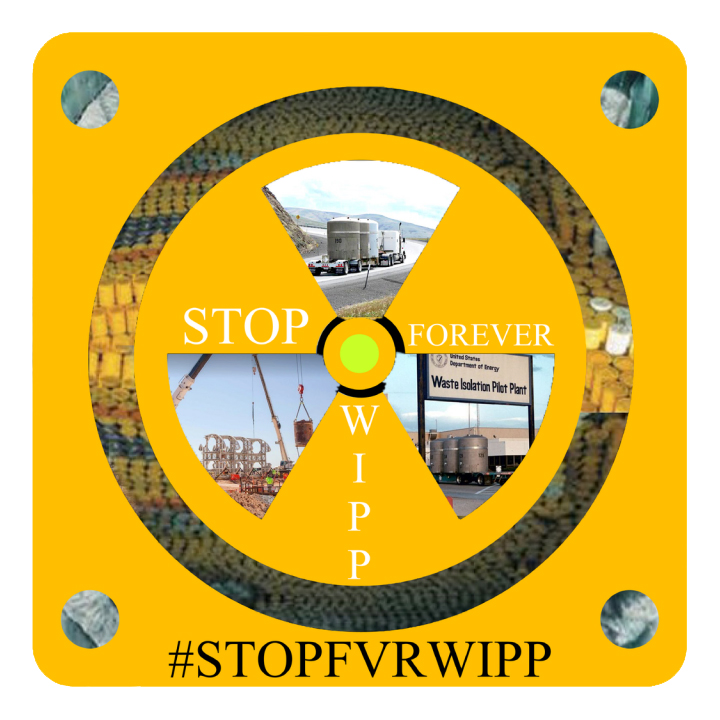
5. Mon. May 17th – Fri. May 21 – Virtual Public Hearing about Proposed Shaft for the Waste Isolation Pilot Plant (WIPP). For more information: NM Environment Department at https://www.env.nm.gov/hazardous-waste/wipp/ (scroll down to March 10, 2021 entry); Stop Forever WIPP Coalition at https://www.facebook.com/StopfvrWIPP/ ; and CCNS at http://nuclearactive.org/See a five-part Stop Forever WIPP Coalition series about the proposed shaft, the public hearing, how you can participate, and sample comment letters you can use.
Activists, technical experts, and the public are asking why the Hazardous Waste Bureau (HWB) of the New Mexico Environment Department is processing an incomplete permit modification request for a proposed shaft and associated drifts at the Waste Isolation Pilot Plant (WIPP). Last year, the HWB issued a defective draft permit for public review and comment. Nearly 97 percent of the comments submitted opposed the proposed expansion and the new shaft. Nevertheless, that draft permit is the subject of a virtual public hearing scheduled to begin on Monday, May 17th. https://www.env.nm.gov/hazardous-waste/wipp/ , scroll down to March 10, 2021 posts.
The defects are numerous. The hazardous waste regulations require the Department of Energy (DOE) to explain why the shaft and drifts are needed. DOE is also required to notify the HWB of the plans to change the facility, such as the proposed waste disposal panels and rooms that would extend from the drifts. DOE has not explained the need or their planned changes.
The National Academy of Sciences Consensus Study Report [Review of the Department of Energy’s Plans for Disposal of Surplus Plutonium in the Waste Isolation Pilot Plant, 2020, https://www.nap.edu/catalog/25593/review-of-the-department-of-energys-plans-for-disposal-of-surplus-plutonium-in-the-waste-isolation-pilot-plant ] and the Government Accountability Office [Nuclear Waste Disposal: Better Planning Needed to Avoid Potential Disruption at WIPP, GAO-21-48, November 2020] gao-21-48 filled in some of those voids. Their recent reports describe future waste panels and DOE’s plan to dispose of 48 metric tons of surplus plutonium, currently stored at the Los Alamos National Laboratory, Pantex, and the Savannah River Site.
In its permit application, DOE did not provide even a glimmer of the future expansion plans and it opposes any discussion of the expansion at the public hearing. https://www.env.nm.gov/hazardous-waste/wipp/ , scroll down to June 12, 2020 post. The HWB did not alert the public to the planned expansion in the draft permit and similarly opposes any discussion of the expansion at the public hearing. https://www.env.nm.gov/hazardous-waste/wipp/ , scroll down to June 12, 2020 post.
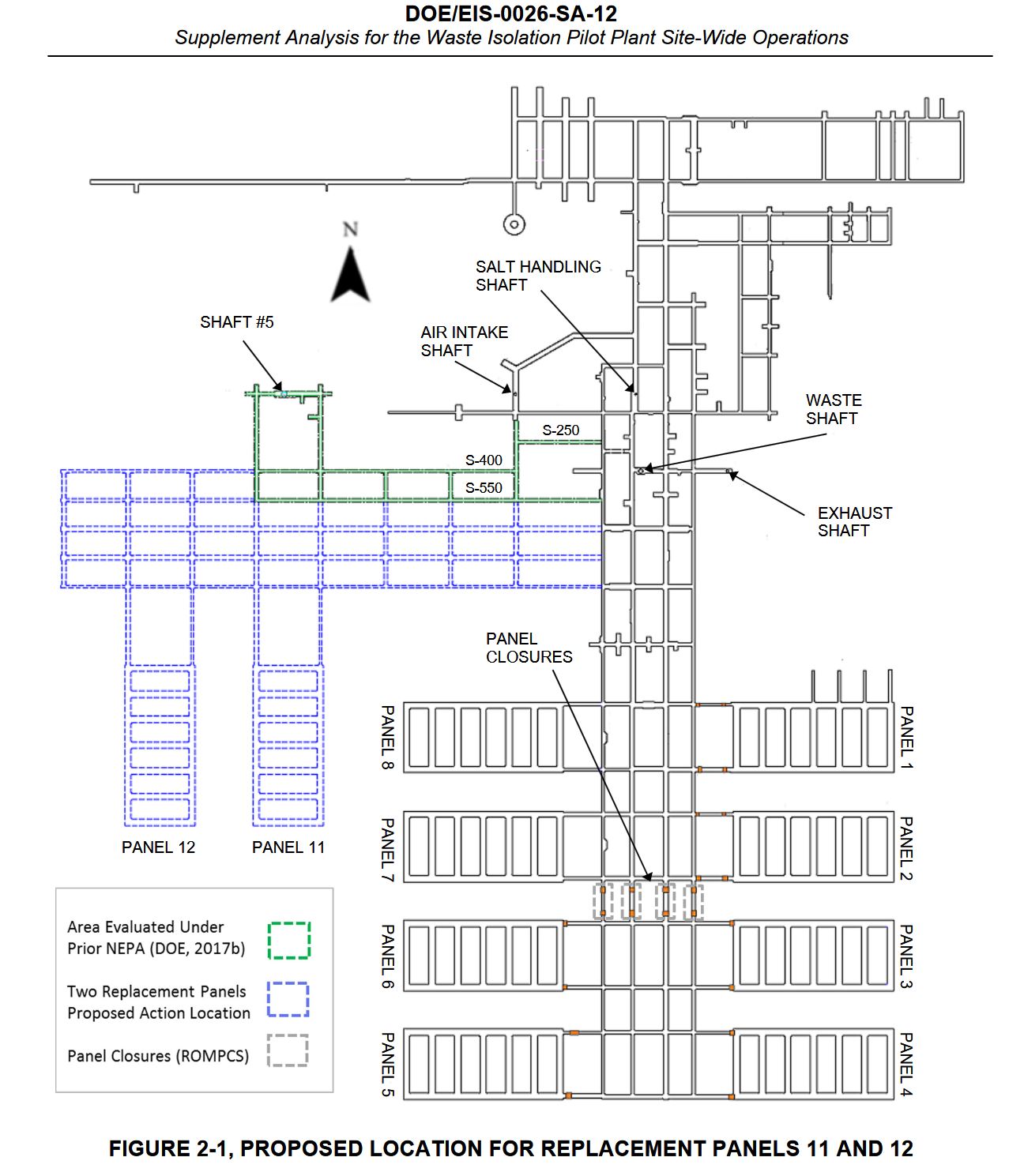
Even so, this week DOE released a Supplement Analysis for the Waste Isolation Pilot Plant Site-Wide Operations, DOE/EIS-0026-SA-12, Rev. 0, Effective April 8, 2021 for two proposed “replacement” panels 11 and 12 located south of the proposed shaft No. 5. As you can see, more panels for more waste are proposed. But DOE has not been presented these evolving plans to the HWB as part of its permit modification request. These evolving proposed plans are not part of the draft permit and not subject to the public hearing. DOE_EIS-0026-SA-12_SA_for_WIPP_Site-Wide_Operations_Rev0_Final_Sig_on_File
Further, the proposed shaft is estimated to cost nearly $200 million and take 37 months to build, with completion in 2024. But the current permit, based on DOE’s previous agreements with the People of New Mexico, requires WIPP to end waste disposal in 2024 and begin a 10-year process to close the facility. https://www.env.nm.gov/hazardous-waste/wipp-permit-page/ , see Attachment G Closure Plan – August 2020, specifically, p. 10 of the pdf, p. 6 of the document, Permit Condition G-1d(2), which reads:
The Disposal Phase for the WIPP facility is expected to require a period of 25 years beginning with the first receipt of TRU waste at the WIPP facility [March 26, 1999] and followed by a period ranging from 7 to 10 years for decontamination, decommissioning, and final closure.
The draft permit has a limited scope that does not address portions of the permit that are logically related and necessary to the need and planned changes. For example, if DOE seeks a permit to construct the proposed shaft and related drifts, then it is logical to imagine that DOE wants to keep WIPP open beyond 2024. DOE’s actions imply that it wants to expand WIPP’s disposal capacity. Under the hazardous waste regulations, the related and necessary actions must be included in the DOE’s permit modification request and the draft permit. But they are not included.
In the end, the public is entitled to review DOE’s entire expansion plan as part of the permit modification process.
A virtual public hearing about a proposed new shaft and associated drifts, essential elements for the proposed WIPP expansion, begins on Monday, May 17th, 2021. New Mexicans can comment at that hearing where numerous groups, including CCNS, are opposing the shaft, drifts and expansion. https://www.env.nm.gov/hazardous-waste/wipp/ , scroll down to March 10, 2021 post.
We are Podcasting!
1. Thursday, April 15th at 6 pm – Virtual WIPP Town Hall about the environmental monitoring data from the January 31, 2021 four-hour test of the WIPP 700-C ventilation fan. The data has also been posted to the WIPP website here https://wipp.energy.gov/700c-restart.asp. To register for the virtual Town Hall meeting, go to: https://zoom.us/meeting/register/tJIkceiorDMjGtffC3a56Y9w7TuyGOSXoGWg. Stakeholders can also submit questions prior to the meeting by emailing the WIPP Information Center at infocntr@wipp.ws. Questions will be accepted through the end of the business day following the virtual Town Hall meeting. For more information: https://wipp.energy.gov/wipp_news_20210409.asp
2. Every Friday and Saturday from noon to 1 pm – Protest LANL signing a 10-year lease (for the former Descartes building) to establish itself “permanently” in Santa Fe at the corner of Guadalupe and W. Alameda. JOIN US! We’ll have banners. Please bring a sign.
3. Fri. April 16th at 1:30 pm –Virtual meeting of the Regional Coalition of LANL Communities. Please express your concerns about the continuation of the ineffective RCLC. To view the agenda and zoom links: https://regionalcoalitionnm.org/
4. Th. April 22nd from 6 to 7:30 pm – Virtual open house for the Kirtland Air Force Base Bulk Fuels Facility. You will need to download Adobe Connect software to participate. See email below from KAFB:
“Dear Neighbor,
“As we previously mentioned, the Air Force will be hosting a virtual open house for the Kirtland Air Force Base Bulk Fuels Facility project on Thursday, April 22, 2021 from 6:00 to 7:30 p.m. In light of Coronavirus concerns, this open house will be held virtually using a platform provided by the Air Force Institute of Technology (AFIT). Due to issues with previous software, there is a new update.
“Attendees will need to download the free Adobe Connect software to join the virtual meeting. It is suggested this be done in advance of the meeting date and time. The updated software can be downloaded at https://helpx.adobe.com/adobe-connect/connect-downloads-updates.html.
“An updated presentation will be provided that will include a project status update and a question and answer period. To submit questions, e-mail brannon.lamar@us.af.mil.
“If you would like additional information, please contact Brannon Lamar at 377 Air Base Wing Public Affairs at (505) 639-8420 or by email, brannon.lamar@us.af.mil.
“We ask that you share this notification with others in your community and hope you can join us at the upcoming event!
“Regards,
“Kirtland Air Force Base Public Affairs”
5. Saturday, April 24th from 8:30 am – 10:45 am on Zoom –Political Support for the Nuclear Ban Treaty, with Beatrice Fihn, Executive Director of the International Campaign to Abolish Nuclear Weapons, with ICAN campaigners around the world about how they have successfully used the ICAN Pledge to build support for nuclear abolition in other countries. Read the ICAN Parliamentary Pledge here: https://pledge.icanw.org/
To register, see the list of distinguished speakers and sponsoring organizations, including CCNS: http://bit.ly/political-tpnw
The New Shaft Permit Modification Part 4 Public Participation Now and at the May 17th Public Hearing
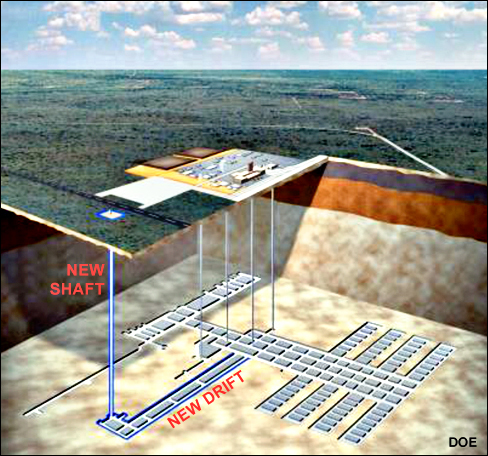
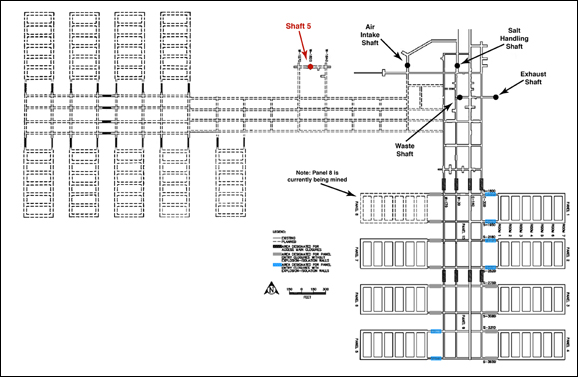
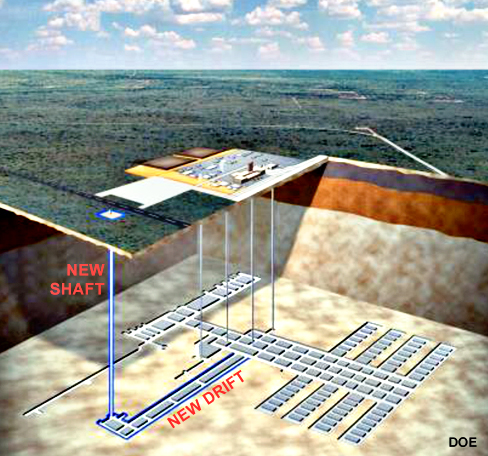
The WIPP underground showing the proposed new shaft and drifts (corridors)
The New Mexico Environment Department (NMED) regulates WIPP as a Hazardous Waste Facility for the storage and disposal of transuranic mixed waste. Transuranic waste is waste contaminated with radioactive elements greater than (trans-) uranium (uranic). Most transuranic waste is contaminated with plutonium and most also includes hazardous waste. NMED’s authority to regulate WIPP comes from the federal Resource Conservation and Recovery Act (RCRA) and the state Hazardous Waste Act. Within NMED, hazardous waste sites are regulated by the Hazardous Waste Bureau (HWB).
Public Participation
During the WIPP permitting process, public comment is required. RCRA requires meaningful public participation, including adequate information and notification. Public participation must also be equal and non-discriminatory. Because of previous and continuing problems with disparate treatment, in 2017 NMED signed an Informal Resolution Agreement with EPA to keep public participation fair and meaningful for all New Mexicans.
In 2019 and 2020, several hundred people commented on the WIPP shaft modification permit. 97% of comments each time have been against the new shaft and against WIPP expansion. These comments may have influenced NMED’s decision not to renew the Temporary Authorization given DOE to start excavating the new shaft before the required public hearing. We are in a comment period now that will continue through the last day of the public hearing in mid May.
Read on for more details on the public process
or
skip to the end for information on how to comment now and during the public hearing
Barriers to Public Participation
NMED has not made it easy for the public, and especially for the “Low English Proficiency” (LEP) public, to inform themselves and be able to participate in the permitting process in a meaningful way. Only the Public Notice, the updated Fact Sheet and the Index to the Administrative Record are in Spanish. The Draft Permit and the Public Involvement Plan (PIP) (which guides the public process) are not in Spanish. (Click here for an analysis of problems in the PIP, Public Notice and updated Fact Sheet. Links to these documents and to the WIPP Permit webpage are provided at the end of the newsletter.)
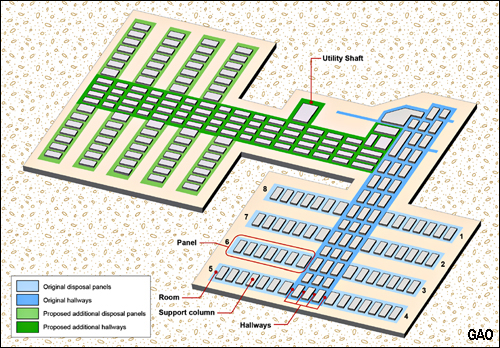
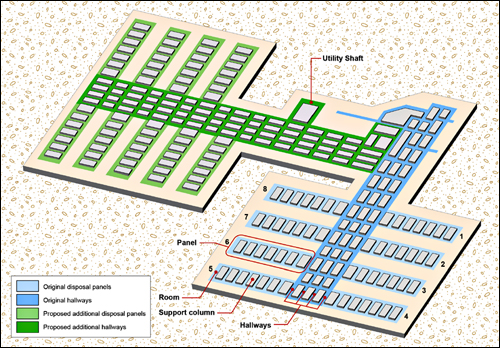
GAO’s map of the WIPP underground showing the proposed New Shaft (labeled “Utility Shaft”) and drifts but also showing the waste panels and waste rooms. The original footprint is in blue. The proposed, expanded footprint is in green. (image: GAO)
The Updated Fact Sheet is inadequate. The Fact Sheet states that the new shaft is only needed for better underground ventilation during the current operational period for WIPP. It denies that this “utility shaft” is to support DOE’s planned WIPP expansion. But that justification falls flat because it never explains why the taxpayers would spend almost $200 million on the new shaft if WIPP is going to stop waste disposal in 2024 and the new shaft won’t be finished until just a few months before that date. Importantly, the updated Fact Sheet does not mention that the Temporary Authorization allowed shaft construction to begin before the required public hearing, which many people view as a predisposition to approve the permit modification and prejudice the hearing process.
NMED has said that it wants to increase public involvement in their permitting and that they particularly want to make sure that LEP persons can participate equally and in a meaningful way. But because of the limited amount of information provided even for English speakers, commenting is very difficult. Additional discriminatory barriers to participation have been created for persons who are not fluent in English as they have access to even less information than English speakers have. For LEP persons it is almost impossible to be adequately informed and to be able to participate in a meaningful way in this hearing process.
Nevertheless, the public has been persistent in making their concerns known to NMED and this has led to positive change in the past. It is important that NMED hears about public needs and concerns and that the agency is called out for not providing equal participation for all New Mexicans. Our voices do make a difference.
How to Comment
Email written comments to: Madai.Corral@state.nm.us
In the subject line include: HWB 21-02 WIPP Shaft
Mail written comments to:
Hearing Clerk, NMED, Room S-2100
PO Box 5469, Santa Fe, NM 87502-5469.
In your heading, include: HWB 21-02 WIPP Shaft
At the public hearing provide written or oral comments in your preferred language. If you will be commenting in a language other than English or Spanish, arrange for interpretation, ideally, 10 or more days ahead by contacting:
The hearing begins on Monday, May 17 at noon.
The virtual public hearing is on Zoom from Noon to 4 pm and 6 to 9 pm each day. You may also join by phone
Join by Telephone
For higher quality, dial a number based on your current location.
Dial: US: +1 669 900 6833 or +1 253 215 8782 or +1 346 248 7799 or +1 929 436 2866 or +1 301 715 8592 or +1 312 626 6799
Meeting ID: 917 2894 5523 Passcode: 050223
The hearing is in English, with simultaneous Spanish interpretation.
If you need an interpreter in a language other than Spanish, contact:
[There is a lot of information in this Update to help you understand the complexity of the LANL/WIPP/Expanded Plutonium Pit Production at LANL/Expansion Plans at WIPP issues. Please read all the way to the end to learn about how to prepare for the May 17, 2021 public hearing about the proposed new shaft at WIPP. There is an extensive list of links to reports about the sparking drum at LANL and WIPP. Thank you for your interest in these issues!]
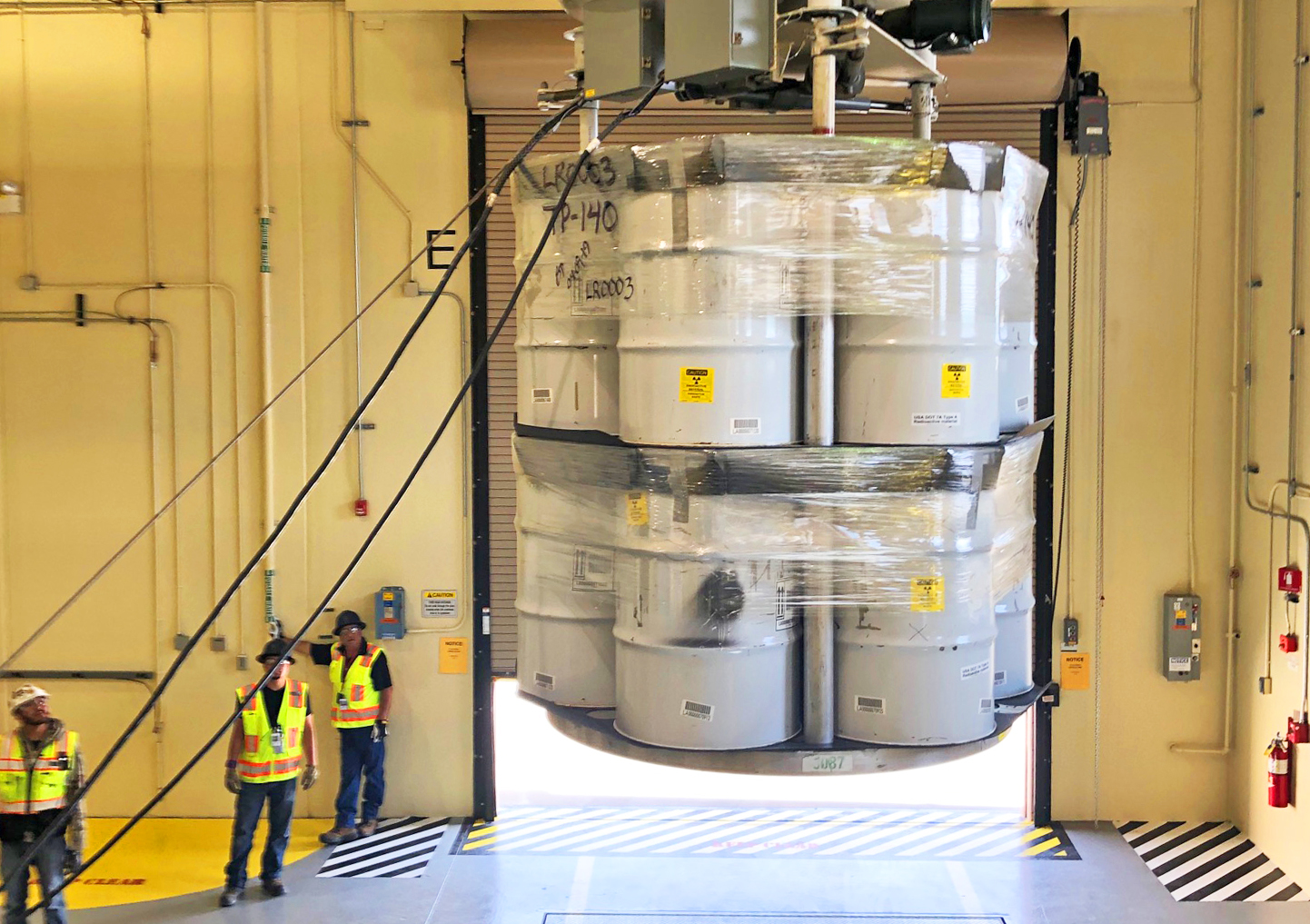
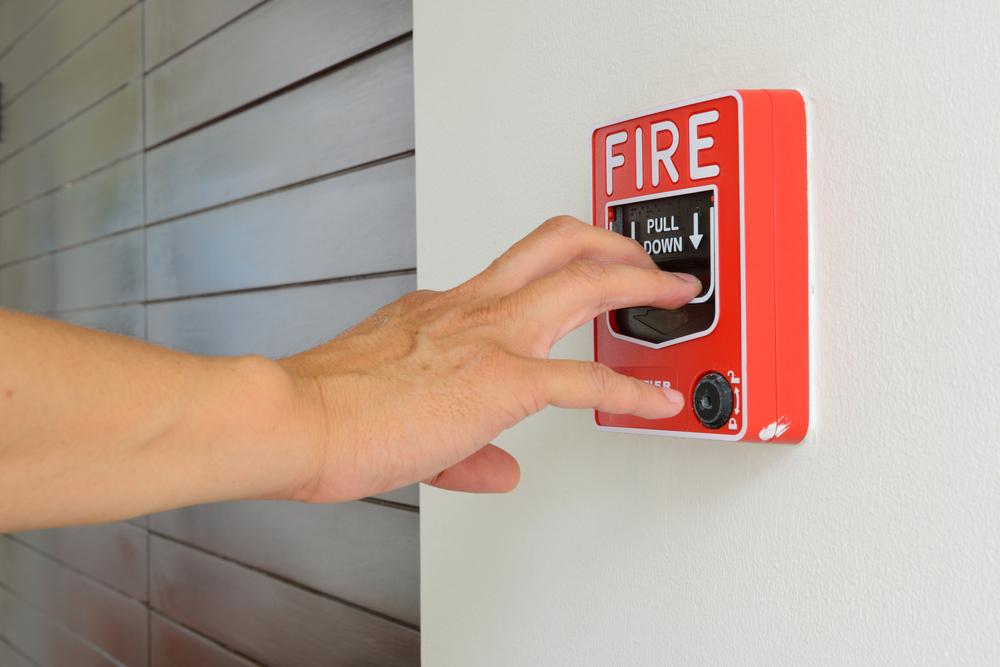
On February 26th, 2021, Los Alamos National Laboratory (LANL) workers saw sparks inside of a recently packaged 55-gallon drum of plutonium-contaminated transuranic (TRU) waste at the Plutonium Facility. The workers followed procedures and pulled the fire alarm and evacuated the area. LANL’s investigation then found that four other drums containing similar waste were still at LANL and that two such drums had been shipped to the Waste Isolation Pilot Plant (WIPP) and disposed in 2020. In response to LANL’s findings, WIPP evacuated workers from the underground and suspended shipments from LANL.
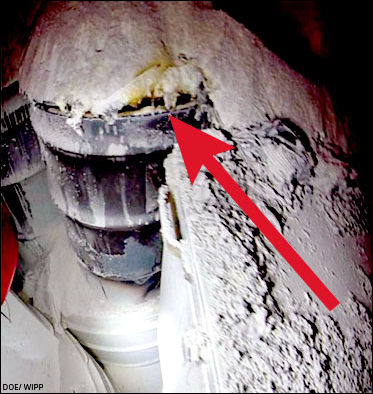
This story is reminiscent of the February 14th, 2014 explosion of one or more drums in the WIPP underground. These drums also had been packaged at LANL. In that case, LANL scientists incorrectly used organic, rather than non-organic, kitty litter to sop up liquids in the drums. The organic kitty litter created a chemical reaction and radiation release that contaminated 22 workers and over 8,000 linear feet of the underground mine; and vented contaminated air directly to the environment.
Both incidents show inadequacies in WIPP’s Central Characterization Project that operates at LANL and other sites and is supposed to ensure proper analysis of the waste. Nevertheless, LANL again has shipped incompatible drums to WIPP. Following the 2014 Valentine’s Day explosion, WIPP was closed for nearly three years at a $2 billion cost to taxpayers. Because of the underground contamination, WIPP continues to receive waste at a much lower rate than before the explosion.
The mission of WIPP is to dispose of “legacy” radioactive and hazardous waste created by the research, fabrication, and testing of nuclear weapons during the Cold War. It appears that the sparking drum packaged in the Plutonium Facility and the other similar ones are “newly generated” waste from efforts to modernize nuclear weapons.
As LANL prepares to expand its fabrication of plutonium pits, the radioactive triggers for those nuclear weapons, the resulting TRU waste would exceed the capacity limits at WIPP, according to reports in 2020 from Government Accountability Office and National Academy of Sciences. When establishing those limits in 1992, Congress tasked DOE to establish other waste repositories, but none are yet planned.
Instead DOE wants to expand the underground disposal area at WIPP for the additional waste, keep the site open until at least 2080, and develop no other repository.
A virtual public hearing about a proposed new shaft, an essential part of the WIPP expansion, begins on Monday, May 17th. New Mexicans can comment at that hearing where numerous groups are opposing the shaft.
QUESTIONS ABOUT HOW TO PREPARE FOR THE May 17, 2021 PUBLIC HEARING?
Over the next five weeks, CCNS, working with the Stop FOREVER WIPP Coalition, will be providing information about the proposed new shaft, along with the connections between proposed expanded plutonium pit production at LANL and the lack of WIPP disposal space for such waste. Check out the animations at https://www.facebook.com/StopfvrWIPP/
The Stop FOREVER WIPP Coalition has prepared three newsletters with more detailed information. They are:
DNFSB Los Alamos Activity Report for Week Ending March 12, 2021. https://www.dnfsb.gov/documents/reports/resident-inspector-weekly-reports/los-alamos-week-ending-march-12-2021 “Triad personnel continued their efforts to identify waste containers with contents similar to those involved in the incident that occurred two weeks ago (see 3/5/2021 report. They identified potential containers at the Plutonium Facility, Transuranic Waste Facility (TWF), and the Waste Isolation Pilot Plant.”
March 12, 2021 NNSA letter to NMED about potential non-compliance under the Hazardous Waste Facility Permit.
March 19, 2021: Report of Implementation of the Resource Conservation and Recovery Act Contingency Plan at the Waste Isolation Pilot Plant Facility on March 4, 2021, Hazardous Waste Facility Permit, Number NM4890139088-TSDF, Reinhard Knerr/CBFO and Sean Dunagan/NWP to Kevin Pierard, NMED HWB https://wipp.energy.gov/2021-information-repository-documents.asp
Los Alamos Reporter: March 24, 2021: “WIPP Central Characterization Project is Lynchpin for Radioactive Waste Receive from LANL, Other DOE Sites”
[Reinhard Knerr, DOE’s field manager at WIPP] discussed the importance of the Central Characterization Project (CCP) which was established by DOE to standardize and provide efficiencies in the characterization and certification process at DOE waste generator sites such as LANL.
“The area I most worry about is the interface between the generator site and our program. We rely on Environmental Management at Los Alamos and their contractors to give us information. Sometimes they don’t have the information because it’s legacy waste and it really becomes a research project on both sides of the fence to make sure we understand what we’re taking,” he said. “Newly generated waste should be easier but sometimes the downside for newly generated waste is that people will make operational errors whenever you deal with it. There’s always room for mistakes so those are the types of things I’m a little more nervous about to tell you the truth because the legacy waste – it is what it is.”
Knerr said the legacy waste has been sitting for decades so “you feel pretty comfortable and if you don’t know what it is, you go ahead and you sample”. He said the CCP program is probably one of the most regulated programs anywhere in the world and that the people involved take a lot of pride in what they do especially when they are doing Acceptable Knowledge” research and chemical compatibility analyses to make sure they have multiple layers of control.
“I think we have learned a lesson that an error along that front has a lot of potential ramifications for us in the underground with regard to the operability of the repository. That program is a lynchpin of our characterization process but again we are dependent on the generator site,” Knerr said.
*** TODAY’S NEWS*** April 8, 2021: “DOE prepared this supplement analysis (SA) to evaluate the Waste Isolation Pilot Plant Disposal Phase Final Supplemental Environmental Impact Statement (DOE/EIS-0026-S2) in light of changes that could have bearing on the potential environmental impacts previously analyzed. Included with this SA is a proposed change pertaining to the excavation of two underground replacement panels for the disposal of transuranic (TRU) waste.”
1. Every Friday and Saturday from noon to 1 pm – Protest LANL signing a 10-year lease (for the former Descartes building) to establish itself in Santa Fe at the corner of Guadalupe and W. Alameda. JOIN US! We’ll have banners. Please bring a sign.
2. Th. April 22nd from 6 to 7:30 pm – Virtual open house for the Kirtland Air Force Base Bulk Fuels Facility. You will need to download Adobe Connect software to participate. See email below from KAFB:
“Dear Neighbor,
“As we previously mentioned, the Air Force will be hosting a virtual open house for the Kirtland Air Force Base Bulk Fuels Facility project on Thursday, April 22, 2021 from 6:00 to 7:30 p.m. In light of Coronavirus concerns, this open house will be held virtually using a platform provided by the Air Force Institute of Technology (AFIT). Due to issues with previous software, there is a new update.
“Attendees will need to download the free Adobe Connect software to join the virtual meeting. It is suggested this be done in advance of the meeting date and time. The updated software can be downloaded at https://helpx.adobe.com/adobe-connect/connect-downloads-updates.html.
“An updated presentation will be provided that will include a project status update and a question and answer period. To submit questions, e-mail brannon.lamar@us.af.mil.
“If you would like additional information, please contact Brannon Lamar at 377 Air Base Wing Public Affairs at (505) 639-8420 or by email, brannon.lamar@us.af.mil.
“We ask that you share this notification with others in your community and hope you can join us at the upcoming event!
“Regards,
“Kirtland Air Force Base Public Affairs”
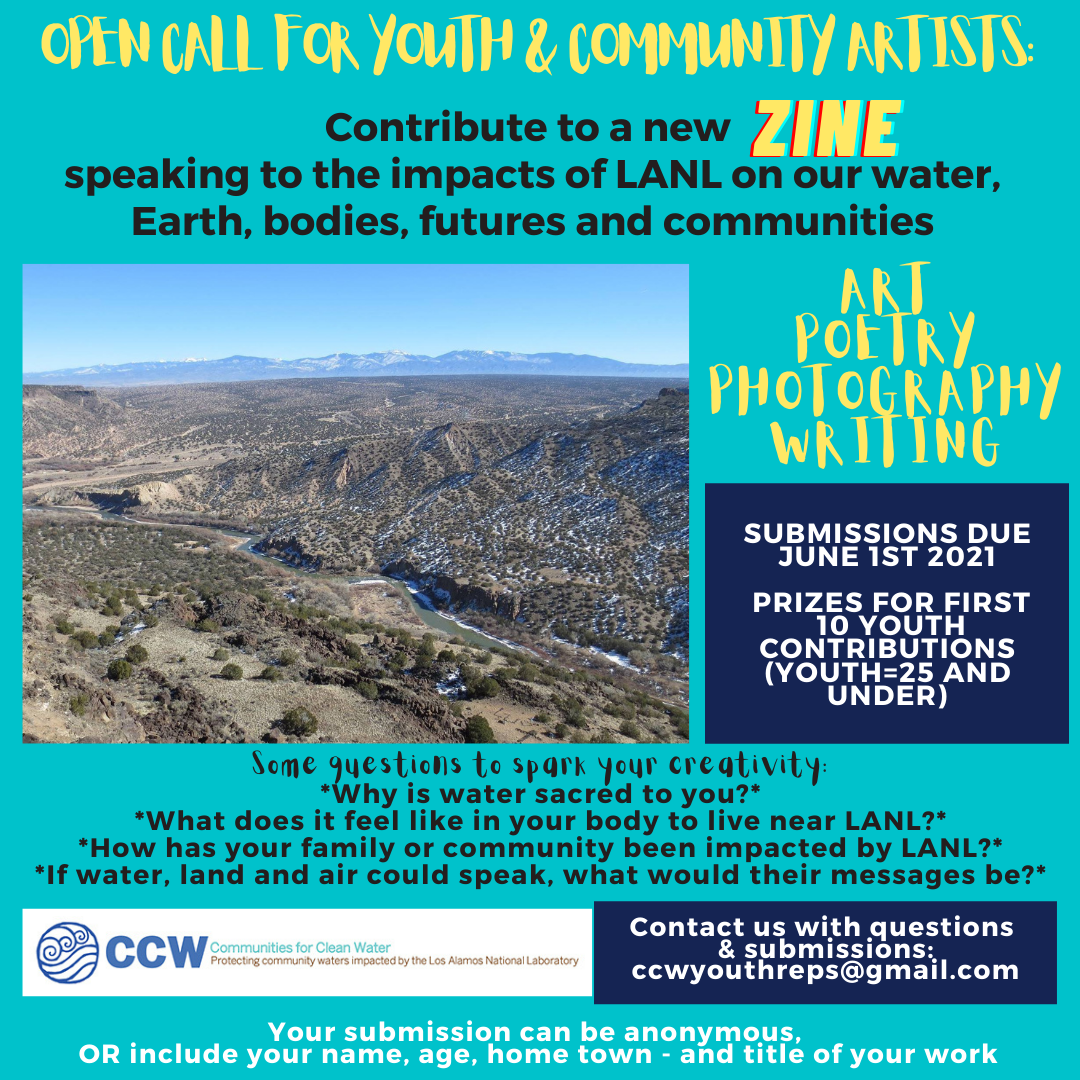
3. Submissions due Tuesday, June 1st: Calling all youth and community artists!
Communities for Clean Water (CCW) is working on a new ZINE and would love to feature your art, poetry, photography or writing. Open to all mediums and creative ideas.
Some questions to spark your reflection:
** Why is water sacred to you?
** What does it feel like in your body to live near LANL?
** How has your family and community been impacted by LANL?
** If water, land and air could speak, what would their message be?
The New Shaft Permit Modification Part 3 Your Comments and the May 17th Public Hearing
As demanded by organizations and individuals, the New Mexico Environment Department (NMED) has scheduled a public hearing on adding a New Utility Shaft to the WIPP permit. The hearing will start at noon on Monday, May 17, 2021. Hundreds of people commented on the proposed new shaft in 2019 and 2020, and 97 percent of them objected to WIPP expansion and the new shaft.
NMED allowed the Department of Energy (DOE) to bypass the public process and start digging the new shaft with just a Temporary Authorization. But after receiving so many public comments in 2020 against the new shaft and against the Temporary Authorization, NMED stopped the construction of the shaft until after the public hearing. Public comments do make a difference!
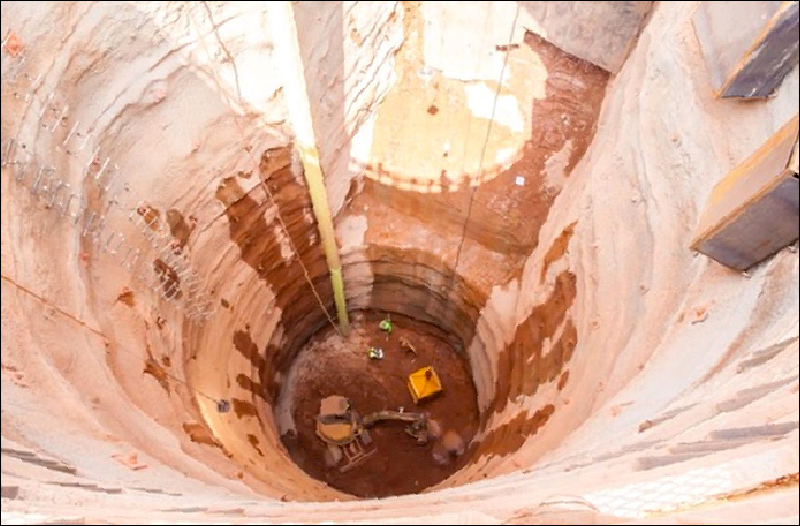
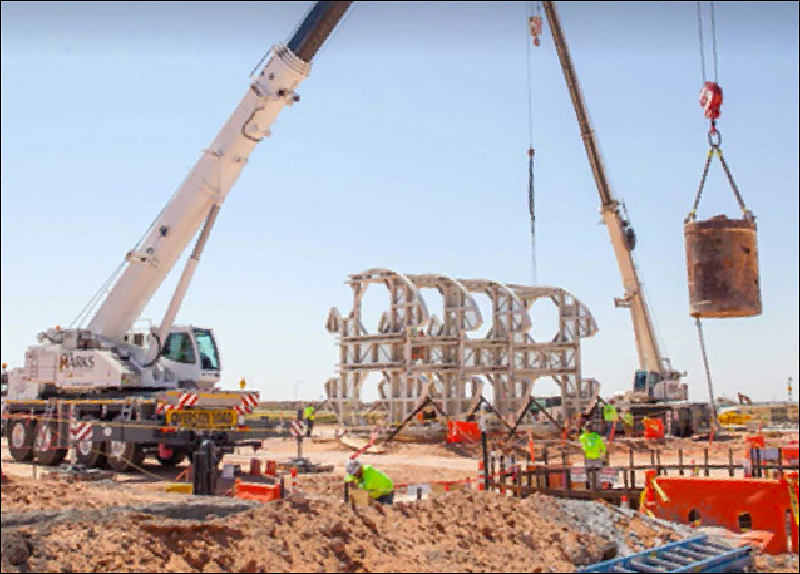
A bucketload of excavated material is lifted from the utility shaft during the Temporary Authorization period. The Galloway work platform is at center. This multi-stage platform is suspended near the bottom of the shaft during shaft sinking. (image: DOE)
You can comment now on the proposed new WIPP shaft, which is part of DOE’s plan to expand WIPP and operate it forever, instead of developing new repositories. The plan violates existing limits set in federal law, state agreements, the WIPP Permit, and DOE’s decades-old social contract with New Mexicans.
Your comments and participation can help stop the new shaft and DOE’s WIPP expansion plan!
Read on to learn more
or
skip to the end to see a sample comment
The proposed expanded underground repository. Solid lines show current drifts (corridors), waste panels and waste rooms. Proposed drifts, panels and rooms are shown with dashed lines. The proposed new utility shaft is labeled in red “Shaft 5.” The four current Air Intake, Salt Handling, Waste and Exhaust Shafts are labeled in black. (image: Steve Zappe)
Hearing Officer Gregory Chakalian will preside over the public hearing, which will include testimony and cross-examination of several experts from DOE, NMED, and from the organizations and individuals that requested the hearing. There will also be oral comments from the public and the public can cross examine any of the witnesses.
Later in the summer, based on the regulations, the hearing record, evidence, testimony, and public comment, the Hearing Officer will issue a recommendation to approve or deny the shaft permit or to approve it with conditions. The NMED Secretary will then make the final decision, which can be appealed to the New Mexico Court of Appeals.
Details about how to watch and participate in the public hearing, either on Zoom or by phone, are provided in NMED’sPublic Notice and Fact Sheet (both in English & Spanish). Simultaneous Spanish interpretation will be available on both Zoom and by phone, and interpretation into other languages may be available upon request. Future newsletters will provide more detailed information about the hearing.
Although oral public comments can only be provided during the hearing itself, anyone can submit additional written comments now and until the hearing is over.
Submit your own written comment, or copy and paste the following sample comment
Email comments to the NMED Hearing Clerk in Santa Fe
I join with many other people to object to WIPP expansion and the new shaft. Please deny the new shaft draft permit.
The DOE expansion plan violates existing limits on WIPP set in federal law, state agreements, the WIPP Permit, and DOE’s decades-old social contract with New Mexicans.
DOE has not presented the entire WIPP expansion plan to the public and to New Mexico officials. Instead, DOE is providing only a single piece of the plan – the new shaft – saying that other pieces of the plan will be presented in the future. I object to DOE’s piecemeal and illegal approach. In order to provide informed public comments, the public must be able to review DOE’s entire plan.
I know that, after examining the expansion plan, the 2020 National Academy of Sciences report stated, “An incremental approach inhibits a comprehensive review by regulators and public of the full impact of the proposed … program on a future WIPP.”
I also know that, in 2020, it was the Government Accountability Office – not DOE – that provided the public with the design of DOE’s plan to more than double the number of underground waste disposal panels.
DOE’s claim that the new shaft is needed for underground ventilation is not true. WIPP has been operating all along with just the existing four shafts. When the New Filter Building is completed, it will provide more underground ventilation than WIPP has ever had before. Instead of being just a ventilation shaft, the New Utility Shaft is actually an integral part of DOE’s expansion plans. These expansion plans must be a part of the public hearing.
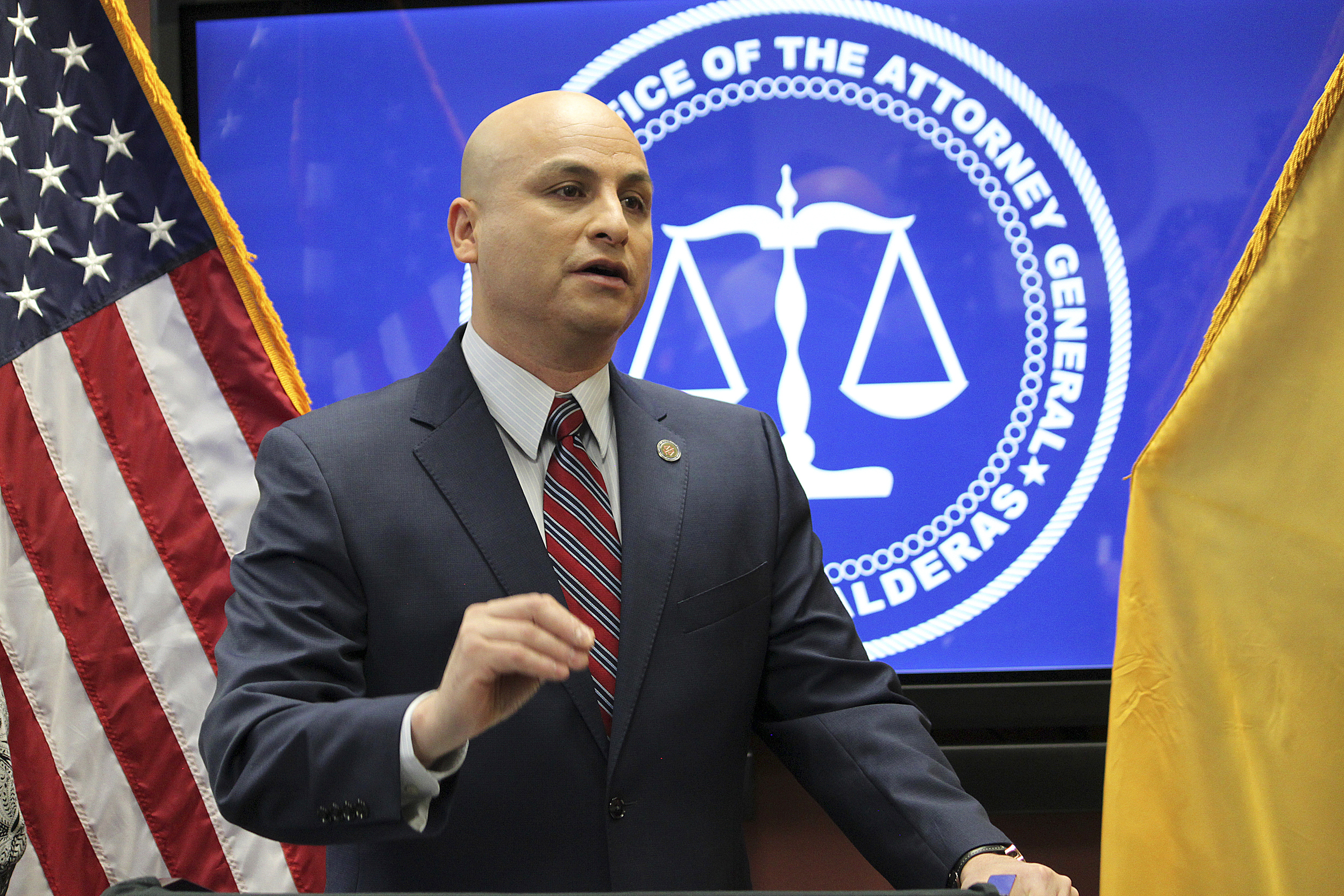
On Monday, Attorney General Hector Balderas took a necessary step to protect the People, environment, and economy of New Mexico by filing a lawsuit against the United States Nuclear Regulatory Commission to stop its efforts to license two proposed facilities for high-risk, high-level radioactive waste from nuclear power plants. Balderas alleges the proposals present a clear and present danger to New Mexico because of the risky and long-term burdens they impose on the State. The suit was filed in the U.S. District Court for the District of New Mexico. Attorney_General_Balderas_Announces_Lawsuit_to_Halt_Holtec_Nuclear_Storage_Facility
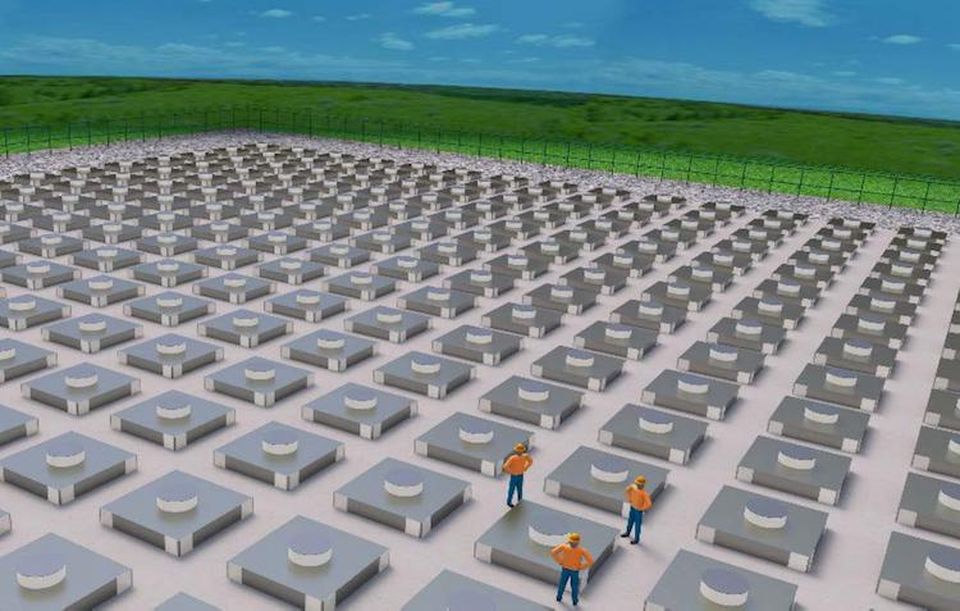
Holtec International is proposing to build and operate a consolidated storage facility, located halfway between Carlsbad and Hobbs, New Mexico, in the oil patch. Holtec is seeking a license to store 8,680 metric tons of uranium vertically in 500 lead-lined canisters for 40 years, with future expansion to 10,000 canisters containing 100,000 metric tons of uranium for 120 years or longer.
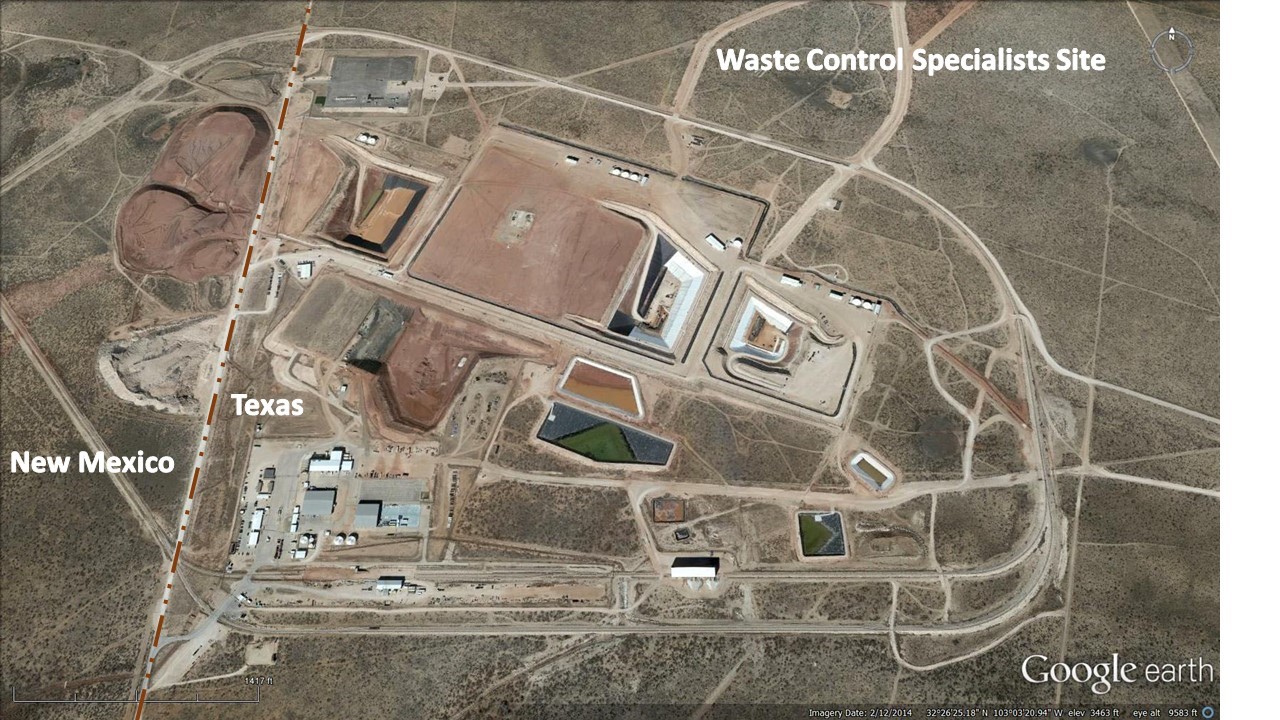
Also, Interim Storage Partners is proposing to expand Waste Control Specialists low-level waste facility in Texas, located five miles east of Eunice, New Mexico. Its application calls for storage of 40,000 metric tons of uranium for at least 40 years.
The fatal flaw, you ask? The applications of the limited liability corporations assume that the Department of Energy (DOE) will take title to the waste and pay the costs. But the 1982 Nuclear Waste Policy Act prohibits DOE from taking title until a permanent federal repository is operating. Yucca Mountain, the only proposed disposal facility, has been canceled for more than a decade. Even so, the applications state that a permanent repository will be built by 2048.
This means that unacceptable burdens would fall on New Mexico should NRC illegally grant one or both licenses. New Mexico would be responsible for emergency preparedness and response for transportation-related accidents along road and rail transportation routes that have yet to be disclosed. Further, New Mexico would be responsible for the repair and maintenance for many years. If the NRC grants one or more of the licenses, the ongoing daily threat from the transportation of the waste and operations at the facility(ies) would create an imminent and substantial endangerment to the diverse communities of New Mexico.
Attorney General Balderas explains why he took the legal action. “I want to mitigate dangers to our environment and to other energy sectors. It is fundamentally unfair for our residents to bear the risks of open ended uncertainty.”
In the lawsuit, New Mexico asks the Court for a preliminary injunction to suspend the licensing processes, as well as to declare the case in its favor. https://www.nmag.gov/
1. Every Friday and Saturday from noon to 1 pm – Protest LANL signing a 10-year lease (for the former Descartes building) to establish itself in Santa Fe at the corner of Guadalupe and W. Alameda. JOIN US! We’ll have banners. Please bring a sign.
3. On Monday, March 29, 2021, CCNS, Honor Our Pueblo Existence (H.O.P.E.), and the New Mexico Acequia Association submitted supplementary comments to the Environmental Protection Agency (EPA) about its draft industrial wastewater discharge permit for 11 outfalls at Los Alamos National Laboratory (LANL). Our comments were filed in response to the Department of Energy and Triad’s request to EPA to reopen the comment period and its February 25, 2021 supplementary filings about the draft permit, challenge to the New Mexico Environment Department’s §401 certification of the draft permit, and planned changes to the Radioactive Liquid Waste Treatment Facility for Outfall 051. https://www.epa.gov/nm/los-alamos-national-laboratory-lanl-limited-reopening-public-comment-period-npdes-permit-no To review the filings, scroll down to the bottom of the page: https://www.epa.gov/nm/los-alamos-national-laboratory-lanl-limited-reopening-public-comment-period-npdes-permit-no-0
The New Shaft Permit Modification Part 2 WIPP’s Temporary Authorization
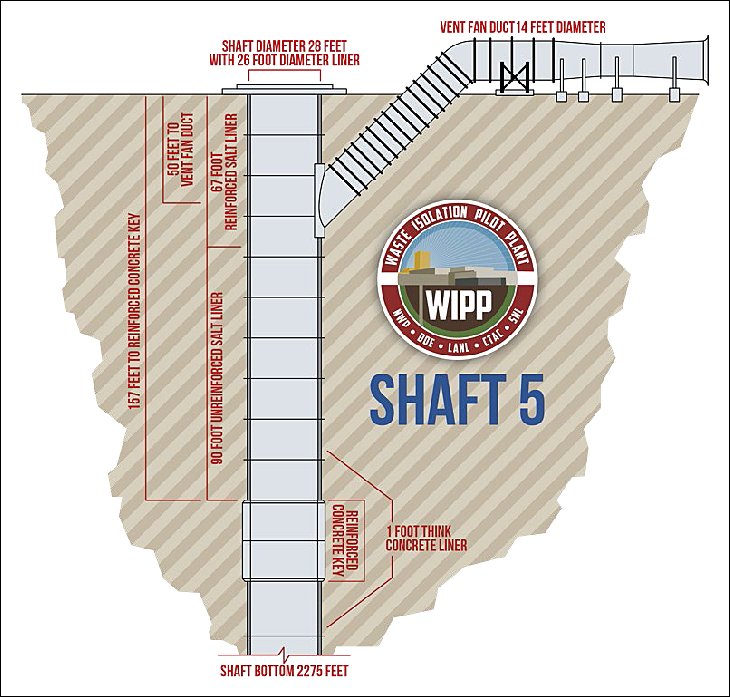
The New Mexico Environment Department (NMED) must approve or deny the Department of Energy’s (DOE) New Shaft Permit Modification Request (PMR), based on regulations, evidence, and public comment. However, even before issuing the Draft Permit for public comment, NMED allowed DOE to start shaft construction under a Temporary Authorization (TA). The 180-day TA expired on October 24, 2020, and NMED denied the request to re-issue the TA. Under the TA, the new shaft was sunk to 116 feet deep – of a final proposed depth of 2,275 feet. The total estimated construction time is 37 months at an estimated cost of $197 million.
Looking down the New Shaft during the Temporary Authorization period. An excavator and a personnel hoist are ready to be lifted out of the utilityshaft prior to another round of blasting. (image DOE)
In approving the TA, NMED stated: “This authorization is temporary and does not constitute a final agency action on the pending Class 3 PMR, nor does it prejudice or presuppose the outcome of the final action on the PMR. If NMED ultimately denies the PMR, the Permittees must reverse all construction activities associated with this Request at their expense and within the timeframes specified by the Department.”
Read on to learn more or skip to the end to see how you can help stop the WIPP expansion
Objecting to the TA
Various groups and individuals objected to the TA because it appeared to approve the new shaft before the required public comments and public hearing on the draft permit. It was also an “end run” around public involvement in deciding whether or not the New Shaft is even needed.
In 2019, 97 percent of the 295 organizations and individuals commenting on the New Shaft modification request opposed that request and also objected to the WIPP expansion.
On June 12, 2020, NMED issued the draft permit for 60 days of public comment. Again, 97 percent of the 360 organizations and individuals that commented opposed the New Shaft draft permit, including objecting to the WIPP expansion.
What isn’t said
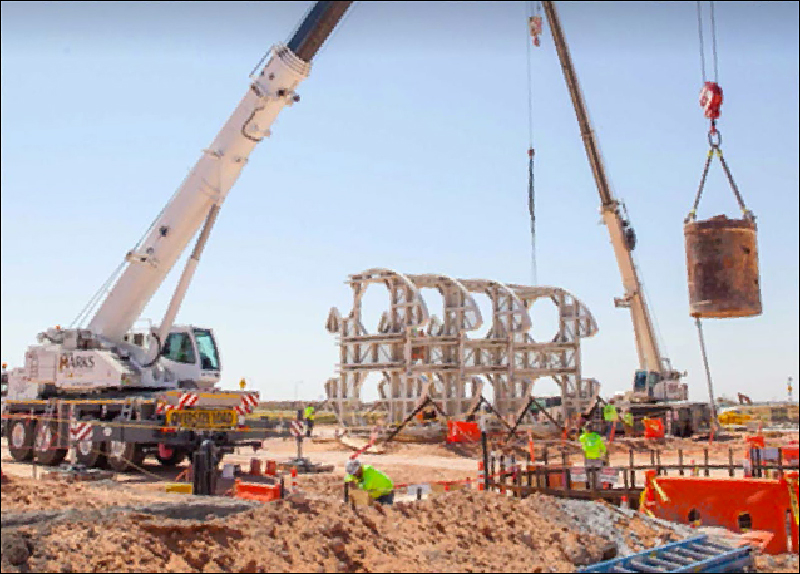
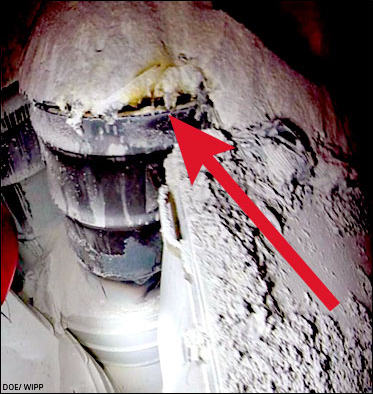
The regulations require that the Permit Modification Request must state the need for the New Shaft and that the proposed change protects public health and the environment. The PMR and draft permit state that the need is for underground ventilation and do not mention that the New Shaft is an essential part of the WIPP expansion. (The shaft’s diameter is wide enough for a new waste hoist.) Nor do they describe the health and environmental impacts of “Forever WIPP.” (image DOE)
The public hearing
During the public hearing in May, Technical Testimony will be presented and witnesses cross-examined. The public can comment as well, both during the hearing itself and during the pre-hearing period we are in now. Public comment includes previous written comments, written comments submitted before the hearing begins, and written and oralcomments made during the public hearing itself. All comments from the public must be considered along with technical testimony from expert witnesses when the the NMED Secretary makes his decision on the permit.
The hearing begins on Monday, May 17 at noon and will continue for a few days. People can participate on Zoom or by phone. There will be simultaneous English/Spanish interpretation.
More information about how to comment will be provided in the next Update. (image DOE)
How You Can Help Stop the New Shaft and the WIPP Expansion
People can help stop this New Utility Shaft by reading NMED’s Public Notice and Fact Sheet (both in English & Spanish), reading our analysis of these documents, and by participating in the permit modification hearing. Read our future newsletters to see our analysis, read a short timeline & history of WIPP, and to find out more on how you can participate and influence the hearing process.
Monday, March 29th, is the deadline for public comment on an important five-year permit that regulates wastewater discharges from 11 Los Alamos National Laboratory (LANL) industrial facilities into the canyons that flow to the Rio Grande. These facilities include some that have not discharged any industrial “wastewater” for years. The question before the federal Environmental Protection Agency (EPA) is whether to renew the Clean Water Act permit.
The Clean Water Act requires a “discharge of [a] pollutant” for EPA to issue a permit. But no discharges are anticipated at several facilities. Mechanical evaporators were installed at two of the facilities, the Radioactive Liquid Waste Treatment Facility and the High Explosive Wastewater Treatment Facility, more than a decade ago. The evaporators have been used as the sole disposal system, but the Clean Water Act does not regulate them.
LANL wants to keep the Clean Water Act permit because it provides an exemption from regulation by the stricter and more protective federal and state hazardous waste laws and regulations (federal Resource Conservation and Recovery Act (RCRA) and New Mexico Hazardous Waste Act).
The hazardous waste laws cover more than just a discharge. For example, the hazardous waste laws cover the systems of piping and tanks that store and treat the liquid waste and require a registered professional engineer to determine its structural integrity, as well as conduct assessments as to the strength of the welds and systems to prevent corrosion, among other assessments.
And, as Los Alamos County and LANL facilities are located in a seismic zone, the regulations also require these facilities to meet seismic safety requirements.
The seismic risks are significant. The Radioactive Liquid Waste Treatment Facility is located across the street from the existing Plutonium Facility and the location of the proposed, but canceled, super Wal-Mart sized Chemistry and Metallurgy Research Replacement (CMRR) Nuclear Facility. Lack of compliance with the seismic requirements was among the reasons that the Nuclear Facility was canceled. http://nuclearactive.org/public-comments-needed-for-epa-about-lanl-industrial-wastewater-discharge-permit/
In addition, hazardous waste laws require a public permitting process for approval of new construction. EPA admits in its fact sheet that LANL has “a newly constructed main low-level [liquid] waste treatment facility, [] with an estimated operational start date in 2023.” There was no public process for that new facility, because LANL has an exemption for it based on the Clean Water Act permit. Under the hazardous waste laws, a full public process, including a public hearing, was required. But because of the exemption, LANL only had to submit their plans and specifications to EPA.
1. Every Friday and Saturday from noon to 1 pm – Protest LANL signing a 10-year lease (for the former Descartes building) to establish itself in Santa Fe at the corner of Guadalupe and W. Alameda. JOIN US! We’ll have banners. Please bring a sign.
Nuclear Watch New Mexico – under “New & Updated.” Scroll down for the Local Governments Should Leave the Regional Coalition of LANL Communities fact sheet. https://nukewatch.org/
Los Alamos Study Group March 2, 2021 post: “Please contact the Santa Fe City Council urging the City to leave the Regional Coalition of LANL Communities.” https://lasg.org/letters/2021/nm_02Mar2021.html
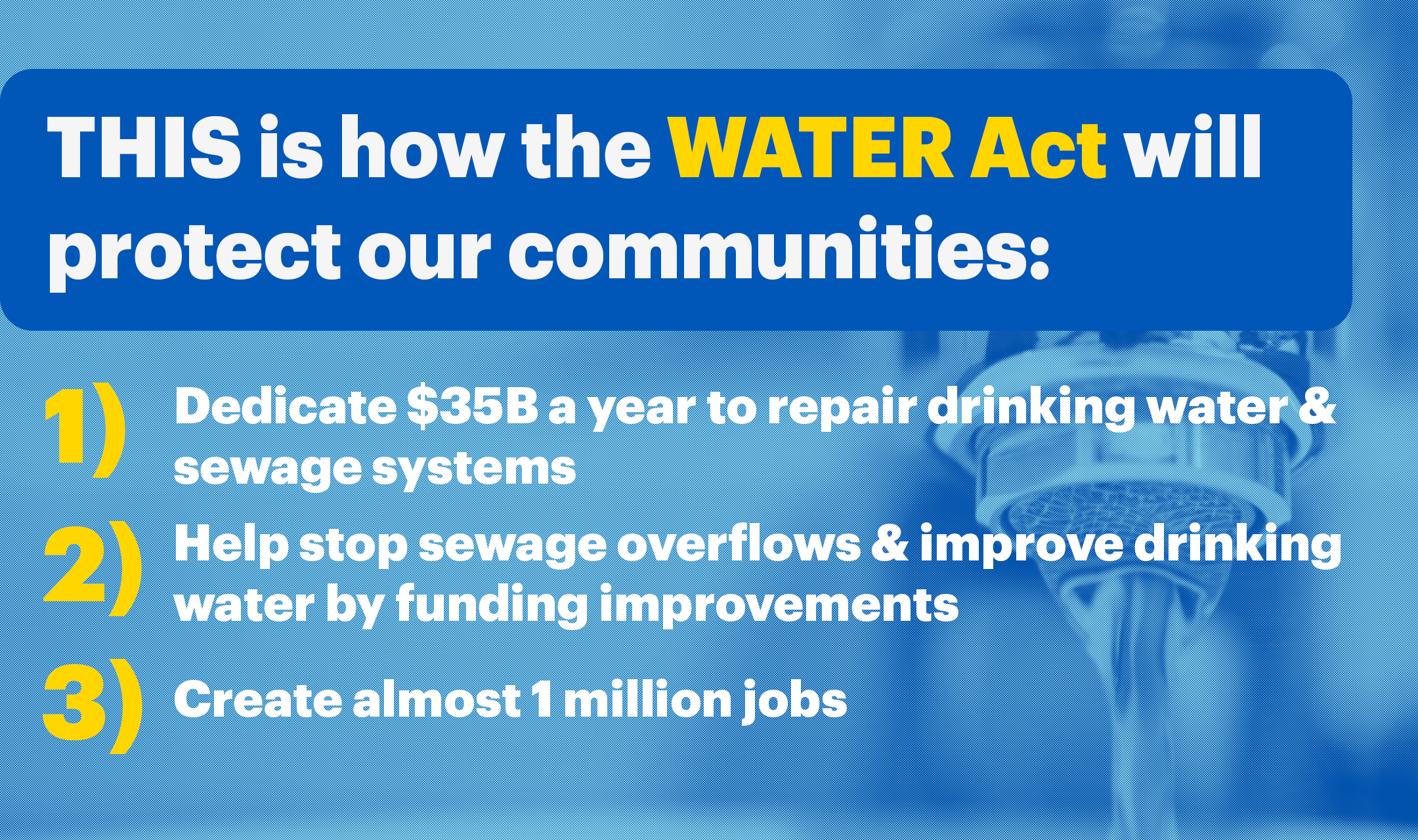
Let’s pass the WATER Act so we can fix our aging water infrastructure & help ensure #WaterForAll! http://fwwat.ch/3kfTtzS
We want to share some upcoming events this week in honor of World Water Day:
Today, Monday 3/22 at 9:30 am PT/ 12:20 pm ET, the Water Equity and Climate Resilience Caucus is holding a National Call for Water, featuring Janene Yazzie, Catherine Flowers, Monica Lewis-Patrick and Rep. Debbie Dingell.
Today, Monday 3/22 at 1 pm PT/ 4 pm ET, We the People of Detroit is hosting “Democratizing Water Affordability: A discussion on structural racism and environmental segregation across America.” Featuring Monica Lewis-Patrick, Peter Hammer, Jason Stanley, Coty Montag, Nadia Gaber and more!
Friday, 3/26 all day: We’re having a National Call-In Day for the Water Act, so mark your calendars.
On Friday, we are asking people to call their Congressional Representative and Senators to encourage them to cosponsor the WATER Act and push for it to be included in the upcoming infrastructure package. We have set up phone numbers that will track the number of calls we generate and that will have a quick recording at the beginning with a sample message to deliver:
House switchboard: 202-609-9041
Senate switchboard: 202-609-9043
Here is a draft message:
Hi my name is ____ and I live at ______. I am calling to urge Rep ____ to cosponsor the WATER Act (HR 1352) and push for its water justice provisions to be included in the infrastructure package. The federal disinvestment in our water systems has caused skyrocketing water rates, crumbling infrastructure, widespread pollution, mass water shutoffs, and dangerous privatization schemes – Congress must act now to end our water crisis.
The New Shaft Permit Modification Public Hearing Begins on
Monday, May 17, 2021
The Department of Energy (DOE) wants to expand WIPP beyond the limits set in federal law, state agreements, the WIPP Permit, and DOE’s decades-old social contract with New Mexicans. But instead of presenting their entire plan to the public for review, DOE is trying to have different parts of the plan approved piecemeal, to avoid the required public process to examine the entire plan, and before the public and state officials decide if DOE’s expansion plan is even needed.
The latest “piece” is the current permit modification to add a new, fifth shaft to the WIPP underground. This permit modification is scheduled for public hearing, starting on May 17th. DOE claims the New Shaft and accompanying corridors (drifts) are needed for ventilation during current operations, but in fact, they are part of the build-out that will later include waste panels and waste rooms that would more than double the size of the underground disposal area.
Read on for more details or skip to the end to see how you can help stop the WIPP expansion
What is the Real Purpose of the New Shaft?
It is true that the drum explosion and radioactive release from WIPP in 2014 contaminated much of the underground and the exhaust shaft so that underground workers have been working with less than half of the air flow they had before the accident. However, the claim that the New Shaft is needed for ventilation of the existing underground space is bogus.
The existing four shafts provided all needed air for the first 15 years of operations. It is only because of the contamination that all air exiting the underground through the exhaust shaft must now be filtered.
In 2018 DOE began construction on a New Filter Building (NFB), which was expected to be completed in 2020 and would have provided all necessary air for the existing underground areas. But the NFB construction has been botched and is many months behind schedule and tens of millions of dollars over budget. Though the NFB can provide the needed air without the New Shaft, the New Shaft can’t improve airflow without venting contaminated air unless the New Filter Building is in place.
Though DOE claims the New Shaft is needed for current operations, not future expansion, DOE expects to complete the New Shaft and drifts in 2023, less than a year before WIPP is supposed to cease waste emplacement operations in 2024 under the current permit. Do they really think we can believe they are spending almost $200 million on a shaft that is to be used for just a few months?
Finally, though DOE claims this is only a ventilation shaft, they, and others often refer to it as a “utility shaft” which is a better descriptive name since in the future, the shaft would include a waste hoist for operations in the new waste panels and waste rooms that will make up the rest of an expanded WIPP.
NAS Agrees
The National Academies of Sciences (NAS) examined DOE’s plans to bring more waste and new waste (like highly concentrated “surplus” plutonium) to an expanded WIPP. Their April 2020 report said that the legal capacity limit at WIPP “…is likely to be exceeded…” by DOE’s expansion plans. The NAS report further determined:
FINDING 5-4: By virtually any measure, the proposal to dilute 48.2 Metric Tons of surplus plutonium and dispose at the Waste Isolation Pilot Plant (WIPP) represents a substantial technical and “social contract” change for WIPP and the State of New Mexico.
The NAS Report also determined that the piecemeal approach undermines the required public review:
FINDING 5-7: A segmented and incremental approach to revealing the full inventory under consideration for disposal … in WIPP … obfuscates the total anticipated inventory expected for WIPP and its consequences. An incremental approach inhibits a comprehensive review by regulators and public of the full impact of the proposed … program on a future WIPP.
GAO Agrees
In 2017, the federal Government Accountability Office (GAO) reported:
DOE does not have sufficient space at WIPP to dispose of all defense TRU waste.
In 2020, it was the GAO – not DOE – that provided the public with the design of DOE’s plan to more than double the amount of disposal panels at WIPP.
It’s difficult to compare this map to the drawing at the top because the proposed “Utility Shaft” is pointing to the top, right here and is pointing to the bottom, left in the drawing. However, this map shows not only the proposed New Shaft and drifts, but also the waste panels and waste rooms. The original underground footprint is in blue. The proposed, expanded footprint is in green.
People Have Not Been Fooled
DOE has not presented its expansion plan to New Mexicans. But People have not been fooled. Since at least 2005 the public has been concerned about DOE’s plans to expand WIPP. That concern has continued to grow.
In 2019, 97 percent of the 295 organizations and individuals commenting on the New Shaft permit modification request, opposed that request and also objected to the proposed WIPP expansion.
In 2020, 97 percent of the 360 organizations and individuals that commented, again opposed the New Shaft draft permit, including objecting to the proposed WIPP expansion.
How You Can Help Stop the New Shaft and the WIPP Expansion
People can help stop this New Utility Shaft by reading NMED’s Public Notice and Fact Sheet (both in English & Spanish), reading our analysis of these documents, and by participating in the permit modification hearing. Read our future newsletters to see our analysis, read a short timeline & history of WIPP, and to find out more on how you can participate and influence the hearing process.
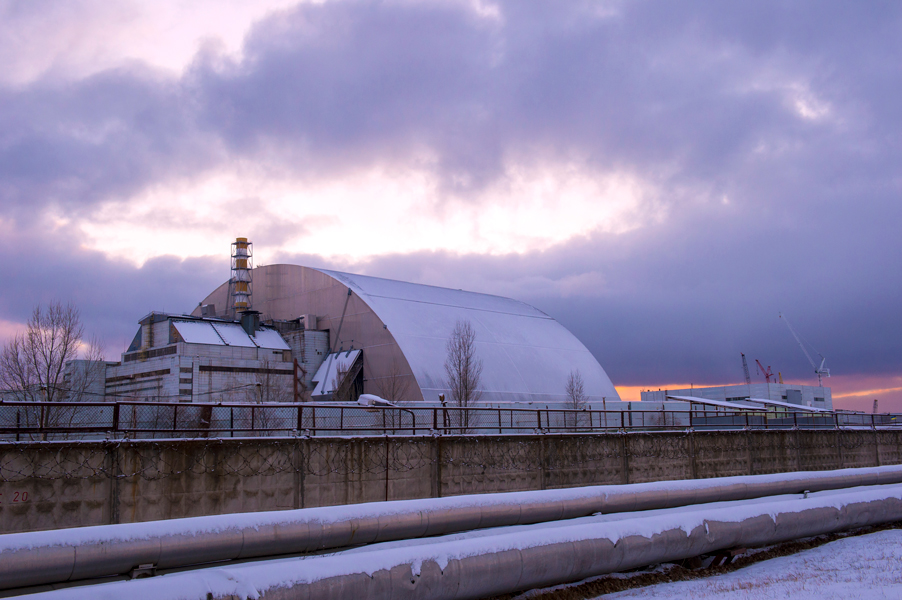
 As we celebrate Earth Day and commemorate the 35th anniversary of the Chernobyl nuclear disaster in 1986, three free virtual events are taking place between now and Friday, April 30th. They are the Taos Environmental Film Festival and Conference; the Building Political Support for the Nuclear Ban Treaty webinar; and the Native American Forum on Nuclear Issues.
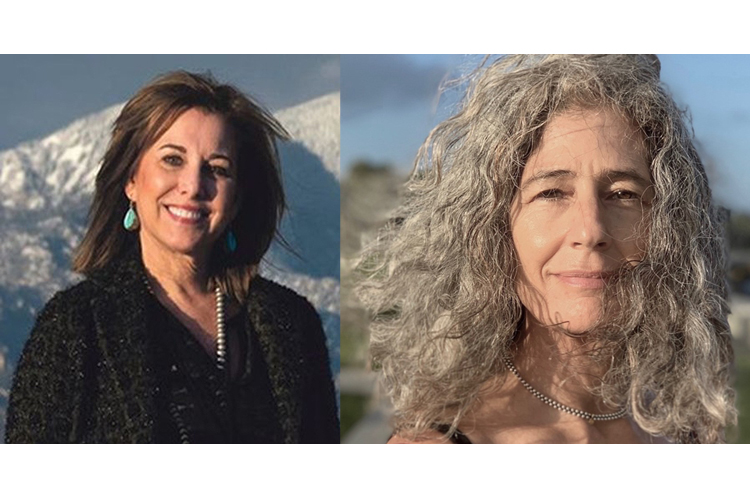 In honor of Earth Day, Thursday, April 22nd, two outstanding New Mexico Poets Laureate, Catherine Strisik of Taos, and Elizabeth Jacobson of Santa Fe, will read their poetry beginning at 7:30 pm. For more information and zoom links, please visit https://taosenvironmentalfilmfestival.com/somos-information-1/
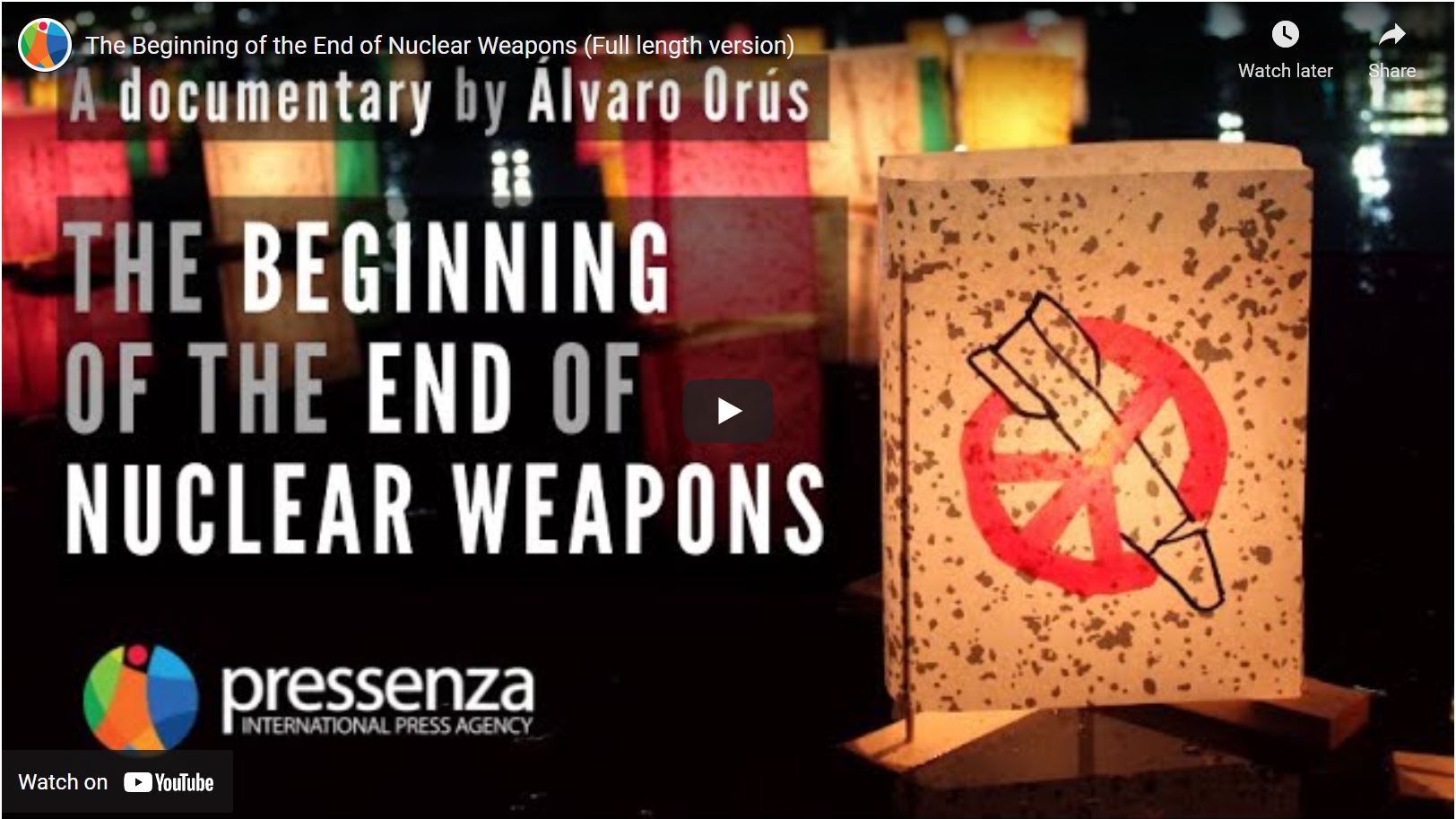 The free zoom conference takes place from Friday, April 23rd through Sunday, April 25th from 11 am to 1 pm Mountain Daylight Time. There will be two one-hour sessions, one at 11 am and the other at noon. For more information and registration, please visit https://taosenvironmentalfilmfestival.com/conference-information/
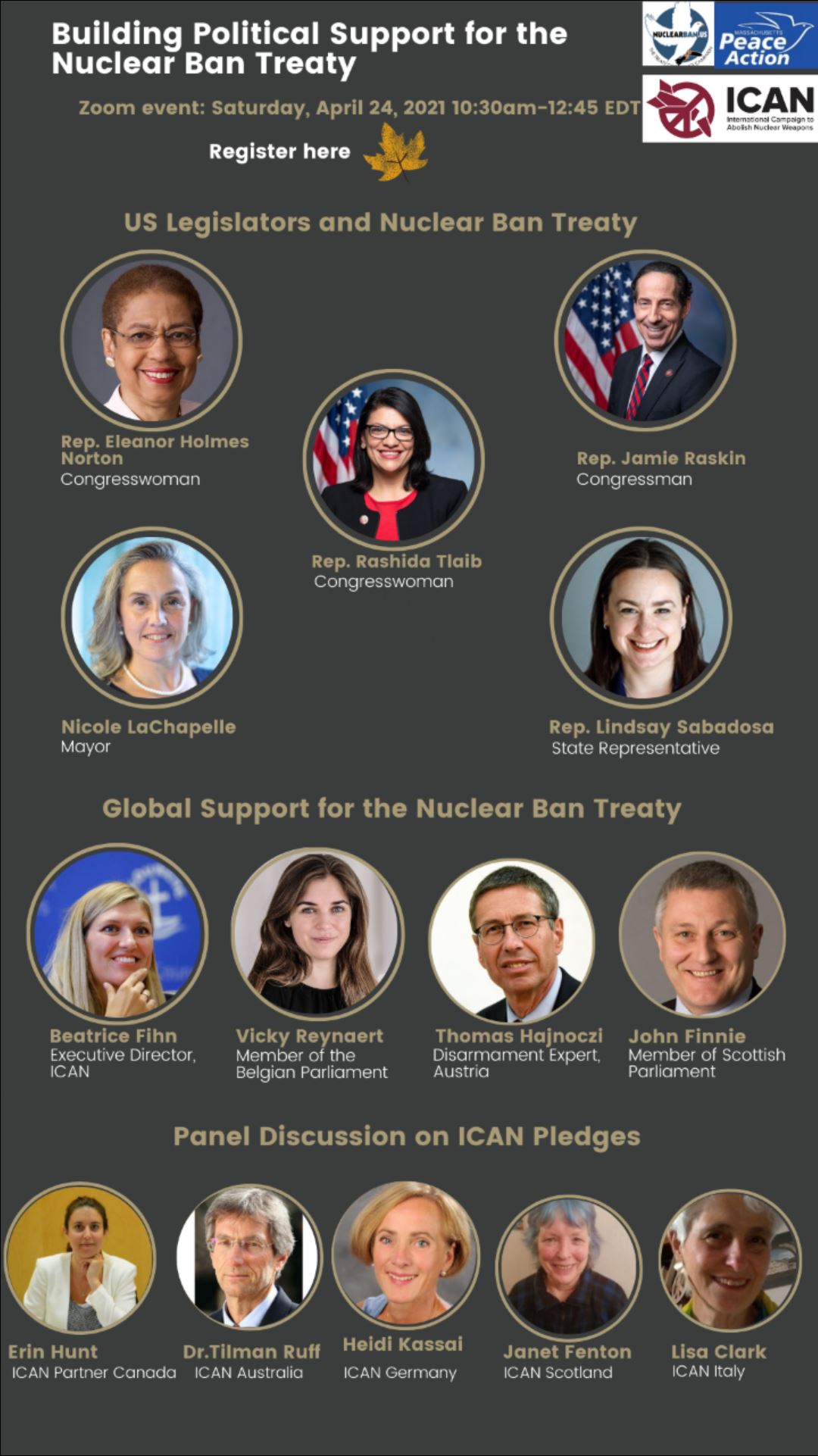 On Saturday, April 24th, the International Campaign to Abolish Nuclear Weapons, Massachusetts Peace Action, and Nuclear Ban US host a virtual webinar, Building Political Support for the Nuclear Ban Treaty. Speakers include U.S. and international lawmakers. The webinar will take place from 8:30 am to 10:45 am Mountain Daylight Time. To register, please visit http://www.nuclearban.us/
 Featured artists include Jack Malotte, Sorren Thunder Richards, Sarah Caligiuri, and Bryan Hudson, among others. To register for your complimentary ticket, please visit https://tosavetheworld.ca/events/the-native-american-forum-on-nuclear-issues-nafni-2021/

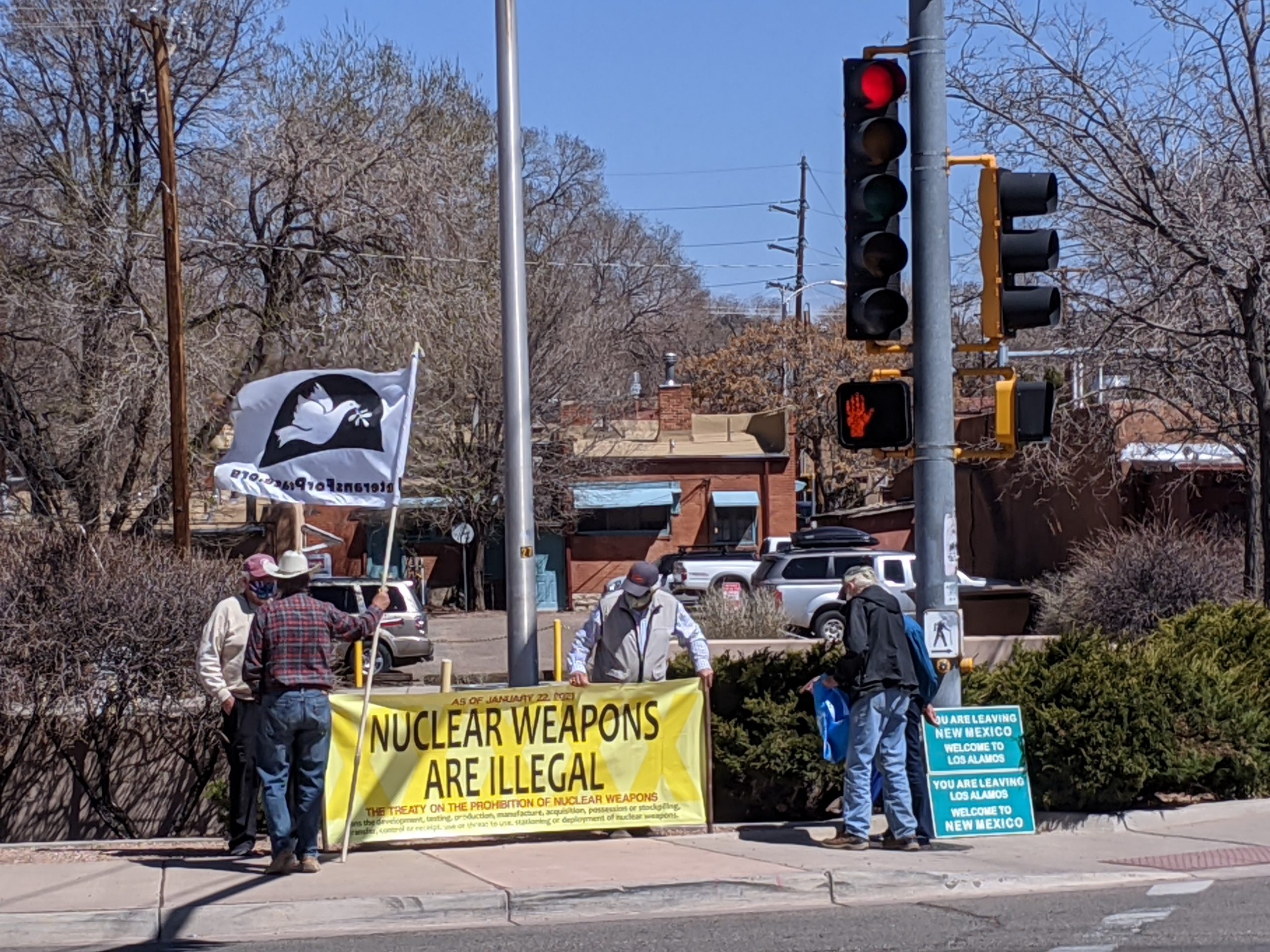 – Protest LANL signing a 10-year lease (for the former Descartes building) to establish itself “permanently” in Santa Fe at the corner of Guadalupe and W. Alameda. JOIN Veterans for Peace, CCNS, Nuclear Watch NM, and others. We’ll have banners. Please bring a sign.
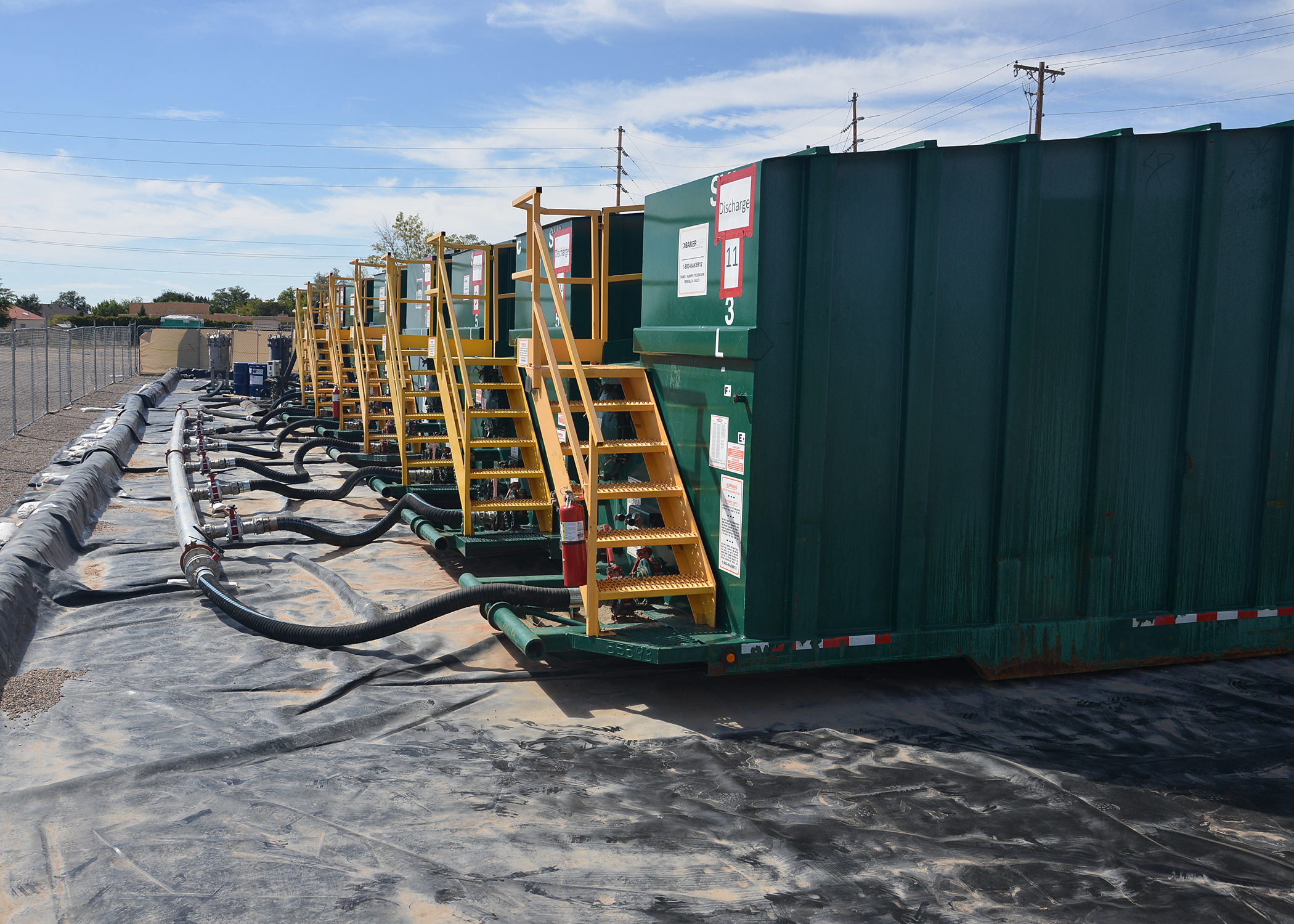 – Virtual open house for the Kirtland Air Force Base Bulk Fuels Facility. You will need to download Adobe Connect software to participate. See excerpts below from a KAFB email:
 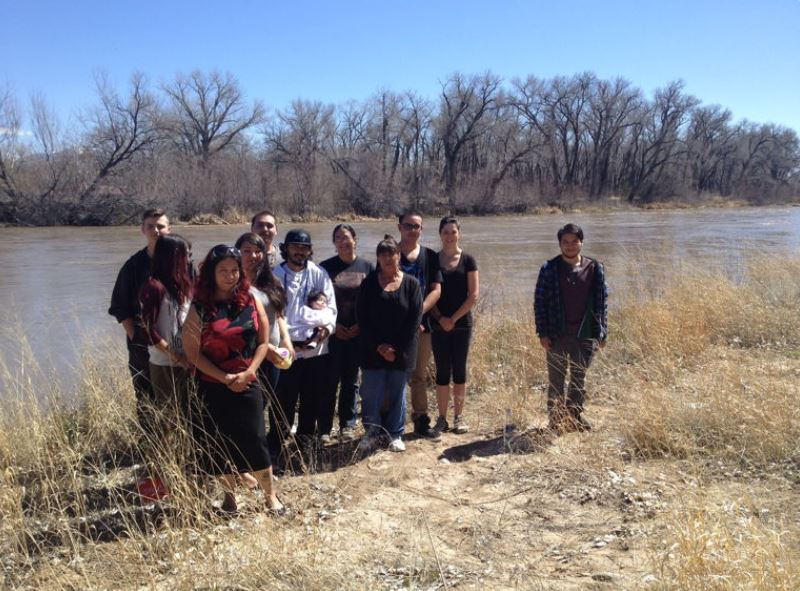 Communities for Clean Water (CCW) will be a featured community organization, as part of the Peace Development Fund “Healing Our Communities and Our Land,” during its Grassroots Funding Week. CCNS is a founding member of CCW. Please support our collective work to hold LANL accountable on surface and groundwater issues by making a donation. Thank you! https://www.mightycause.com/story/Supportcommunitiesforcleanwater
 Santa Fe City Council will vote up or down on resolution, introduced by Councilor Renée Villarreal, to leave the Regional Coalition of LANL Communities (RCLC). The agenda has yet to be posted. Check here: https://santafe.primegov.com/public/portal#
  Virtual Public Hearing about Proposed Shaft for the Waste Isolation Pilot Plant (WIPP). For more information: NM Environment Department at https://www.env.nm.gov/hazardous-waste/wipp/ (scroll down to March 10, 2021 entry); Stop Forever WIPP Coalition at https://www.facebook.com/StopfvrWIPP/ ; and CCNS at http://nuclearactive.org/ See a five-part Stop Forever WIPP Coalition series about the proposed shaft, the public hearing, how you can participate, and sample comment letters you can use.