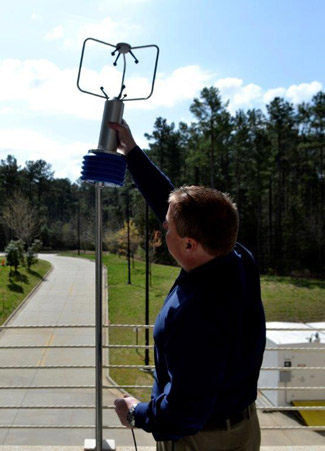
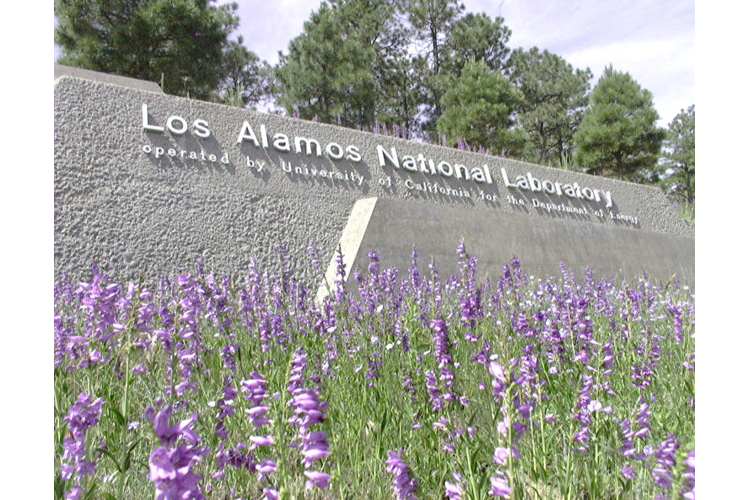
The New Mexico Environment Department Department of Energy Oversight Bureau may move its oversight bureau from Los Alamos to Santa Fe.
News of the proposed move has some nuclear watchdog groups concerned.
According to NMED’s Public information officer, Maddy Hayden, the move is to better ensure compliance at Los Alamos National Laboratory and other federal facilities the NMED oversees.
The move was also about conducting oversight in better, more modern facilities, she said.
“This contemplated relocation to a more modern facility will include a new and innovative laboratory,” Hayden said.
Environmental, nuclear safety groups Nuclear Watch and Concerned Citizens for Nuclear Safety expressed concern over the move.
Concerned Citizens Spokeswoman Joni Arends said the oversight bureau’s physical presence in Los Alamos was important.
“It’s not the same to be able to drive down to the ‘Y’ intersection of NM. 4 and NM 502 and look at the flows to LA and Pueblo Canyon. It’s not the same as actually watching how much runoff is going off Smith’s parking lot into Los Alamos Canyon, it’s not the same as actually looking up at the Los Alamos ski hill and seeing how much snow is up there,” Arends said. “There’s something about being a presence in a place that allows a sensitivity for what’s going on.”
Hayden said the move would not diminish the oversight bureau’s pollution monitoring activities of LANL.
The New Mexico Environmental Department did not give a timeline for the move.
“The move will not result in decreased services and all program commitments will continue to be met,” Hayden said.
NMED is currently setting up a schedule of meeting where the public can give their comments on the move.
“NMED will continue to ensure engagement with local stakeholders and is initiating quarterly community meetings to provide opportunities for productive discussions on topics related to Los Alamos National Laboratory compliance,” Hayden said.
Arends and Jay Cauglan, executive director of Nuclear Watch New Mexico, both said that the move would also mean more road time and less monitoring time for scientists at the oversight bureau who do the monitoring.
“If it’s close to two hours in roundtrip transportation, won’t that inevitably cut the amount of time that they can do actual oversight,” Cauglan said.
Despite being exclusively funded by a Department of Energy (DOE) grant, the New Mexico Environment Department is exploring whether to move the Oversight Bureau at Los Alamos National Laboratory (LANL) from Los Alamos to Santa Fe. A community meeting will held the week of June 24th to discuss the issues at a location to be determined. Your voice to support the Oversight Bureau remaining in Los Alamos is needed now.
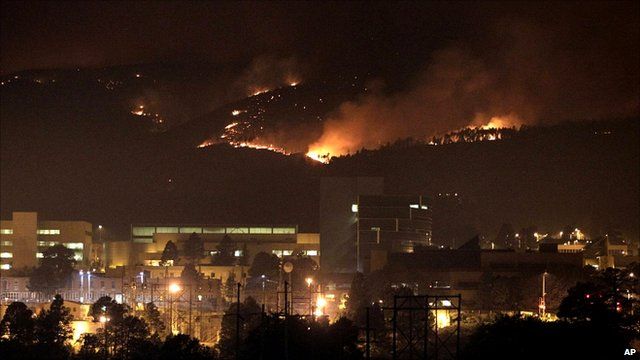
For over 30 years, the Oversight Bureau has served as the eyes and ears of the Environment Department in Los Alamos. Their purview of day-to-day operations and emergencies, such as the 1996 Dome fire, the 2000 Cerro Grande http://www.nuclearactive.org/docs/CerroGrandeindex.html, and the 2011 Las Conchas fires, has been essential for communities downwind and downstream of LANL. During the fires, the Oversight Bureau staffers remained on-site and monitored air emissions. CCNS, Nuclear Watch New Mexico, and the public rely on the Oversight Bureau’s expertise, institutional knowledge of LANL operations, and their environmental sampling data and analyses.
The Environment Department says it is conducting a proper assessment to determine where the Oversight Bureau should be located. Nevertheless, DOE provides about $1.8 million annually to the LANL Oversight Bureau under what was called an agreement in principle between the two agencies. It covered oversight of both the environmental releases from nuclear weapons work and cleanup at LANL. It is now called a memorandum of understanding and is restricted to cleanup.
Scott Kovac, of Nuclear Watch New Mexico, said, “If the Environment Department is concerned about funding the Oversight Bureau, it is time for them to initiate negotiations with DOE to revise, update, and possibly expand the memorandum of understanding and funding for it.” https://nukewatch.org/
Joni Arends, of CCNS, urged people to get involved to keep the Oversight Bureau in Los Alamos. She said, “The new Environment Department Secretary, James Kenney, needs to understand the importance of the Oversight Bureau staying in Los Alamos for those living downwind and downstream of LANL. Please contact Secretary Kenney and tell him your story about what the Oversight Bureau means to you. Explain why it needs to remain in Los Alamos. His phone number is 505 827-2855 and his email is James.Kenney@state.nm.us. Please copy your correspondence to your congressperson and your local media. Thank you.”
Here’s a sample public comment letter that you can use to submit your concerns to NM Environment Department Secretary James Kenney. Feel free to use the paragraphs that resonant with your concerns – edit them and add your own concerns. f OB sample public comment letter 6-6-19
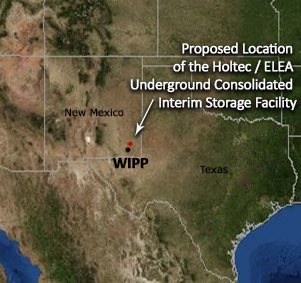
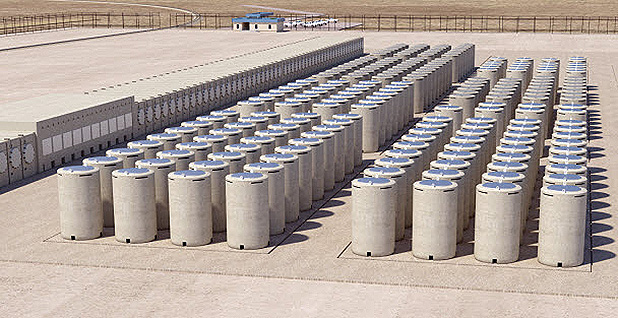
1. Wednesday, June 19, from 6 to 7:30 pm at the Center for Progress and Justice, 1420 Cerrillos Road, Santa Fe – The Santa Fe County Democratic Party is sponsoring a forum entitled, “Nuclear Wasteland – New Mexico?” which will address the challenged expansion of the Waste Isolation Pilot Plant (WIPP) and the proposed Holtec International high-level radioactive waste consolidated interim storage facility located 16 miles north of WIPP. Speakers include: Don Hancock, Southwest Research and Information Center; State Representative Christine Chandler (District 43); James Kenney, New Mexico Environment Department Secretary; and Sally Rodgers, founder of Conservation Voters New Mexico. http://santafedemocrats.org/events/
2. Wednesday – Thursday, July 10 – 11, beginning at 9 am, the Atomic Safety and Licensing Board of the Nuclear Regulatory Commission will hold a hearing about the Waste Control Specialists (Interim Storage Partners) license application for a consolidated interim storage facility (CISF) for high-level radioactive waste at the Midland County Courthouse, 500 North Loraine Street, Midland, Texas. https://www.nrc.gov/pmns/mtg It is anticipated that this hearing will be similar to the ASLB hearing in Albuquerque in January about the Holtec International license application.
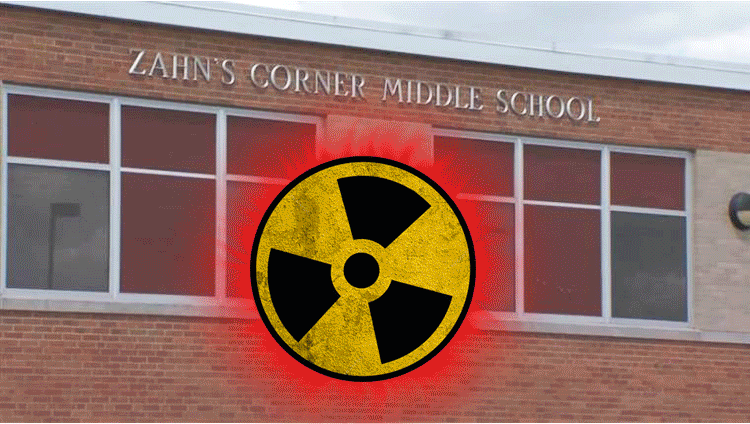
Residents living within four miles of the Department of Energy’s Portsmouth [Uranium] Gaseous Diffusion Plant filed the first class action lawsuit after Pike County officials closed Zahn’s Corner Middle School earlier this month after radioactive contamination was detected inside and outside of the school. http://www.huntingtonnews.net/sites/default/files/n64/mcglone.pdf Enriched uranium was detected inside the school, while an air monitor located near the school found neptunium-237. The middle school is less than two miles from the Portsmouth site, with 300 students served by 25 staff members.
Jennifer Chandler, a Piketon village councilwoman, reported that in the past five years, five students have been diagnosed with cancer. Unfortunately, three of them have died. She wonders if there is a cancer cluster in her village.
The Portsmouth Gaseous Diffusion Plant began producing enriched uranium and weapons-grade uranium for nuclear weapons in 1954. After the end of the Cold War, it began producing uranium for nuclear power reactors. Since 2001, DOE and its contractors have been working to decontaminate and decommission the 3,777-acre site.
DOE conducts routine air monitoring. In 2017, DOE detected trace amounts of neptunium and enriched uranium. In 2018, DOE detected americium. All three radionuclides are by-products of nuclear production. The data was released in March 2019.
One of the neighbors, Elizabeth Lamerson, took matters into her own hands and contacted scientists at Northern Arizona University. She began her own sample collection process and the University conducted a public interest study to investigate possible sources. One source may be the construction of an on-site waste disposal facility for 2 million cubic yards of waste from decontamination and decommissioning work.
Last weekend, DOE Secretary Rick Perry sent “a world class team of certified health physicists” to do follow-up sampling.
Besides the DOE, other defendants include its contractors – Centrus Energy Corporation; United States Enrichment Corporation; Uranium Disposition Services, LLC; BWXT Conversion Services, LLC; Mid-America Conversion Services, LLC; Bechtel Jacobs Company, LLC; Lata/Parallax Portsmouth, LLC; and Fluor-BWXT Portsmouth, LLC.
The plaintiffs seek to represent the following individuals, including all property owners within a seven-mile radius of the Portsmouth Site; all residents and former residents with more than one year of residence, also within a seven-mile radius; and all current and former students at Zahn’s Corner Middle School from 1993 to the present, as well as their parents.
The plaintiffs are asking the U.S. District Court to certify the class; award damages for loss of use and enjoyment of their property; and punitive damages. They are also asking for remediation of their property; a medical surveillance and medical monitoring program; and other procedures to settle the case.
1. New Mexico has a uranium enrichment facility too. It’s called URENCO USA, which is located at 275 Hwy. 176, approximately 4.5 miles east of Eunice, NM. URENCO USA uses a different technology than the Portsmouth Gaseous Diffusion Plant. URENCO USA uses centrifuges to separate uranium. https://www.nrc.gov/materials/fuel-cycle-fac/ur-enrichment.html
2. URENCO USA submitted an application to renew and modify its groundwater discharge permit (DP-1481) to the New Mexico Environment Department. URENCO USA proposes to discharge 19,717,000 gallons per day – yes, that is correct – nearly 20 million gallons per day – of industrial wastewater and stormwater to a treatment and disposal system.
3. This is an area with lots of oil and gas extraction and other nuclear-related operations, including the Waste Isolation Pilot Plant (WIPP). Two projects to bring all of the nation’s high-level radioactive waste generated in nuclear power plants to this area are currently before the Nuclear Regulatory Commission right now. They are:
a. the Holtec International proposal, located on oil and gas extraction lands, 16 miles north of WIPP; and
b. The Interim Storage Partners (formerly Waste Control Specialists, LLC) located on the New Mexico – Texas border, six miles east of Eunice, NM.
4. On January 22, 2019, the Environment Department issued a Public Notice 1 stating that URENCO USA had received the application. VIEW DISCHARGE PERMITS
5. The Environment Department permit writer is Jason Herman, at jason.herman@state.nm.us, at 505 827-2713. Ask to be informed when the Public Notice 2 (PN-2) is issued. PN-2 lets the public know that a draft permit is available to review and that there is an opportunity to ask for a public hearing.
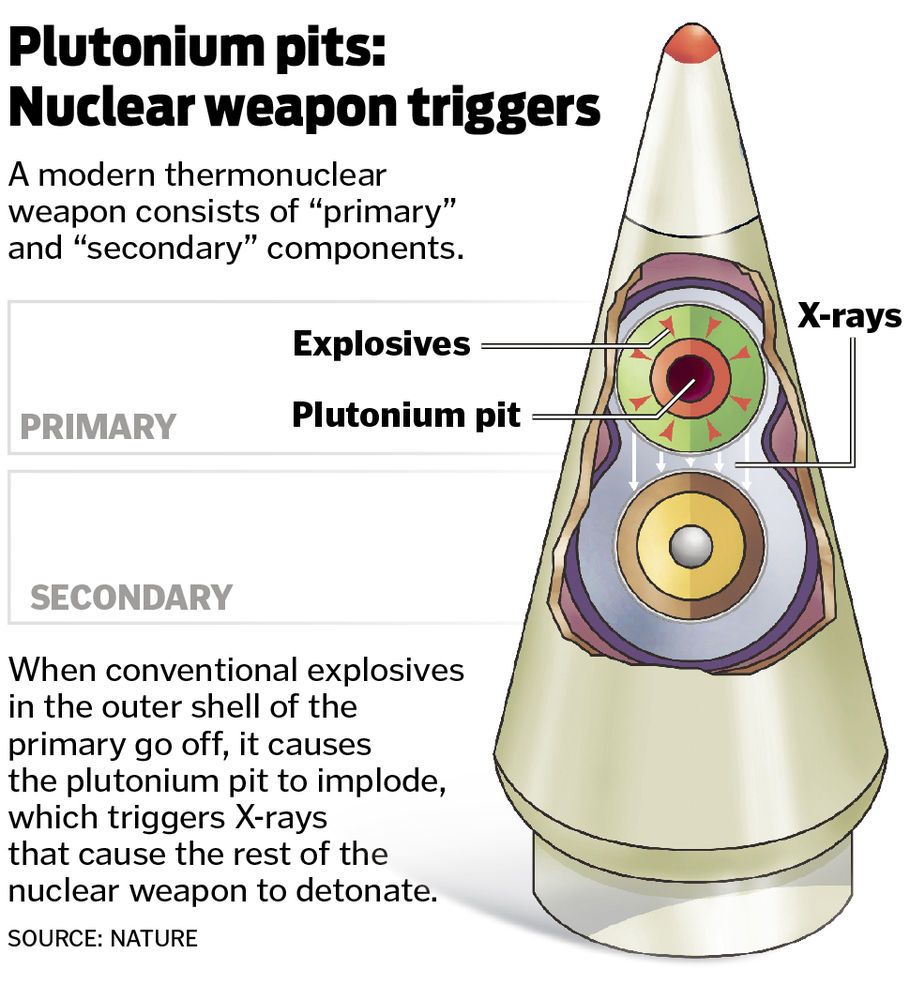
An unclassified five-page executive summary released this week during the Alliance for Nuclear Accountability DC Days reveals risks and problems inherent in a renewed U.S. effort to reconstitute plutonium pit production capacity by 2030. The government contractors from the Institute for Defense Analysis found that “[t]rying to increase production at [the Plutonium Facility at Los Alamos National Laboratory (LANL)] by installing additional equipment and operating a second shift is very high risk.” LANL is the only U.S. manufacturing location for plutonium pits, the triggers for nuclear weapons. IDA ExecSum UNC March2019
The Department of Energy (DOE) and its semi-autonomous National Nuclear Security Administration have been trying to increase the number of pits manufactured at LANL since the end of the Cold War. Such proposals include a Modern Pit Facility and a super Wal-Mart-sized Nuclear Facility as part of the Chemistry and Metallurgy Research Replacement Project. Neither was built.
The Institute cited these failures, and others across the nuclear weapons complex, as historical evidence of the difficulties DOE could encounter. The Institute wrote, “Put more sharply, eventual success of the strategy to reconstitute plutonium pit production is far from certain. DOE historical data make clear that difficulties are to be expected in a project of this scale and complexity. [The Institute] examined past [DOE] programs and could find no historical precedent to support starting initial operations [ ] by 2030, much less full rate production.”
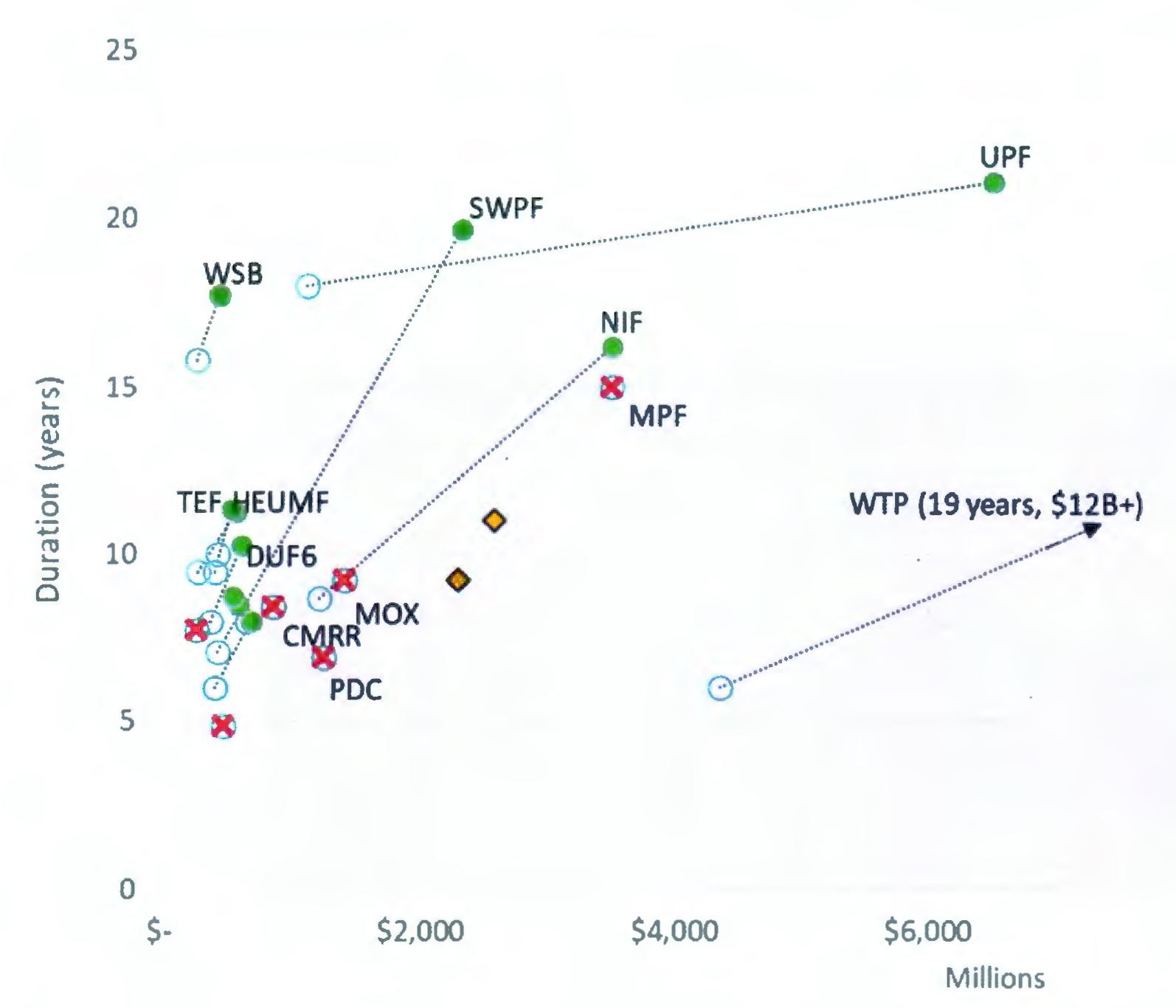
The Institute continued, “Of the few major projects that were successfully completed, all experienced substantial cost growth and schedule slippage; we could find no successful historical major project that both cost more than $700 million and achieved [initial operations] in less than 16 years.”
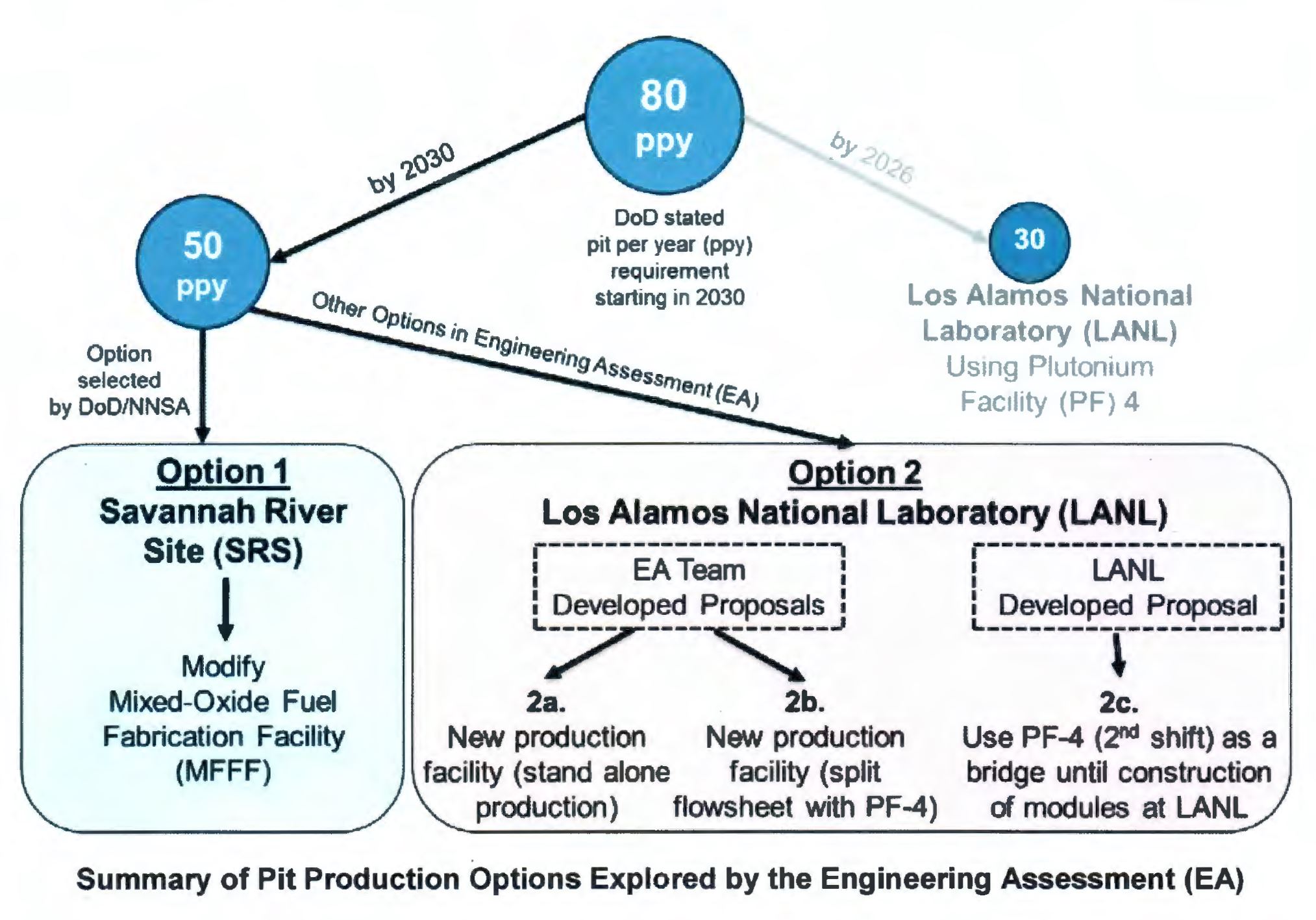
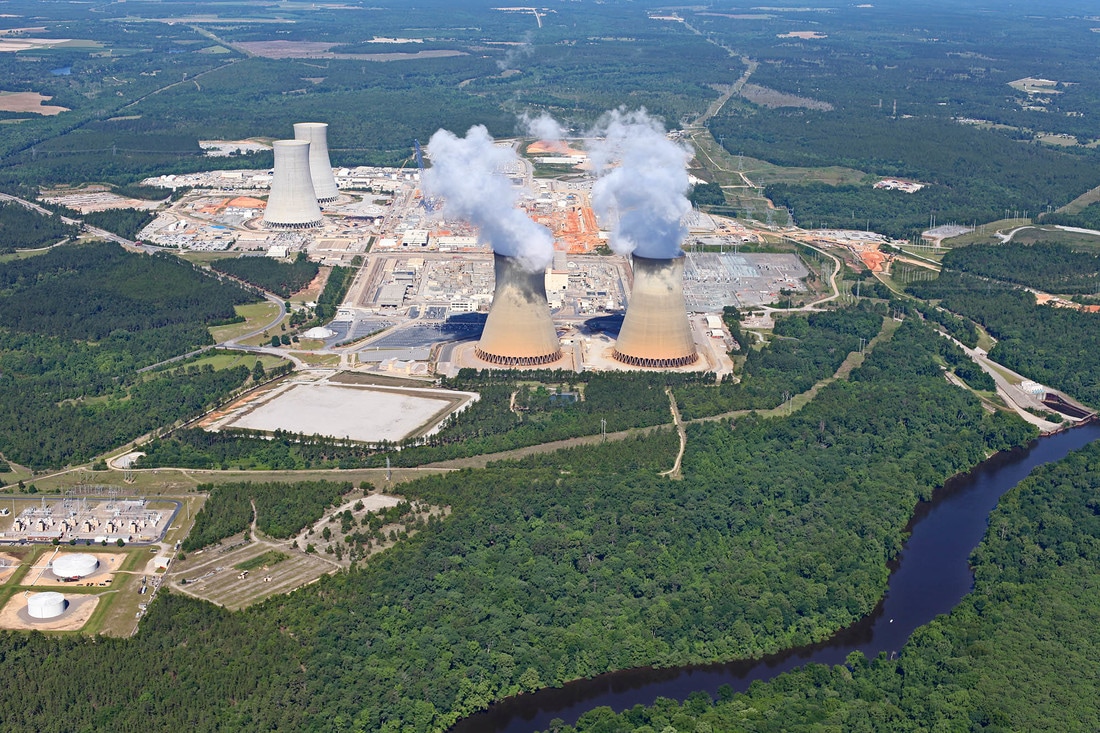
On May 10, 2018, the nuclear weapons bureaucracy announced that it supports the manufacture of 80 plutonium pits per year. They chose two facilities. One is the LANL Plutonium Facility for the manufacture of 30 pits per year. The other is the uncompleted Mixed-Oxide Fuel Fabrication Facility at the Savannah River Site in South Carolina. Fifty pits per year could be manufactured once the mixed-oxide, or MOX, facility was reconstructed.
Jay Coghlan, Director of Nuclear Watch New Mexico, said, “This report makes clear that DOE is blowing smoke when it says that it will produce 80 plutonium pits per year by 2030 for new unneeded nuclear weapons. After all, this is the gang that can’t shoot straight. They need to slow down, do it right and for sure do it safely. Above all the feds must concretely demonstrate a real need for expanded pit production before they fleece the American taxpayer of tens of billions of dollars.”https://nukewatch.org/
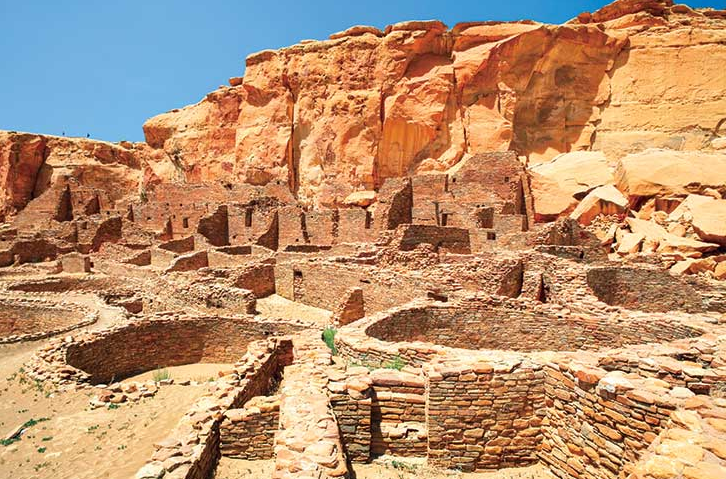
1. CHACO CANYON – Santa Fe County Commissioner Anna Hansen is bringing forward a Resolution at the Tuesday, May 28th Board of County Commissioners’ meeting about Resolution No. 2019-____, A Resolution Urging Congress to Enact ‘The Chaco Cultural Heritage Area Protection Act, S. 1079’ and Withdraw the Federal Lands Around Chaco Canyon from Further Mineral Development and Ensure the Protection of Chaco Ruins and the Greater Landscape Surrounding the Chaco Culture National Historical Park. https://www.santafecountynm.gov/committees/board_of_county_commissioners_bcc Please support Commissioner Hansen’s efforts by attending Tuesday’s meeting (on agenda around 3:30 or 4 pm) and/or call your commissioners and urge their support.
2. CCNS has been trying to obtain a color paper copy of LANL’s application for a National Pollutant Discharge Elimination System (NPDES) permit for over two weeks? LANL used to provide color paper copies of their permit applications to the public. They state they will provide a CD. Well, a CD doesn’t do it for us. Our shelves include the two volume 2014 NPDES permit application, which we refer to often in our work to protect the Rio Grande.
Having a color paper copy of the application, maps, and appendices is important in our preparation for a public hearing this fall about the discharges from LANL outfalls into the canyons that flow to the Rio Grande.
Please help us by emailing Peter.Maggiore@nnsa.doe.gov and saladen@lanl.gov and ask that LANL provide a color paper copy of the application, maps, and appendices TO CCNS. Remind them that the LANL buget has increased from $2.2 billion/year to $2.7 billion/year under the Trump administration. Surely they can find the funding to provide CCNS with a color paper copy of their complete application. Thank you for your help!
Leaders and activists from across the country will come together for the 31st annual Alliance for Nuclear Accountability DC Days from May 19th through the 22nd. With nearly 100 pre-arranged meetings, they will meet with elected congresspeople, as well as officials in the administration, such as the Department of Energy (DOE) and the National Nuclear Security Administration. This year, it is especially important for Congress and the administration to hear from those who seek a nuclear-free future that safeguards communities, public health and the environment. http://www.ananuclear.org/CLEANUP AND WASTE FACT SHEET and WEAPONS AND POLICY FACT SHEET
On Tuesday evening, May 21st, the Alliance will host its annual reception in the Rayburn House Office Building. It will honor Ms. Gardner with the Dr. Judith H. Johnsrud “Unsung Hero” Award for her outstanding work challenging the two proposed consolidated interim storage facilities for high-level radioactive waste. http://static1.1.sqspcdn.com/static/f/356082/24557781/1395166421747/Thunderbird_TMI_March2014.pdf?token=Kn4f5a4a50Jfzz2h5KKG0VJWHUM%3D The facilities are: the proposed Holtec International site located half way between Hobbs and Carlsbad; and the existing Waste Control Specialists, now called Interim Storage Partners, located on the New Mexico – Texas border, east of Eunice, New Mexico.
ANA will honor Congressman Adam Smith, representing Washington State’s Ninth District. Congressman Smith is the chair of the House Armed Services Committee, which oversees DOE. https://armedservices.house.gov/ He has made bold statements opposing expanded nuclear weapons production.
The appropriations bill must be voted out of the House before moving to the Senate.
If you are unable to attend DC Days, you can participate by contacting your Senators. Please tell them to strongly oppose funding for consolidated storage in the Energy and Water appropriations bill. Please urge them to oppose Senate Bill 1234 and any similar bills that would authorize consolidated storage. And finally, tell your congresspeople that New Mexicans strongly oppose the Holtec proposal.
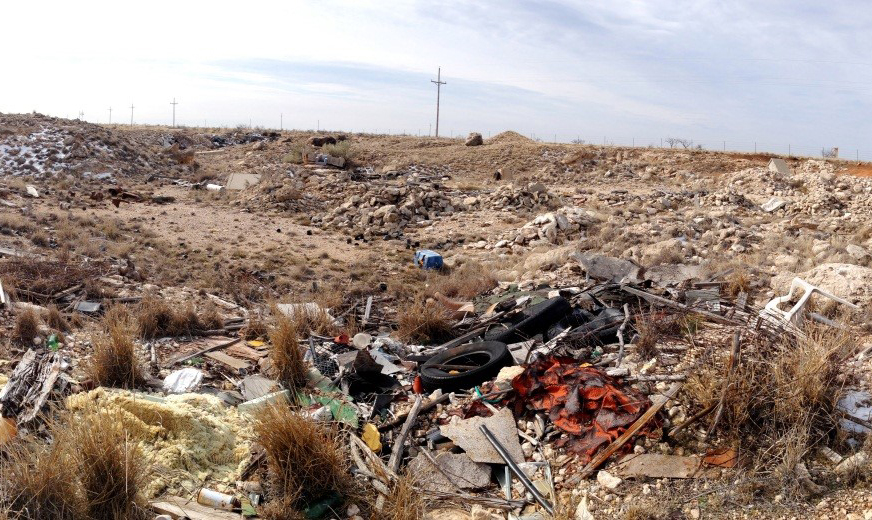
1. On Wednesday evening, the New Mexico Environment Department held a public hearing in Hobbs, NM about the Lea County Landfill for a renewal of the 20-year permit and proposed expansion to bring 2,500 tons of asbestos waste annually among other wastes. The wastes could be coming from NM, but also from other states. It is not clear whether the expansion could include foreign wastes. They are proposing vertical expansions of 75 feet (which could be 7.5 stories at 10 feet/story or 5 stories at 15 feet/story). To view the video of the hearing, go to save lea county
2. On May 29th and May 30th, the Cold War Patriots are holding two socials for LANL, Sandia, and Uranium Workers.
Cold War Patriots is a community resource and advocacy organization helping nuclear weapons and uranium workers and their families get the recognition, compensation and health care they have earned.
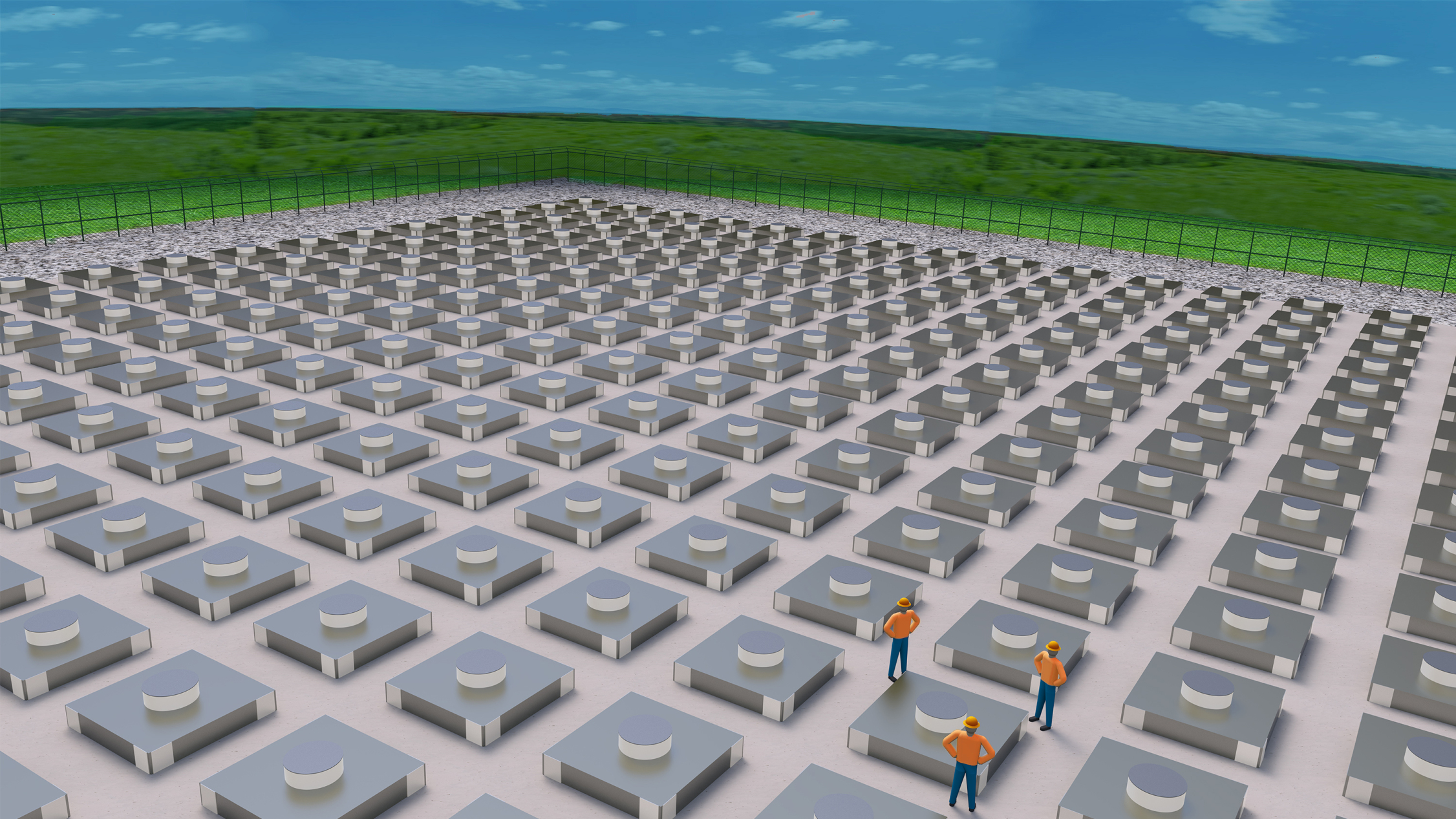
A Nuclear Regulatory Commission (NRC) board denied an evidentiary hearing to all of the public interest and industry groups that oppose the Holtec International proposal to open the world’s largest “interim” nuclear waste dump in southeast New Mexico for one of the most deadly materials on Earth – high-level radioactive waste. The 142-page decision is available at https://www.nrc.gov/docs/ML1912/ML19127A026.pdf
The companies that operate nuclear power plants, located mostly east of the Mississippi River, own the waste. The Board did acknowledge the federal Nuclear Waste Policy Act does not allow the Department of Energy (DOE) to take title to the waste or pay for transportation or storage until there is a permanent dump.
Although the Holtec application states that DOE or nuclear utilities could pay for the storage and transportation, the Board ruled against the legal challenges because “…the Board assumes Holtec will honor its commitment not to contract unlawfully with DOE to store any other spent nuclear fuel. Likewise, we assume DOE would not be complicit in any such unlawful contracts.”
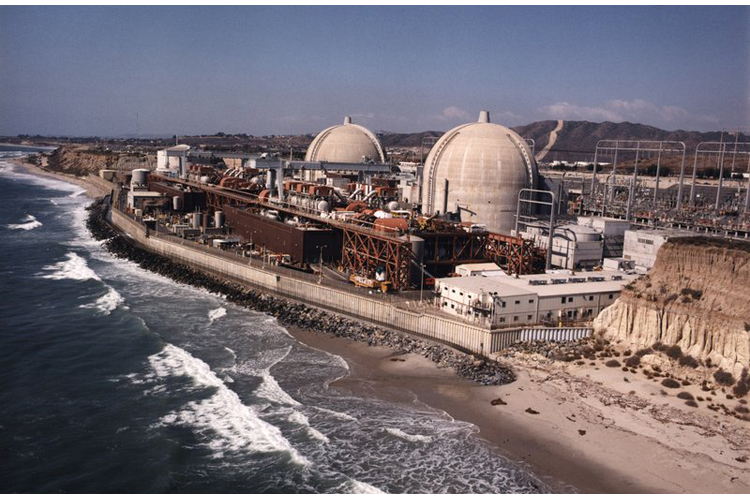
Among the other objections the board ruled against hearing are problems with the Holtec waste canisters. Donna Gilmore, with San Onofre Safety, is watchdogging the Holtec canisters stored in a similar configuration as those planned for Holtec’s New Mexico site. Gilmore said, “The NRC told the [Board] they have no problem with Holtec returning leaking canisters back to sender, yet neither the proposed New Mexico Holtec site nor the San Onofre site have a plan to deal with leaking canisters, let alone prevent radioactive leaks or hydrogen gas explosions. We cannot trust the NRC to protect our safety. It will be up to each state to stop this madness.” https://sanonofresafety.org/
Former U.S. Senator Jeff Bingaman of New Mexico has said that opening a consolidated interim storage facility without an operating permanent repository risks so called “temporary” becoming de facto permanent. http://bioguide.congress.gov/scripts/biodisplay.pl?index=B000468
Although Congress has never funded interim storage, it is again considering changing the law and providing such funding. Please call your Representative and Senators now and tell them that New Mexicans oppose the Holtec proposal and that Congress should not change the law or provide any funding for interim storage in the Energy and Water Appropriations bill. https://www.senate.gov/senators/index.htm and https://www.house.gov/representatives/find-your-representative
Mother’s Day is Sunday. If you love your Mother Earth, please support the work of CCNS. Your tax-deductible contribution will make a difference. Join us with a monthly contribution of $5, $10, or more a month. Thank you!
1. Support clean water! On Tuesday, May 14th, the NM Water Quality Control Commission will reconsider its decision to deny the Communities for Clean Water (CCW) Motion to Vacate the Agency Decision and Remand the Petition for Review of DP-1132 (for LANL’s Radioactive Liquid Waste Treatment Facility). The hearing begins at 9 am in Room 307 of the State Capitol in Santa Fe. It is agenda Item No. 8 and may begin after 10 am. https://www.env.nm.gov/water-quality-control-commission/wqcc/ and http://nuclearactive.org/ccw-asks-wqcc-to-remand-lanl-permit-to-nmed-secretary/
Please note: NMED Hearing Officer, Felicia Orth, will provide a one-hour orientation session for the new members of the Water Quality Control Commission.
Please come and support CCW, of which CCNS is a founding member, in its quest for justice.
3. On June 26th, the Environmental Protection Agency (EPA) will hold a public meeting and public hearing about the National Pollutant Discharge Elimination System (NPDES) permit for Kirtland Air Force Base. It will be held at the NM Veterans Memorial, 1100 Louisiana Blvd. SE, in Albuquerque. The public meeting will be held from 5:30 to 7 pm. The public hearing will begin at 7 pm. Details are available at: https://www.epa.gov/nm/united-states-air-force-draft-npdes-permit-no-nm0031216-0
4. The Nuclear Regulatory Commission (NRC) is proposing to hold a July 11th, and if necessary July 12th, pre-hearing conference to hear oral argument on standing and contention admissibility in the Interim Storage Partners, LLC (WCS Consolidated Interim Storage Facility)in Lubbock, Texas. Stay tuned for additional information.
Improper regulation of Los Alamos National Laboratory (LANL) for a proposed new radioactive liquid waste treatment facility for contaminated plutonium waters from nuclear weapons operations leaves the public out of the process. Because the new facility treats, stores and disposes of hazardous waste, it must be regulated by the New Mexico Environment Department. To do so, LANL would have to submit a permit modification request to the Environment Department, which requires enhanced regulation. It would also allow for public review and comment, as well as the opportunity to request a public hearing. LANL has resisted hazardous waste regulation at every turn.
The current facility has a National Pollutant Discharge Elimination System permit from the Environmental Protection Agency (EPA). https://www.env.nm.gov/swqb/NPDES/Permits/NM0028355-LANL.pdf, p. 7 of Part I. In order to be covered by an EPA discharge permit, a discharge of a pollutant into the environment must occur. Since November 2010, no discharge has flowed through Outfall 051 – the outfall hooked up to the current facility.
The proposed $145 million facility would be located between the plutonium facility and the current radioactive liquid waste treatment facility and would process about 7,500 gallons of wastewater annually. Like the current facility, it would be a “zero discharge” facility, which means that the treated wastewaters would be evaporated into the air. Even so, LANL would most likely hook up the new facility to Outfall 051 in order to avoid hazardous waste regulation.
Like the current facility, the sludge would be shipped to the Waste Isolation Pilot Plant.
Joni Arends, of CCNS, stated, “The Environment Department must protect human health and the environment through hazardous waste regulation of the old and new facilities. The revelations in the new DOE Assessment highlight our concerns for hazardous waste regulation of LANL operations.”
Did you know that as a special project, CCNS posted individual clips from the There is No Refuge from Nuclear War or Nuclear Waste: Rocky Flats in Context (September 15, 2018 in Boulder, Colorado) on our website, YouTube, and Facebook? Clips include:
1. Elizabeth Panzer, a Mother and Concerned Citizen living near Rocky Flats, talks about denial of the enormity of the issues;
2. Michael Ketterer, PhD, wants to sample areas contaminated with plutonium; and the need for perpetual monitoring; and
3. Rick Wayman, of the Nuclear Age Peace Foundation, explains how he got involved and suggestions for how to get youth involved. He also speaks about the Treaty on the Prohibition of Nuclear Weapons.
Please support our special projects! We want to do more to keep you informed!
CCNS believes that these clips are important to share with others to explain what happened at Rocky Flats and how DOE is using the same playbook for LANL cleanup.
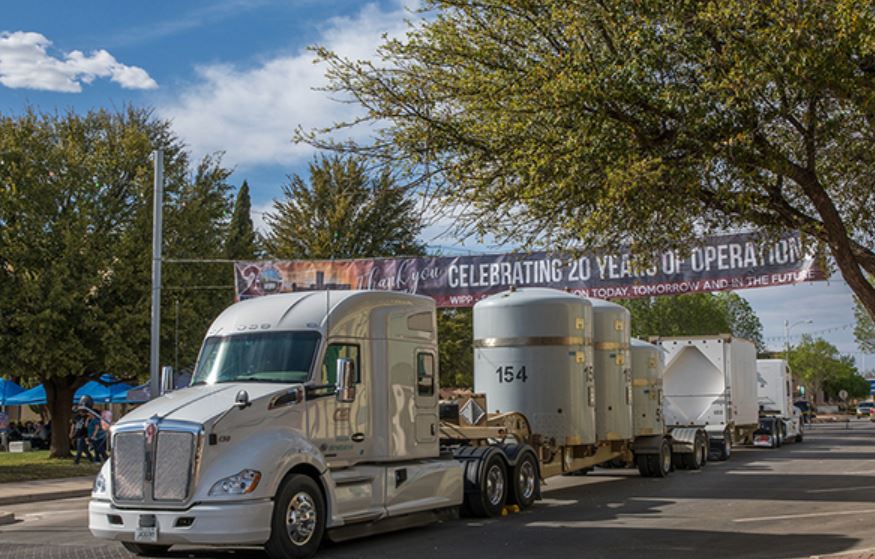
The Waste Isolation Pilot Plant (WIPP) is celebrating the 20th anniversary of the opening of the radioactive and hazardous waste dump on March 26, 1999 with outdoor events, including ice cream and a bounce house in Carlsbad, New Mexico. https://content.govdelivery.com/accounts/USDOEOEM/bulletins/23f1c3b Unfortunately, the celebrations minimize past and present health and safety problems and do not disclose the plans of the Department of Energy (DOE) and its for-profit contractors to expand WIPP. http://nuclearactive.org/wipp-worker-exposures-being-investigated/
Expansion plans include much more waste, different forms of waste, a new multi-use shaft to facilitate new waste-disposal rooms to expand the underground footprint, and surface storage. None of that waste was included in the WIPP Land Withdrawal Act that limits the types and amounts of waste allowed. The proposed additional waste and facilities are not included in the existing WIPP Permit issued by the New Mexico Environment Department. Please join the resistance to oppose DOE’s expansion plans.
DOE wants five new types of waste: “surplus” plutonium from nuclear weapons; high-level waste from the Hanford and Savannah River sites; commercial “Greater Than Class C” radioactive waste; commercial waste from West Valley, New York; and the storage of elemental mercury.
The existing ten-year New Mexico hazardous waste permit expires in December 2020. https://www.env.nm.gov/hazardous-waste/wipp/ The permit renewal application is anticipated to include the addition of a long-term, above-ground storage facility; additional waste disposal areas and drifts; and changing the 2024 date to end waste disposal operations.
DOE may incorporate these changes into their permit application, or to separately submit modifications to the permit. In recent years, DOE has submitted various modifications, including one to change how the waste volume is calculated to allow 30 percent more waste than the legal limit. That modification request is now before the New Mexico Court of Appeals. http://nuclearactive.org/ccns-sues-to-stop-wipp-expansion/
Before submitting the permit renewal application, DOE is required to hold public meetings. For the previous renewal, the pre-application meetings were held in February 2009, and final permit approval was not until November 2010. Based upon that history, pre-application meetings should have already been held, but they have not even been announced. Activists are concerned that DOE is delaying the public meetings to make the renewal process more rushed, which would disadvantage the public and the Environment Department, which have much fewer resources than DOE and its contractors.
Don Hancock, of Southwest Research and Information Center, said, “DOE should immediately announce the pre-application meeting dates and fully disclose its plans for expansion. Through public comments and hearings, people can tell the Environment Department what limits on more waste and additional facilities should be included in the permit.” http://www.sric.org/
Celebrate the new season in the Espanola Healing Foods Oasis and Honor our Earth Mother on Saturday, April 27th from 9 to 1 pm. More info at: https://conta.cc/2XzlIwU
There will be:
– opening blessings and welcome
– honoring community partners and sponsors
– garden planting and maintenance
– introducing the Española Seed Library Project!
– sharing food
Please bring:Sun hat, sturdy shoes for working on the earth, water bottle, sack lunch and an open heart!
According to the preferred alternative for expanded plutonium pit production at Los Alamos National Laboratory (LANL), the Northern New Mexico nuclear weapons facility would get nearly everything it wanted when the Bush Administration also proposed expansion in the early 2000s. That proposal was called “The Bombplex” and was defeated by strong public opposition. The current preferred alternative, No. 2c, would use the existing Plutonium Facility as a bridge unit until proposed construction of underground modules is completed. Nevertheless, the same volcanic geology remains on the Pajarito Plateau resulting in the high likelihood of seismic events and post-seismic fires with significant consequences. Despite proposed engineering fixes, the high risk remains with serious consequences to all life, including those living downwind and downstream, tourists, animals, water, land and air.
When a new administration enters the White House it reviews, and inevitably changes, the previous administration’s Nuclear Posture Review. In 2018, the Nuclear Posture Review emphasized the need for “an effective, responsive, and resilient nuclear weapons infrastructure” that can “adapt flexibly to shifting requirements.” https://media.defense.gov/2018/Feb/02/2001872886/-1/-1/1/2018-NUCLEAR-POSTURE-REVIEW-FINAL-REPORT.PDF
The Pentagon stated it needed 80 plutonium pits per year. Plutonium pits are the triggers for nuclear weapons. The Department of Energy (DOE), and its semi-autonomous National Nuclear Security Administration (NNSA), suggested four alternatives to meet the need. One is to modify the Mixed Oxide Fuel Fabrication Facility at the DOE’s Savannah River Site to manufacture 50 pits per year. Two alternatives include Savannah River manufacturing 50 pits, and LANL manufacturing 30. Another is for LANL to manufacture all 80.
This week the Institute for Defense released its congressionally-mandated review of the four alternatives. It found that all of the alternatives have cost and schedule risks. It concluded that the two-site plan is possibly achievable, which will require management focus, time, and resources. https://nukewatch.org/new-and-updated-item/6129/
Jay Coghlan, of Nuclear Watch New Mexico, said, “NNSA’s plans for expanded plutonium pit production is a house of cards waiting to fall down. First, we have an agency with a long track record of cost overruns and schedule slippages. Added to this is the lack of true mission need.”
He continued, “Plutonium pit production is not being expanded to maintain stockpile safety and reliability. Instead it’s all about provocative new nuclear weapons designs that can’t be tested, or alternatively will push the U.S. back into testing with serious proliferation consequences.” https://nukewatch.org/
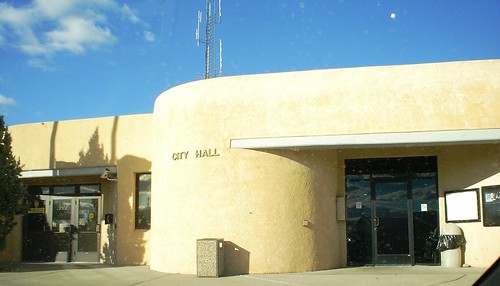
1. In response to community advocacy – thank you! -, the Regional Coalition of LANL Communities (RCLC) re-scheduled their next April 19th meeting to Friday, April 26th from 1:30 to 4:30 pm at the tentative location of the Espanola City Hall to discuss a Restated and Amended Joint Powers Agreement Establishing the Regional Coalition of LANL Communities By and Among the Incorporated County of Los Alamos, the City of Santa Fe, Santa Fe County, the City of Espanola, Rio Arriba County, the Town of Taos, Taos County and the Sovereign Governments of the Pueblo of Ohkay Owingeh and the Pueblo of Jemez.https://regionalcoalition.org/
Despite public requests since 2010, the RCLC has not defined key terms in the JPA dealing with congressional lobbying activities to increase the Department of Energy (DOE) funding at LANL. These terms include “mission diversification,” “economic development,” advocary for long-term stable funding of LANL missions,” etc.
2. Nuclear Watch New Mexico has been leading the effort to challenge expanded plutonium pit production at LANL. To learn more, check out these documents on their website:
* Requirement for preparation of a Programmatic Environmental Impact Statement for expanded plutonium pit production, letter to Ms. Lisa E. Gordon-Hagerty, Under Secretary for Nuclear Security and NNSA Administrator, from Nuclear Watch New Mexico, Savannah River Watch, and Tri-Valley CAREs on October 31, 2018 at https://nukewatch.org/issues/plutonium-pit-production/
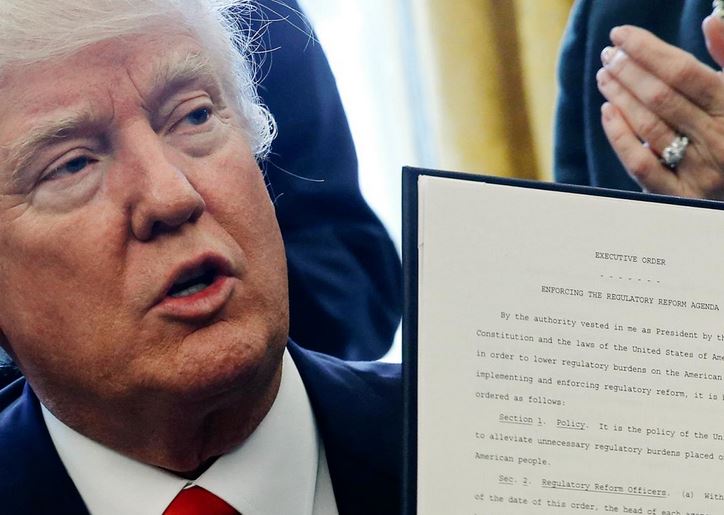
On February 24, 2017, President Trump issued an executive order to enforce his regulatory reform agenda. It established the U.S. policy “to alleviate unnecessary regulatory burdens placed on the American people.”
On Valentine’s Day, 2019, the Environmental Protection Agency’s Office of Water and the U.S. Army Corps of Engineers proposed a “Dirty Water Rule,” which would eliminate critical Clean Water Act protections for ephemeral streams and other stream segments, such as perennial and intermittent segments, above ephemeral streams. Ephemeral streams flow for a short amount of time, such as after a summer monsoon. https://www.epa.gov/wotus-rule
The New Mexico Environment Department estimates that over 96 percent of New Mexico’s waters would lose Clean Water Act protection. https://www.env.nm.gov/wp-content/uploads/2019/03/032119-WOTUS-lawsuit.pdf New Mexico does not have regulatory authority from EPA to issue permits for eliminating discharges of pollutants to waterways under the National Pollutant Discharge Elimination System, or NPDES. Nor does New Mexico have the regulatory authority from the Corps to issue permits for dredge and fill operations. EPA and the Army Corps run those programs.
The proposed rule would create a regulatory void in New Mexico. No state programs exist to fill the regulatory gap if the dirty water rule is approved. The EPA and Army Corps also would lose jurisdiction for ephemeral, perennial and intermittent streams.
For example, the impacts of discharges of legacy waste from Los Alamos National Laboratory (LANL) would be tremendous for the Rio Grande. Ephemeral streams that drain the Pajarito Plateau, where LANL and its dumpsites are located, flow to the Rio Grande. The Clean Water Act would no longer cover them. Currently such discharges from LANL into these streams are subject to several NPDES permits issued by EPA. These include an industrial wastewater permit with 11 separate outfalls; multiple outfalls regulated by a Multi-Sector Industrial Permit; an Individual Stormwater Permit that regulates discharges from 405 contaminated sites; and other discharges regulated by a Construction General Permit. The proposed changes to the definition of “Waters of the United States” would eliminate EPA’s ability to require LANL to comply with the existing permits.
The Clean Water Act governs water pollution. Its goal is to maintain the chemical, physical and biological integrity of the nation’s waters so they are fishable and swimmable, meaning that people and fish can swim in the water without harm.
Comments are due to EPA and the Army Corps on Monday, April 15th. Protect water! Get your comments in!
The Regional Coalition of LANL Communities (RCLC) scheduled their next meeting for Friday, April 19th from 1:30 to 4:30 pm at the Espanola City Hall to discuss a Restated and Amended Joint Powers Agreement Establishing the Regional Coalition of LANL Communities By and Among the Incorporated County of Los Alamos, the City of Santa Fe, Santa Fe County, the City of Espanola, Rio Arriba County, the Town of Taos, Taos County and the Sovereign Governments of the Pueblo of Ohkay Owingeh and the Pueblo of Jemez.https://regionalcoalition.org/
Despite public requests since 2010, the RCLC has not defined key terms in the JPA dealing with congressional lobbying activities to increase the Department of Energy (DOE) funding at LANL. These terms include “mission diversification,” “economic development,” advocary for long-term stable funding of LANL missions,” etc.
Friday, April 19th is Good Friday and the beginning of Passover. CCNS’s experience over the past 31 years indicates there is less public participation during times of cultural and religious holidays. Inevitably, this will be the case with the RCLC meeting. Please contact your elected officials who are representatives of the RCLC and ask that the meeting be rescheduled: